
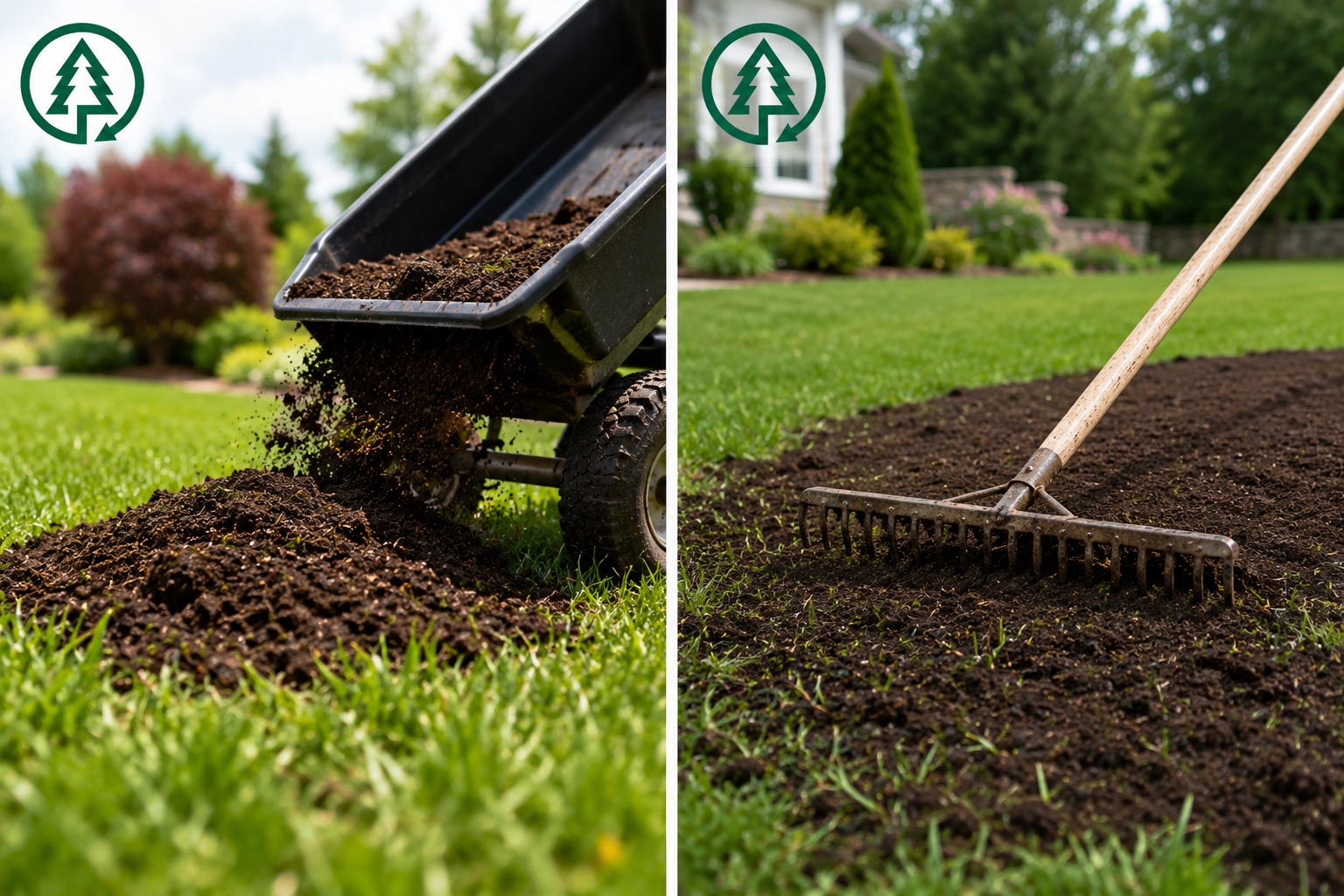
Topsoil is best for adding bulk and correcting shallow low spots, while compost is best for adding organic matter, supporting soil organisms, and improving moisture and nutrient management. For most patchy or mildly uneven lawns, we recommend a thin layer of 50/50 Compost Lawnsoil Mix because it combines the structure of screened lawnsoil with the soil-building benefits of compost. Apply about ¼ inch over established turf, or up to ½ inch only where grass is sparse, then rake lightly, overseed, and water consistently. UConn and UNH Extension both recommend topdressing established lawns lightly and pairing compost with core aeration so material can reach the root zone.
A bare or bumpy lawn rarely needs one universal fix. Low areas need enough mineral soil to restore the grade, while weak turf often needs more organic matter and better seed-to-soil contact. Choosing between compost and topsoil depends on whether the main problem is elevation, soil quality, compaction, or thinning grass.
Compost vs. Topsoil for Overseeding a Lawn
Topsoil, also called lawnsoil, contains mineral particles that provide weight, root support, and lasting volume. It works well for filling small depressions, repairing eroded areas, preparing bare soil, and leveling minor surface irregularities.
Compost serves a different role. Mature compost adds organic matter, supports microbial activity, and can improve soil structure, moisture retention, and nutrient cycling. UConn notes that compost topdressing can add nutrients and organic matter and may help thatch break down when applied after aeration. soil can level a lawn but may contribute little organic matter. Pure compost can improve tired soil but may settle, spread too loosely, or deliver more nutrients than the lawn needs. Compost made with manure may also contain elevated phosphorus, so a soil test is valuable before repeated applications. 50/50 Compost Lawnsoil Mix Works
Our 50/50 Compost Lawnsoil Mix combines screened lawnsoil for structure with house-made compost for organic matter, moisture management, and root-zone activity. The blend is screened, workable, and suitable for topdressing tired lawns, repairing bare patches, and supporting new seed. ance helps prevent two common mistakes:
- Applying loose compost too heavily and covering grass crowns
- Using dense soil that fills low spots but creates a hard surface after settling
For established turf, spread only enough material for grass blades to remain visible. A thin application filters toward the soil surface instead of burying the lawn.
How to Topdress a Lawn With Compost Mix
1. Inspect the Lawn
Mark bare patches, shallow dips, compacted areas, drainage problems, and exposed roots. Deep holes or major grade changes require more than routine topdressing and may need separate filling and reseeding.
2. Mow and Remove Debris
Mow slightly shorter than normal without scalping the turf. Remove leaves, sticks, heavy thatch, and loose dead grass so seed and topdressing can reach the soil.
3. Core Aerate Compacted Areas
Run a core aerator across the lawn in overlapping passes. Aeration opens channels for air, water, seed, and organic material. UConn recommends core aeration before applying roughly ¼ inch of compost and raking it into the openings. e construction soil or hard clay, review our guide on how to fix compacted clay soil before starting.
4. Overseed
Apply a grass seed blend suited to local light, moisture, and traffic conditions. Spread seed in two directions for even coverage. The goal is strong seed-to-soil contact, especially around aeration holes and bare areas.
5. Apply the Topdressing
Spread small piles across the lawn, then use a landscape rake or leveling tool to distribute the material.
- Established grass: about ¼ inch
- Thin or bare areas: up to ½ inch
- Shallow low spots: build gradually over multiple applications
Avoid covering healthy turf with a thick layer. Grass blades should remain visible after raking.
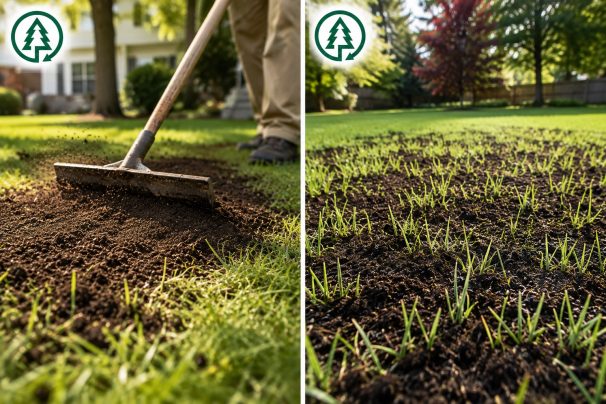
6. Water and Protect New Seed
Water lightly and frequently enough to keep the seedbed moist during germination. Reduce frequency and water more deeply as roots establish. UNH Extension recommends maintaining adequate moisture after seeding and notes that late summer is generally the best renovation period for cool-season lawns, with spring as the second option. How much Topdressing Do You Need?
Use this formula:
Square feet × depth in inches ÷ 324 = cubic yards
At ¼ inch deep, 1 cubic yard covers about 1,296 square feet. At ½ inch deep, 1 cubic yard covers about 648 square feet. Add a small allowance for low spots, settling, and uneven spreading.
Order 50/50 Compost Lawnsoil Mix From Thrive Farm
A balanced topdressing can level minor bumps, improve bare patches, and create better conditions for overseeding without burying existing grass. Calculate the lawn area, choose the proper depth, and order our 50/50 Compost Lawnsoil Mix for pickup or delivery from Thrive Farm in Simsbury, Connecticut.