
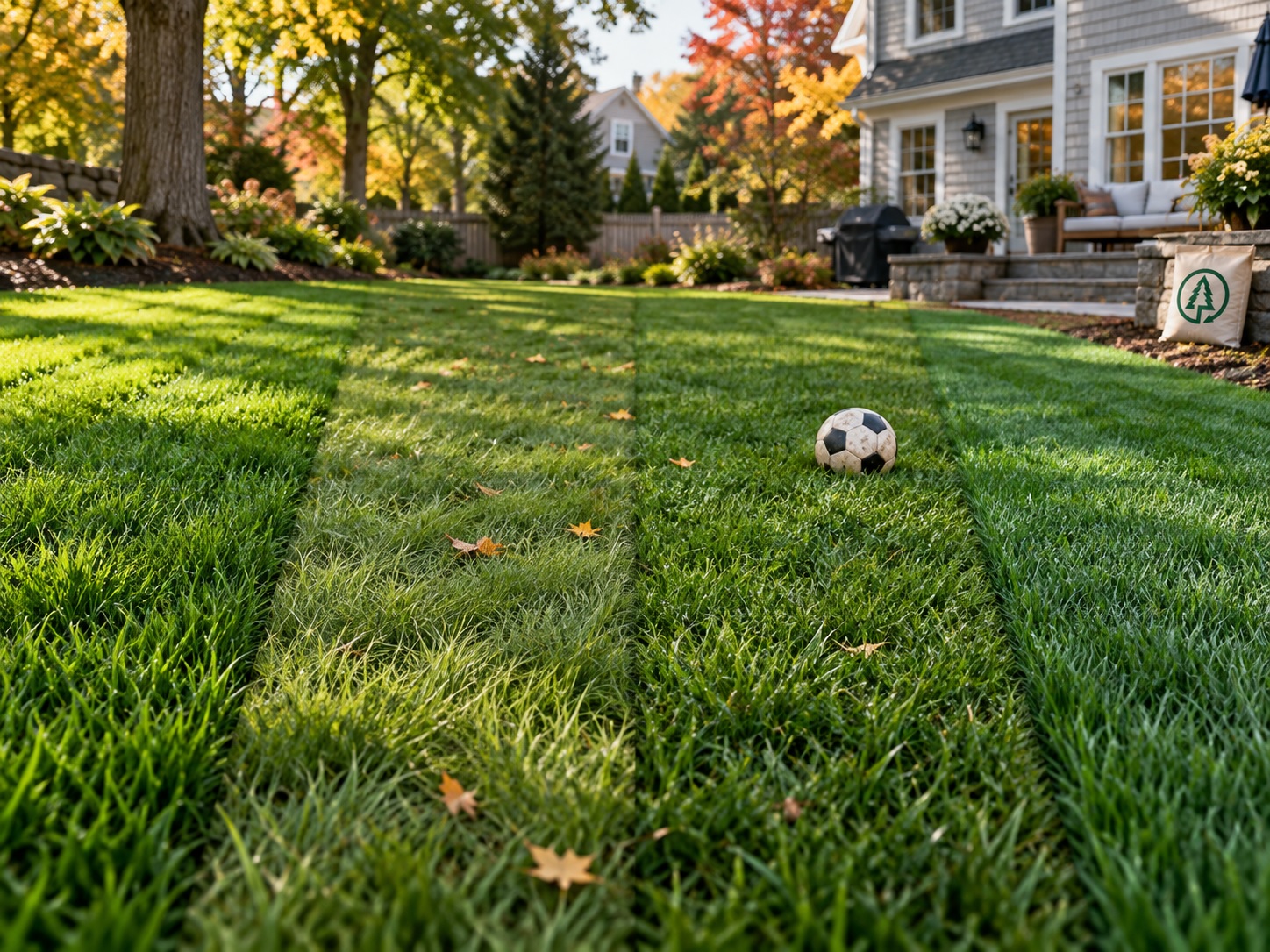
The best grass seed for Connecticut depends on sunlight, soil, moisture, traffic, and maintenance. Turf-type tall fescue stands out for drought tolerance and durability, fine fescues perform well in shade and lower-maintenance areas, perennial ryegrass establishes quickly, and Kentucky bluegrass creates dense turf when sun, water, and fertility are adequate. Match the seed to the site before planting.
What Grass Grows Best in Connecticut?
Connecticut is cool-season grass territory. The main home-lawn choices are turf-type tall fescue, fine fescue, Kentucky bluegrass, and perennial ryegrass.
UConn Home & Garden Education Center identifies these four groups as the primary cool-season grasses for dense New England turf. The best choice depends on the property.
We look at six factors: sun, shade, water, traffic, soil, and maintenance.
Tall Fescue: Best for Drought, Heat & Busy Lawns
Turf-type tall fescue is a strong all-around choice where durability matters. Its extensive root system helps it tolerate dry periods, and modern cultivars have a finer texture than older coarse fescues.
It performs well in full sun, tolerates partial shade, and handles traffic from children, pets, and regular backyard use. UConn also notes that turf-type tall fescue can work well in high-use areas without supplemental irrigation.
Best for: Sunny lawns, active families, pets, lower watering needs, and summer stress.
Fine Fescue: Best for Shade & Low-Maintenance Lawns
Fine fescues include creeping red, Chewings, hard, and related types. Their advantage is performance where other lawn grasses often thin out.
They tolerate shade, lower fertility, lower water availability, and acidic or poorer soils better than Kentucky bluegrass or perennial ryegrass. They are especially useful around wooded Connecticut properties.
The tradeoff is traffic. Fine fescue is generally better for lightly used lawn areas than busy play spaces.
Best for: Shade, wooded yards, lower-maintenance lawns, and poorer or more acidic soil.
Kentucky Bluegrass: Best for Dense, Classic-Looking Turf
Kentucky bluegrass produces the dense, traditional lawn appearance many homeowners want. It spreads through rhizomes, allowing established turf to fill small bare areas over time.
It performs best in sunny locations with fertile, well-drained soil. However, it generally needs more water and fertility than fine fescue.
Best for: Sunny, well-maintained lawns where irrigation and regular lawn care are available.
Perennial Ryegrass: Best for Fast Establishment
Perennial ryegrass germinates and establishes quickly, making it useful for overseeding, worn patches, and faster coverage.
It also handles wear well and is commonly included in seed mixtures with Kentucky bluegrass. Compared with fine fescue, ryegrass generally prefers greater fertility and more consistent moisture.
Best for: Fast repairs, overseeding, worn areas, and high-use zones.
Connecticut Grass Seed Comparison Chart
| Grass Type | Sun | Shade | Drought | Traffic | Establishment | Maintenance |
|---|---|---|---|---|---|---|
| Turf-Type Tall Fescue | Excellent | Good | Excellent | Excellent | Moderate | Moderate |
| Fine Fescue | Good | Excellent | Good | Fair | Moderate | Low |
| Kentucky Bluegrass | Excellent | Fair | Moderate | Good | Slow | Higher |
| Perennial Ryegrass | Excellent | Fair | Moderate | Excellent | Fast | Moderate to High |
Which Grass Seed Should We Choose?
For full sun, choose Kentucky bluegrass or turf-type tall fescue. For shade, start with fine fescue, with tall fescue also useful in partial shade.
For drought, turf-type tall fescue is a strong fit where traffic also matters. Fine fescue works well where lower water use and lighter traffic are priorities. For high traffic, consider tall fescue or perennial ryegrass. For low maintenance, fine fescue stands out. For fast establishment, perennial ryegrass has the advantage.
Seed Mixtures vs. Single Grass Species
Many Northeast seed products combine species because one yard rarely has identical conditions everywhere. A sunny front lawn, shaded side yard, and dry slope may favor different grasses.
A mixture adds adaptability. Ryegrass establishes quickly, bluegrass can spread into damaged areas, and fescues can improve tolerance to shade, drought, or lower-fertility soil.
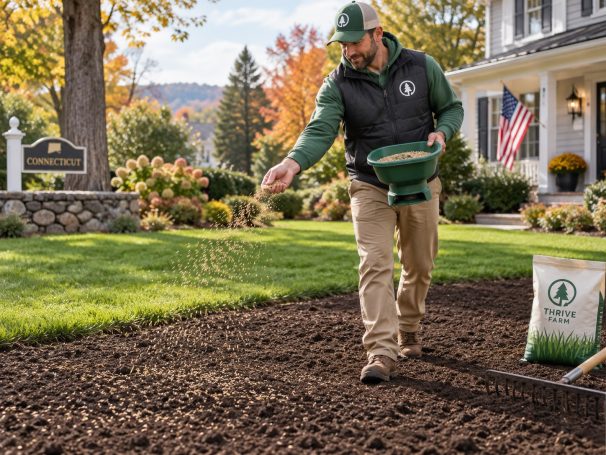
Great Grass Seed Still Needs Good Soil
Even premium grass seed cannot fully overcome compacted soil, rocky fill, thin topsoil, low organic matter, poor seed-to-soil contact, or uneven grading.
That is why the seedbed matters as much as the seed. Thrive Farm lawnsoil combines native topsoil with compost and is screened for lawn applications, creating a workable growing material specifically intended for grass.
For lawn repair or new turf, start with lawnsoil for new grass before expecting seed alone to correct poor soil conditions.
When Should We Seed a Connecticut Lawn?
Late summer into early fall is generally Connecticut’s strongest seeding period. UConn identifies roughly mid-August through mid-September as an ideal Connecticut lawn-seeding window, allowing new turf time to establish before colder weather.
For the full process, see our guide to aerating and overseeding a Connecticut lawn rather than repeating every preparation and watering step here.
Start With the Right Seed and the Right Soil
Choosing grass according to sunlight, traffic, moisture, soil, and maintenance expectations gives a Connecticut lawn a stronger start. Just as important is creating loose, workable soil where roots can establish.
Thrive Farm offers Lawnsoil for pickup or delivery in Simsbury, Farmington, and surrounding Connecticut communities. Pair the right cool-season grass with the right seedbed to give the lawn a stronger foundation for long-term performance.
Frequently Asked Questions
What is the best grass seed for Connecticut?
There is no single best type for every yard. Tall fescue is strong for durability and drought tolerance, while fine fescue is a strong choice for shade and lower-maintenance areas.
Is tall fescue good for Connecticut?
Yes. Turf-type tall fescue offers deep rooting, good drought tolerance, traffic tolerance, and adaptability to full sun or partial shade.
Is Kentucky bluegrass good in Connecticut?
Yes. It performs well in sunny, fertile lawns where adequate moisture and regular maintenance are available.
What grass grows best in shade in Connecticut?
Fine fescues are usually the strongest starting point. Turf-type tall fescue can also work in partial shade with enough direct sunlight.
Can we mix tall fescue and Kentucky bluegrass?
Yes. Seed mixtures can combine useful traits from multiple grass species. Follow the seed producer’s labeled mixture and establishment guidance rather than choosing arbitrary percentages.