
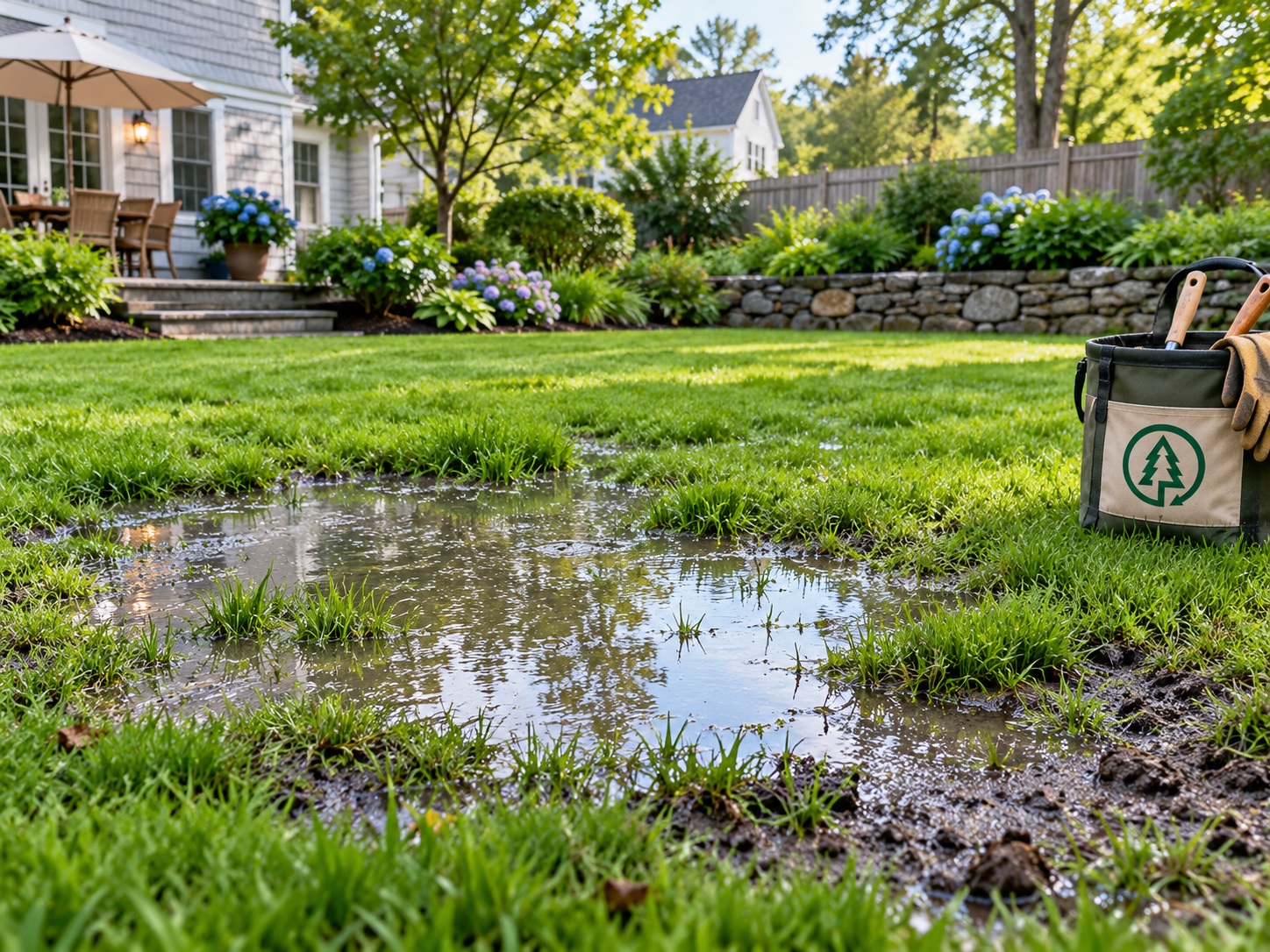
The best way to improve lawn drainage without rebuilding your yard is to identify where excess water originates, relieve compacted soil through core aeration, correct shallow depressions, and redirect unwanted runoff. Adding compatible topsoil or mature compost can improve soil structure over time, while targeted drainage improvements may resolve persistent puddles. Most soggy lawn problems can be addressed locally, although severe grading or groundwater issues may require professional drainage work.
Why Is Your Lawn Always Wet or Soggy?
Standing water after heavy rain is common, but a lawn that stays muddy for days may have an underlying drainage problem.
At Thrive Farm, we help Connecticut homeowners choose quality soil materials for lawn repair, landscaping, and soil improvement projects.
Poor drainage often results from compacted soil, low spots, heavy clay, excessive irrigation, or runoff collecting in the wrong location.
Connecticut’s spring rainfall and seasonal freeze-thaw cycles can make these conditions worse.
Before considering expensive excavation, we recommend identifying the source of the moisture.
7 Ways to Improve Lawn Drainage Without Rebuilding Your Yard
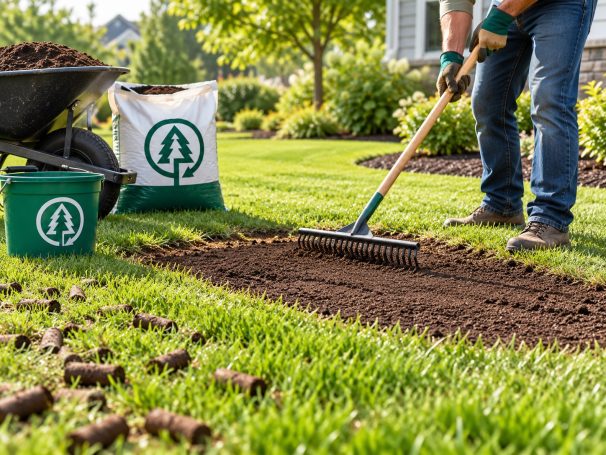
1. Aerate Compacted Lawn Soil
Compacted soil contains fewer spaces for water and air to move through.
Core aeration removes small plugs of soil, allowing moisture to penetrate the root zone more easily.
We recommend aerating when soil is slightly moist but not saturated, preferably during active grass growth.
For most Connecticut cool-season lawns, late summer through early fall is an excellent time.
According to the University of Maryland Extension, core aeration helps relieve surface compaction and improve water movement.
However, aeration cannot solve drainage problems caused by consistently high groundwater.
2. Fill Shallow Low Spots With Quality Lawnsoil
Low areas often collect water because the surrounding ground slopes toward them.
Minor depressions may be corrected by adding compatible screened topsoil.
For established lawns, we recommend spreading thin layers, generally around ¼ inch at a time, while keeping grass blades exposed.
Deeper depressions may require removing the existing turf, correcting the grade, and reseeding.
Our screened Lawnsoil combines native topsoil with compost, making it suitable for lawn repairs, shallow leveling, and seedbed preparation.
Important: Adding topsoil works only when the finished grade allows water to move toward an appropriate outlet.
3. Improve Soil Structure With Compost
If your lawn contains dense, compacted soil, organic matter may help improve its structure over time.
Mature compost supports soil organisms and can encourage better soil aggregation.
For established lawns, a thin compost topdressing following core aeration may gradually improve surface soil conditions.
However, compost is not an instant drainage solution.
Adding excessive material over saturated soil can create additional problems, especially when the underlying drainage restriction remains unchanged.
4. Redirect Downspout and Surface Runoff
Sometimes the lawn itself is not responsible for standing water.
Roof downspouts, nearby pavement, and improperly directed runoff can overwhelm otherwise healthy soil.
We recommend checking whether water enters the lawn from:
- Roof gutters and downspouts
- Driveways and patios
- Neighboring slopes
- Sprinkler systems
- Concentrated drainage channels
Downspout extensions, properly designed swales, or approved drainage outlets may help redirect excess water.
Always keep water moving away from foundations without creating problems for neighboring properties.
5. Adjust Your Lawn Irrigation Schedule
Overwatering can make an existing drainage problem worse.
If grass remains wet between watering cycles, the irrigation schedule may be delivering more water than the soil can absorb.
We recommend checking sprinkler coverage, irrigation duration, and recent rainfall.
Watering less frequently, when appropriate for the grass and soil, can reduce unnecessary saturation.
Avoid watering automatically after significant rain.
6. Repair Bare and Muddy Lawn Areas
Waterlogged soil can weaken grass roots and create thin or muddy patches.
Once drainage improves, repair those sections using suitable lawnsoil and cool-season grass seed.
For smaller areas, we recommend loosening compacted soil, adding compatible screened lawnsoil where necessary, and establishing proper seed-to-soil contact.
Avoid walking or using heavy equipment on saturated ground.
For additional guidance, read our related article, How to Level a Bumpy Lawn With Topsoil.
7. Consider Targeted Drainage Installation
Some soggy lawn solutions require more than soil amendments.
When water repeatedly collects in the same location, a properly designed French drain, surface inlet, or shallow swale may be appropriate.
The correct system depends on soil permeability, property slope, underground utilities, and available drainage outlets.
We recommend professional assessment before excavation, particularly where water collects near foundations or underground utilities.
Which Lawn Drainage Solution Should You Choose?
| Lawn Problem | Recommended Starting Solution |
|---|---|
| Hard, compacted soil | Core aeration |
| Small, shallow puddles | Localized grading correction |
| Poor soil structure | Aeration and appropriate compost |
| Water from downspouts | Runoff redirection |
| Constantly wet from irrigation | Adjust watering schedule |
| Bare, muddy grass | Correct drainage, then reseed |
| Persistent standing water | Professional drainage evaluation |
The most effective approach addresses the underlying cause rather than covering the symptoms.
Common Mistakes When Fixing a Waterlogged Lawn
Homeowners sometimes make drainage problems worse by choosing the wrong materials or techniques.
We recommend avoiding these mistakes:
- Adding thick layers of soil over healthy grass
- Assuming sand automatically improves clay soil drainage
- Aerating while the ground is saturated
- Installing drainage pipes without a suitable outlet
- Filling low spots without correcting the surrounding grade
Proper drainage begins with identifying where water enters, how it moves, and why it remains.
Frequently Asked Questions
How can you improve lawn drainage naturally?
Core aeration, appropriate compost applications, improved grading, and reduced soil compaction can help improve water infiltration and soil structure.
Will adding topsoil fix a soggy lawn?
Topsoil may help correct shallow depressions and improve the growing surface. However, it will not fix persistent groundwater problems or blocked drainage outlets.
Does aerating a lawn help with standing water?
Yes, when compaction contributes to poor water infiltration. Aeration is less effective when water accumulates because of incorrect grading or high groundwater.
Can poor lawn drainage be fixed without digging?
Sometimes. Minor compaction, uneven soil, and excessive watering may be corrected without major excavation. Persistent runoff or underground drainage issues may require more extensive work.
Improve Your Lawn’s Soil With Thrive Farm
A healthier lawn begins with better soil conditions and proper water management.
At Thrive Farm, we supply screened lawnsoil, compost, and soil blends for homeowners throughout Simsbury, Avon, Canton, Granby, and surrounding Farmington Valley communities.
Whether you’re repairing muddy patches, improving a thin lawn, or preparing a new planting area, we can help you select suitable bulk soil materials.