
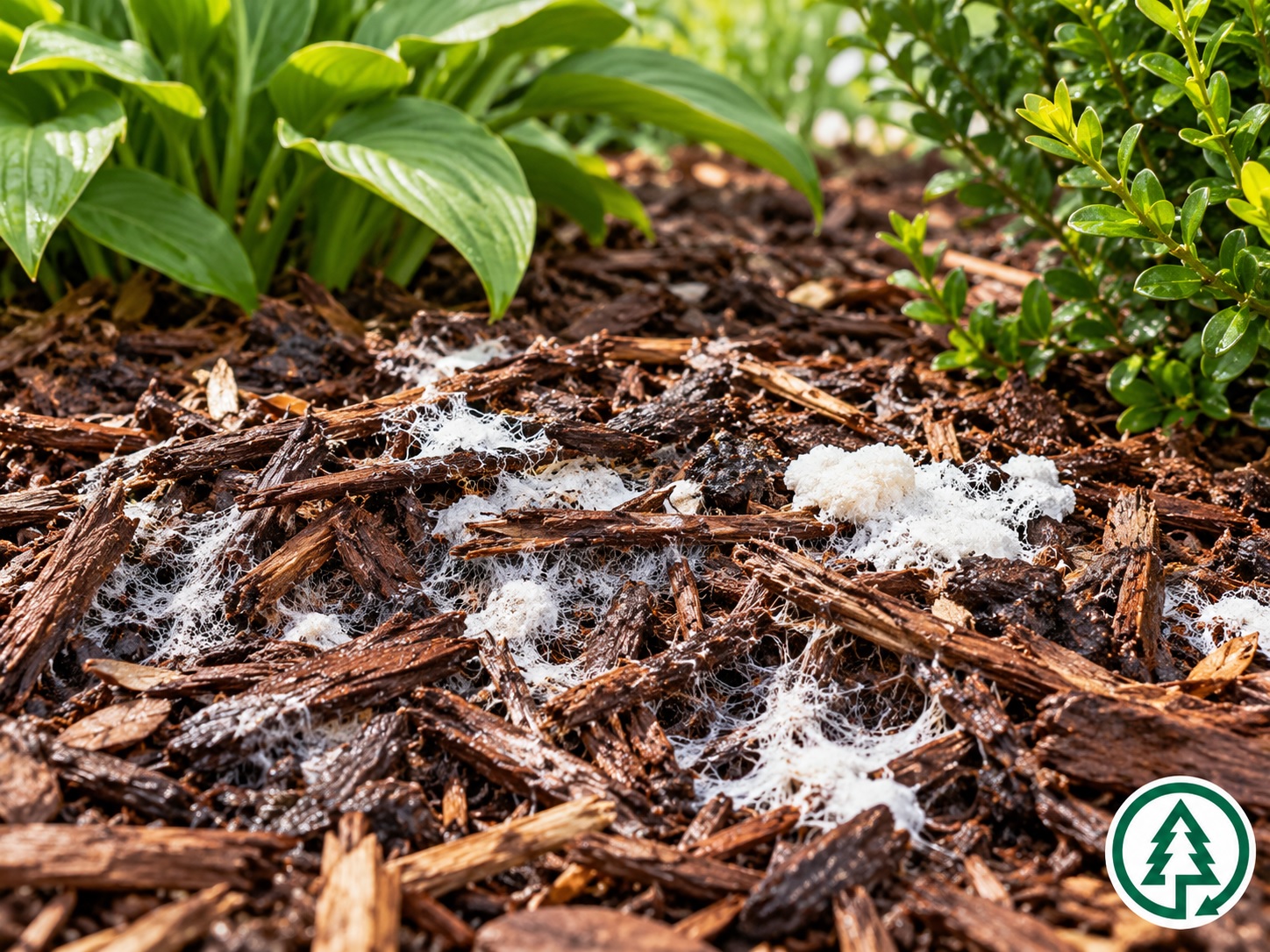
White growth on mulch usually comes from fungi, fungal mycelium, or slime mold feeding on decomposing organic material. In most cases, white fungus on mulch is harmless to plants and is actually a sign that organic matter is breaking down. Warm temperatures, moisture, shade, and naturally decomposing wood can make the growth more noticeable. Raking the mulch, allowing the surface to dry, and correcting excess watering are usually enough to manage it.
At Thrive Farm, we know that spotting white patches across a freshly mulched landscape can cause concern. The good news is that mulch turning white rarely means the mulch has gone bad or that nearby plants are in danger.
Let’s look at what causes the growth and when action may actually be needed.
Why Does Mulch Turn White?
Organic mulch is constantly decomposing.
Bark, wood fibers, and other plant material contain compounds that fungi and microorganisms gradually break down. Penn State Extension explains that fungi found in landscape mulch are natural parts of the decomposition process. Many act as recyclers that help break down woody material.
That process can produce:
- White threadlike material beneath the mulch
- Cottony white patches
- Gray or cream-colored growth
- Mushrooms
- Yellow, white, or brown slime mold
- Powdery coatings after wet growth dries
So when we see fungus growing in mulch, decomposition is often the real story.
Our mulch at Thrive Farm is aged for two years, allowing organic material to begin breaking down before it reaches the landscape. Learn more about why aged mulch matters for soil health at Thrive Farm.
What Is the White Fungus on Mulch?
One of the most common causes is fungal mycelium.
Mycelium consists of tiny fungal threads growing through organic material. It may look like white webbing, cotton, or a pale coating underneath the top layer of mulch.
Seeing mycelium does not automatically mean plants have a fungal disease.
Wood-decomposing fungi generally feed on dead organic material rather than healthy landscape plants. They help return organic matter to the soil as mulch breaks down.
This activity is one reason organic mulch gradually becomes incorporated into healthy garden soil.
Is Mold on Mulch Dangerous?
Most mold on mulch is more unpleasant-looking than dangerous.
Penn State Extension notes that fungi commonly found growing in landscape mulch are generally not harmful to landscape plants.
Problems are more likely to come from the environmental conditions surrounding the mulch than from the visible fungus itself.
For example, constantly saturated beds may create:
- Poor root-zone aeration
- Excessive moisture around plant crowns
- Faster mulch decomposition
- Conditions favorable to certain plant diseases
If mulch stays wet for long periods, we recommend checking drainage and irrigation rather than treating harmless surface fungi with chemicals.
Could It Be Slime Mold?
Sometimes what homeowners call white fungus is actually slime mold.
Slime molds can suddenly appear on mulch after periods of rain, heavy irrigation, warm temperatures, and humid weather.
According to Illinois Extension, slime molds may form white, gray, cream, yellow, or darker masses on organic mulch. They feed on microorganisms and decaying material and generally cause little or no harm to living plants.
Some slime molds look foamy or almost like spilled paint when fresh. As they mature, they can become dry and powdery.
Although the appearance can be dramatic, treatment usually is not necessary.
Why Does Fungus Keep Growing in My Mulch?
Several conditions can encourage fungal growth.
Too Much Moisture
Frequent watering or extended rainy periods keep wood mulch damp enough for decomposers to stay active.
Deep Mulch Layers
Very thick mulch can remain wet underneath even when the surface appears dry.
For most landscaped beds, a moderate layer provides moisture control without creating constantly saturated conditions.
Shade and Poor Airflow
Mulch beneath shrubs, dense plantings, decks, or heavily shaded areas may dry more slowly.
Natural Decomposition
Sometimes nothing is wrong at all. Organic mulch is supposed to decompose.
In fact, our guide to building fungal-dominant soil with wood chips explains how fungal activity contributes to the natural breakdown of woody organic material.
How to Get Rid of White Fungus on Mulch
Chemical treatment usually is unnecessary.
When appearance becomes a concern, we recommend a few simple steps.
1. Rake the Mulch
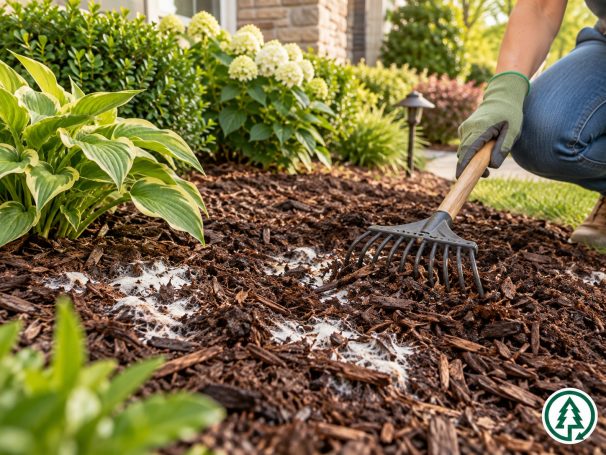
Turn and loosen the affected area with a garden rake. This breaks apart fungal colonies and exposes moist mulch to more air.
Illinois Extension specifically recommends loosening organic mulch with a garden rake when slime mold appears.
2. Let the Surface Dry
Reduce unnecessary irrigation and allow air and sunlight to reach the affected mulch whenever practical.
Avoid watering mulch simply because the surface looks dry. Water should be based on the needs of the plants and soil beneath it.
3. Check Mulch Depth
If mulch has accumulated year after year, remove some of the older material before adding another full layer.
4. Keep Mulch Away From Stems and Trunks
Leave breathing room around tree trunks, shrubs, and plant crowns. Mulch piled directly against living plant tissue can hold unwanted moisture in that area.
5. Remove It for Appearance
If a slime mold colony looks unpleasant, scoop it out or rake it apart. There usually is no need to replace the entire bed.
Should White Mulch Fungus Stop Me From Using Organic Mulch?
No.
Organic mulch offers valuable landscape benefits, including moisture conservation, temperature moderation, weed suppression, and gradual improvement of soil as the material decomposes.
The same biological activity that occasionally creates mushrooms, mycelium, or slime mold is part of what allows natural mulch to break down.
At Thrive Farm, we view that decomposition as part of a living landscape rather than an automatic problem.
When Should You Be Concerned?
Most white fungus on mulch can simply be monitored.
Take a closer look when plants themselves begin showing symptoms such as wilting, stem decay, root problems, or unusual leaf damage. Those symptoms may have another cause that deserves separate diagnosis.
If the white material exists only on decomposing mulch while nearby plants remain healthy, there is usually little reason for concern.
Healthy Mulch Is Part of Healthy Soil
Seeing mulch turning white can look alarming, but fungus and slime mold are often signs that natural decomposition is underway.
We recommend raking visible growth, correcting excessive moisture, maintaining a sensible mulch depth, and letting the biology of the landscape do its job.
At Thrive Farm, our aged natural mulch is produced with long-term soil health in mind. As it gradually decomposes, it becomes part of the organic matter supporting the landscape beneath it.