
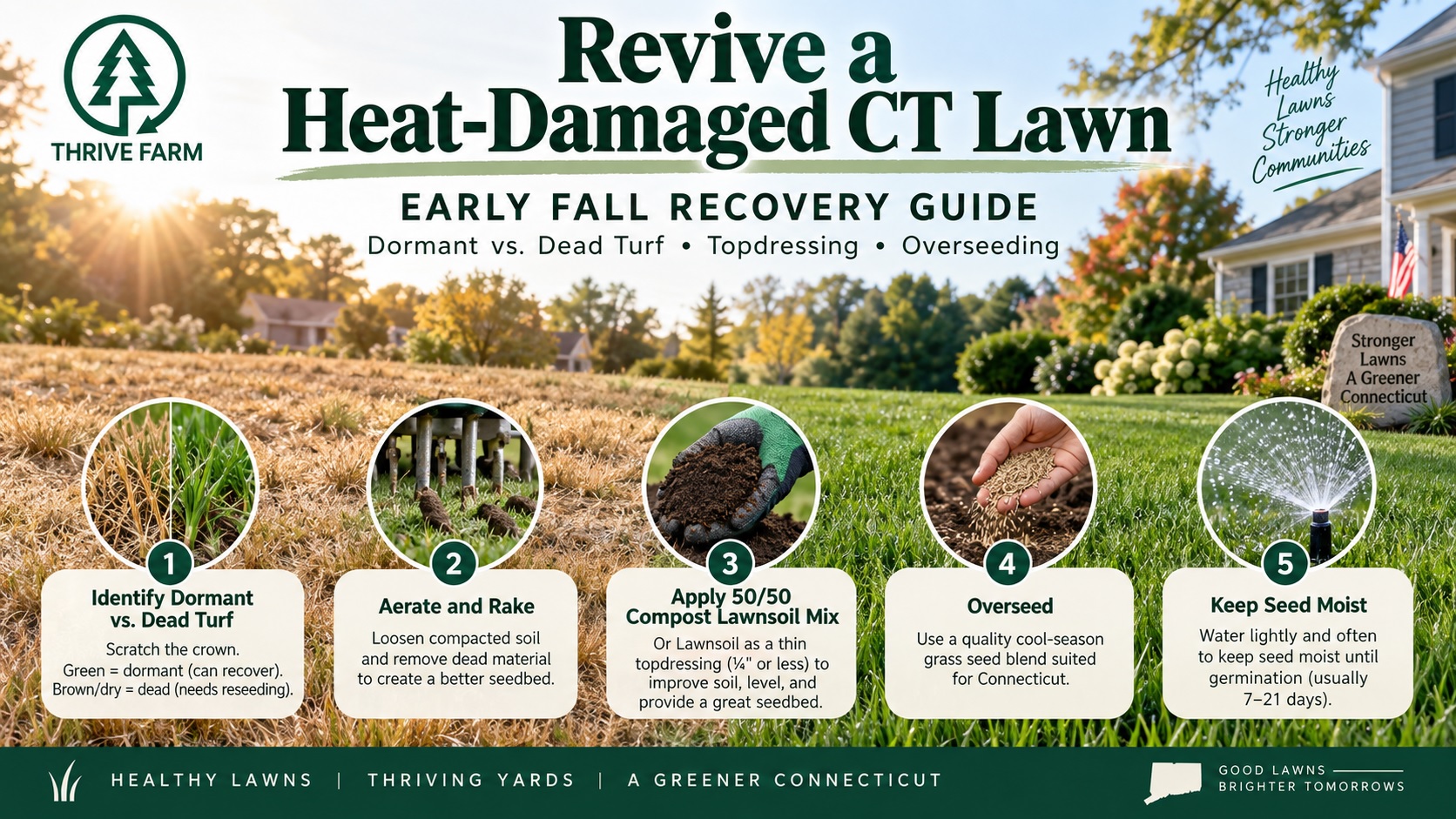
To revive a heat-damaged lawn in Connecticut, first determine whether the brown turf is dormant or actually dead. Dormant cool-season grass may look straw-colored while the crown and roots remain alive, and UConn notes that color can return within roughly 10 to 14 days after adequate moisture resumes. Areas that stay brown after cooler weather and consistent watering may require repair. At Thrive Farm, we recommend using early fall to loosen compacted soil, remove dead material, apply a light topdressing of 50/50 Compost Lawnsoil Mix or Lawnsoil, overseed bare and thin areas, and keep the seedbed consistently moist. UConn identifies August 15 through mid-September as the preferred lawn renovation period in Connecticut.
Dormant Grass vs. Dead Grass: Know What You Have
A brown lawn after a hot Connecticut summer does not automatically mean the grass has died.
Summer dormancy is a survival response. Cool-season turf slows growth, loses green color, and conserves resources during prolonged heat or drought while the crown remains alive. Kentucky bluegrass and perennial ryegrass can enter dormancy relatively quickly, while tall and fine fescues generally tolerate drought better.
Look for these clues.
Likely dormant turf:
- Brown or straw-colored across broad areas
- Crown remains firm
- Some green growth remains near the soil
- Turf begins greening after rainfall or irrigation
Likely dead turf:
- Grass pulls away easily with little root resistance
- Crowns are dry and brittle
- Bare soil remains after surrounding turf greens
- No recovery occurs after cooler weather and adequate moisture
UConn notes that turf can remain dormant for several weeks, but prolonged dormancy of roughly 45 to 60 days with little rainfall can reduce recovery.
Step 1: Wait for Cooler Weather Before Major Repair
Trying to force major lawn recovery during peak summer heat can waste seed, soil amendments, water, and labor.
Connecticut lawns are dominated by cool-season grasses that respond strongly when late-summer temperatures begin moderating.
UConn recommends August 15 through mid-September for lawn establishment and renovation because soil remains warm enough for germination while cooler air temperatures reduce heat stress and weed competition.
For homeowners planning a complete overseeding project, our guide to aerating and overseeding a Connecticut lawn covers the seasonal process in greater detail.
Step 2: Remove Truly Dead Turf and Open the Soil
Once dormant areas have had a chance to recover, rake out grass that is clearly dead.
Remove:
- Loose dead blades
- Heavy thatch
- Leaves and debris
- Matted turf
- Weeds competing with new seedlings
Thin lawns with compacted soil can also benefit from core aeration.
The objective is to expose enough soil for new seed to make contact with the growing medium rather than remaining suspended above a dense layer of dead grass.
Step 3: Repair the Root Zone With Lawnsoil
Heat damage often exposes a deeper problem.
Thin soil, compaction, low organic matter, rocky fill, and poor moisture retention can make a lawn more vulnerable every summer.
Thrive Farm’s Lawnsoil combines native topsoil with compost and is screened for lawn applications. The blend provides a growing medium that can be used to repair low spots, rebuild bare areas, and provide stronger soil beneath new grass.
For deeper depressions or areas where substantial soil has been lost, Lawnsoil can provide the bulk needed to restore grade before seeding.
Step 4: Topdress With 50/50 Compost Lawnsoil Mix
For widespread thinning rather than deep grade correction, we prefer a lighter topdressing.
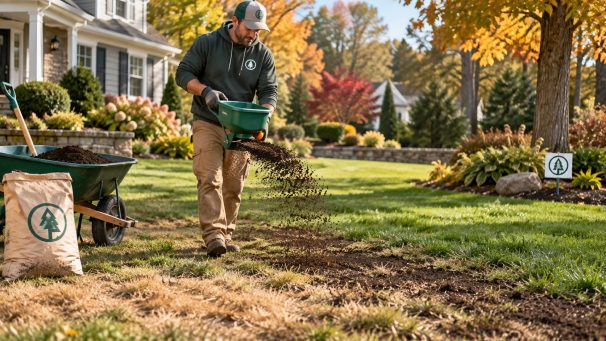
Our 50/50 Compost Lawnsoil Mix combines equal parts house-made compost and screened lawnsoil. Thrive Farm recommends the blend for lawn repair and topdressing because it combines organic matter, soil structure, drainage, and moisture retention.
Spread only a thin layer across existing turf.
The goal is not to bury healthy grass. The material should settle around existing crowns while creating better seed-to-soil contact across thin and bare areas.
Compost can also improve soil structure and water-holding capacity, which can make turf less vulnerable during future dry periods. UConn specifically recommends adding organic matter such as compost to improve drought-prone lawn soils.
Step 5: Overseed the Damaged Areas
Once the surface has been prepared, spread a cool-season seed blend suited to the property.
Connecticut lawns commonly contain:
- Turf-type tall fescue
- Fine fescue
- Perennial ryegrass
- Kentucky bluegrass
For lawns that repeatedly struggle during summer, increasing the proportion of drought-tolerant fescues may help reduce future water stress.
Apply seed at the manufacturer’s recommended rate and lightly work it into the topdressing so good soil contact is maintained.
Step 6: Keep New Seed Consistently Moist
New grass seed cannot tolerate the same dry conditions that triggered summer lawn damage.
Use light, regular irrigation to keep the upper seedbed consistently moist during germination without creating runoff or puddles.
As seedlings establish, transition toward deeper and less frequent watering so roots begin growing farther into the soil.
Avoid heavy traffic until the new turf has developed enough strength to tolerate use.
Common Lawn Summer Recovery Mistakes
Several shortcuts can slow recovery:
- Assuming every brown area is dead
- Reseeding during extreme summer heat
- Seeding directly over thick dead turf
- Burying existing grass under excessive soil
- Allowing seed to dry during germination
- Repairing grass without correcting poor soil
- Waiting until late fall to overseed
UConn warns that seeding becomes progressively less reliable as soil temperatures fall, making early fall preparation especially important.
For additional Connecticut-specific guidance, see the UConn Lawn Renovation and Repair guide.
Build a Stronger Lawn Before Next Summer
Learning how to revive dead grass is only part of summer lawn recovery.
The stronger strategy is rebuilding the root zone so new grass enters the next hot season with better soil structure, moisture retention, and root development.
At Thrive Farm, our Lawnsoil and 50/50 Compost Lawnsoil Mix give Connecticut homeowners bulk soil options for repairing bare patches, topdressing heat-damaged turf, correcting shallow low spots, and preparing lawns for fall overseeding.
Repair the soil first, then give new seed the conditions it needs to establish.