
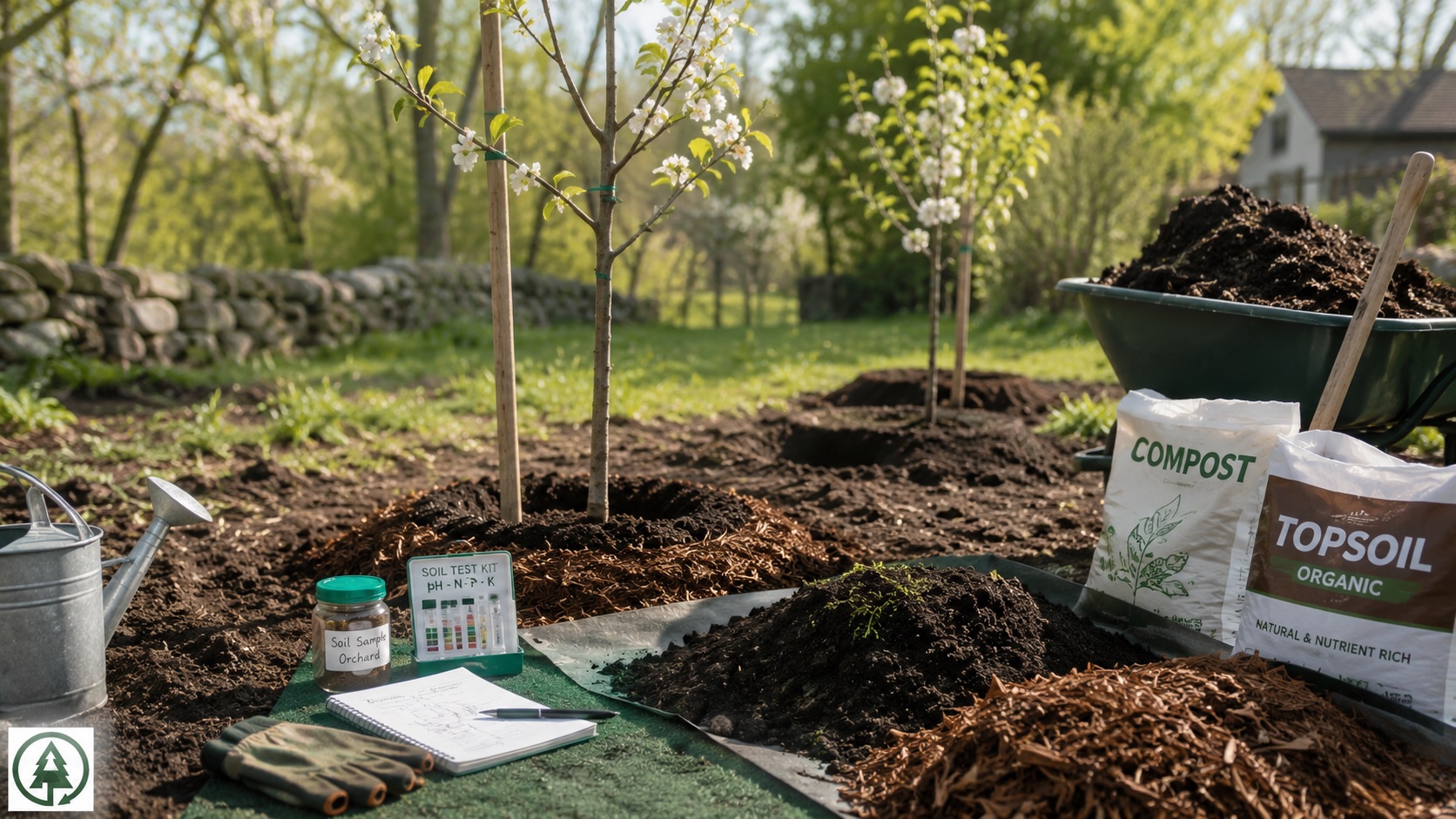
Planting fruit trees feels simple at first. Buy a young apple, pear, peach, plum, or cherry tree, dig a hole, water it, and wait for fruit.
But in Connecticut, that shortcut can cost homeowners years of growth.
Many young fruit trees fail because their roots are placed into compacted clay, poor drainage, low organic matter, or soil with the wrong pH. Once that tree is in the ground, problems are harder to fix. That is why orchard site preparation should start before the first shovel hits the soil.
At Thrive Farm, we believe healthy fruit starts below ground. Strong roots need the right soil structure, the right organic matter, and the right planting environment. Whether preparing a backyard orchard in Simsbury, Avon, Granby, Canton, Farmington, West Hartford, or nearby Connecticut towns, the best fruit tree planting tips begin with one rule: prepare the soil first.
UConn’s soil testing resources note that standard soil analysis can report pH, nutrient levels, calcium, magnesium, micronutrients, lead screening, and site-specific amendment recommendations. For tree fruit, UConn also notes that fruit trees prefer well-drained soil, moderate organic matter, and a pH range around 6.0 to 6.5.
Why Orchard Site Preparation Matters
Fruit trees are long-term plants. A vegetable bed can be corrected every season, but a tree may sit in the same spot for decades. The first planting decision affects root growth, drainage, disease pressure, fruit production, and overall tree strength.
Connecticut yards often have one or more challenges:
- Heavy clay soil
- Compacted builder-grade fill
- Shallow topsoil
- Wet spring conditions
- Rocky subsoil
- Low organic matter
- Poor drainage near slopes or low spots
- Lawn competition around young trunks
When homeowners skip preparation, the tree may survive but fail to thrive. Leaves stay small, growth slows, roots circle inside the planting hole, and fruit production takes longer than expected.
Planting fruit trees in clay requires extra planning. Clay can hold valuable nutrients, but it can also stay wet, compact tightly, and limit oxygen around roots. In waterlogged soil, roots cannot access enough oxygen, and poor drainage can contribute to root decline. UConn Extension notes that heavy, poorly drained sites are a known risk for root problems in fruit production.
Start With a Soil Test Connecticut Homeowners Can Trust
Before adding compost, topsoil, lime, sulfur, or fertilizer, start with a soil test Connecticut homeowners can use for real guidance.
A soil test helps answer key questions:
- What is the current pH?
- Are nutrients too low, balanced, or excessive?
- Does the soil need lime or sulfur?
- Is organic matter low?
- Are there concerns with lead or other soil factors?
- What amendments are actually needed before planting?
This step matters because guessing can create new problems. Adding lime without knowing pH can push soil too alkaline. Adding fertilizer into a planting hole can damage roots or trigger weak, fast growth. Adding too much compost to one small hole can create a rich pocket surrounded by compacted native soil.
A better plan starts with data.
For backyard orchard planning, collect soil from the area where the trees will grow, not from a random garden bed. Take several small samples from across the planned orchard space, mix them together, and submit the combined sample based on lab directions.
Choose the Right Orchard Location
A fruit tree needs more than good soil. The site itself has to support sun, airflow, drainage, and long-term access.
Sunlight
Most fruit trees need full sun for strong growth and fruit ripening. Choose a location with open exposure and avoid heavy shade from woods, fences, garages, or mature shade trees.
Drainage
Avoid low spots where water collects after rain. Young fruit trees do not like sitting in wet soil. If the only available space has clay or poor drainage, consider a raised or mounded planting zone rather than a flat hole.
Airflow
Good airflow helps leaves dry faster after rain and humidity. That matters in Connecticut, where spring moisture and summer humidity can increase disease pressure.
Access
Leave room for pruning, mulching, watering, harvesting, and mowing around the orchard. A tree that is easy to reach is more likely to receive consistent care.
Deep-Pit Earth Amendment: The Smart Way to Prepare Roots
A deep-pit approach does not mean filling a deep hole with loose compost and dropping a tree into it. That can create a bowl effect where water collects and roots hesitate to move into the surrounding native soil.
Instead, use a deep-pit inspection and broad-zone amendment method.
The goal is to improve the root zone while still helping the tree adapt to the native Connecticut soil around it.
Step 1: Dig a Test Pit Before Planting
Before buying trees, dig a test pit in the proposed orchard area.
Dig roughly 18 to 24 inches deep and observe:
- Is the soil dark and crumbly near the surface?
- Does it turn orange, gray, sticky, or dense below?
- Are there hard compacted layers?
- Does water sit in the hole after rain?
- Are roots, rocks, or construction debris present?
- Does the soil smell earthy or sour?
A sour smell, gray clay, or standing water can signal poor drainage. That does not always mean the site is unusable, but it does mean the planting method should change.
Step 2: Loosen a Wide Root Zone
Young trees do not only grow downward. Many feeder roots spread outward through the upper soil layers.
Instead of preparing only a narrow hole, loosen a wide planting zone around each tree. A wide root zone gives new roots an easier path into surrounding soil.
For many backyard plantings, prepare an area several feet wide per tree. Break up compaction, remove large stones, and avoid working clay when it is wet. Wet clay smears and compacts, which makes drainage worse.
Step 3: Blend Organic Matter Into the Broader Area
Organic matter supports better soil structure, microbial activity, moisture balance, and long-term root health. Thrive Farm’s Spicy Compost is a screened, 2-year aged mixture of leaf compost and manure designed for vegetable gardens, ornamental plants, and new beds. Thrive Farm also recommends mixing Spicy Compost with LawnSoil for new growing areas.
For orchard preparation, blend compost into the wider planting zone rather than creating a small compost pocket. The goal is gradual transition from improved soil to native soil.
A practical orchard blend can include:
- Existing native soil
- Screened Topsoil or Lawnsoil
- Mature compost
- A top layer of natural mulch after planting
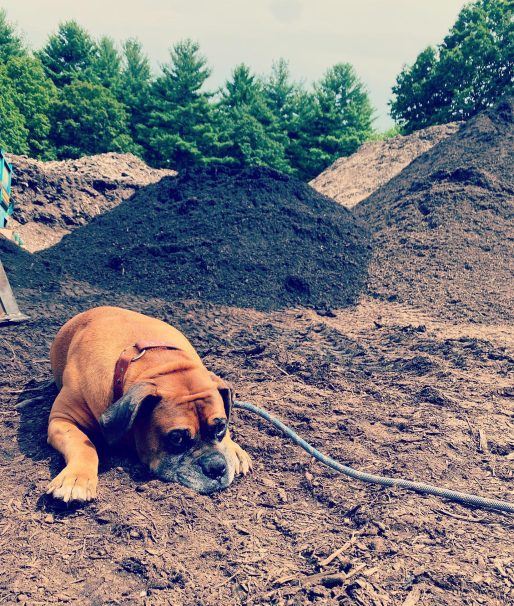
Thrive Farm’s Lawnsoil is made with native topsoil and compost, screened to 1/2 inch, and is also suitable for new beds when mixed with Spicy Compost.
Step 4: Prepare Clay Soil Without Creating a Bathtub
Planting fruit trees in clay requires patience. Clay soil can become a sealed basin if only the planting hole is improved.
Instead, improve drainage and structure across the whole planting area.
For clay-heavy sites:
- Avoid planting in a narrow, smooth-sided hole
- Roughen the sides of the hole so roots can move outward
- Build a broad mound if the area drains slowly
- Mix compost across the wider root zone
- Keep the tree slightly elevated rather than sunk low
- Mulch the surface, but keep mulch away from the trunk
Raised or mounded planting can help on compacted or poorly drained sites. UConn’s home garden guidance notes that mounded raised beds can work well on compacted sites, poorly drained areas, or heavy clay soils.
Step 5: Set the Tree at the Correct Height
Fruit trees are often grafted. That means the desired fruit variety is joined to a rootstock that controls size, vigor, and other growth traits.
The graft union should stay above the soil line. UConn notes that when planting tree fruits, the graft union should be 2 to 4 inches above ground.
Planting too deep can weaken the tree, encourage rooting above the graft, and increase trunk problems. Always check the nursery tag and visible graft area before backfilling.
Step 6: Backfill With a Balanced Soil Mix
Backfill should support roots without shocking them. Use the loosened native soil as the base, then blend with quality organic material.
Avoid adding strong fertilizer directly into the planting hole unless a soil test specifically recommends it. Young roots need contact with soil, moisture, oxygen, and balanced nutrients.
Backfill gently, water as the soil settles, and avoid stomping hard around the root zone. Firm the soil enough to remove large air pockets, but do not compact it.
Step 7: Mulch for Moisture, Weed Control, and Root Protection
After planting, mulch becomes one of the best tools for young orchard success.
A clean organic mulch layer helps:
- Reduce weed competition
- Protect soil moisture
- Moderate soil temperature
- Limit mower damage near trunks
- Feed soil gradually as it breaks down
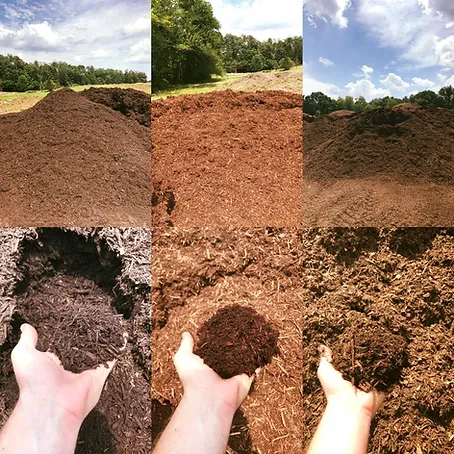
Thrive Farm’s Mulch Connecticut page notes that its natural mulch contains no dyes or chemicals and is installed at a 3-inch depth.
For fruit trees, keep mulch pulled several inches away from the trunk. Mulch volcanoes trap moisture against bark and can cause rot, pests, and disease problems.
Step 8: Water Deeply During Establishment
Newly planted fruit trees need steady moisture while roots establish. Shallow watering encourages weak surface roots. Deep watering helps moisture reach the active root zone.
A good pattern is to water deeply, then let the soil begin to dry slightly before watering again. Clay soils may need less frequent watering than sandy soils, but they still need careful monitoring.
During dry Connecticut weather, young trees may need supplemental water until they are well rooted.
What to Order Before Planting
A well-prepared orchard project often needs more than the tree itself. Before planting day, gather the materials needed to build a stronger root environment.
Recommended materials may include:
- Soil test kit or lab submission form
- Thrive Farm Topsoil or Lawnsoil
- Thrive Farm Spicy Compost
- Natural mulch from Thrive Farm’s mulch supply
- Watering tools
- Stakes, if needed
- Trunk guards for winter protection
- Pruning tools
- Measuring tape for tree spacing
For larger backyard food projects, Thrive Farm also offers products such as mulch, topsoil, Spicy Compost, 50/50 compost lawnsoil mix, and wood chips.
Best Timing for Orchard Prep in Connecticut
The best time to prepare soil is before tree planting season.
Fall is excellent for testing soil and adding amendments because materials have time to settle before spring planting. Early spring can also work, as long as the soil is not too wet to handle.
Avoid digging or tilling wet clay. Wet soil compacts easily, and compaction is one of the main problems orchard preparation is supposed to solve.
A smart timeline looks like this:
Fall: Choose the site, test the soil, remove grass, begin broad soil improvement.
Winter: Select tree varieties, plan spacing, order bare-root trees.
Early spring: Finish soil preparation when workable, plant trees, mulch, water.
Summer: Monitor water, weeds, pests, and mulch depth.
Fall after planting: Protect trunks, refresh mulch, and check tree stability before winter.
Local Orchard Preparation for Farmington Valley Homes
Backyard orchard planning in Connecticut has to account for local soil, drainage, and seasonal swings. A homeowner in Simsbury may have different soil than a homeowner in Avon, Canton, Granby, Farmington, West Hartford, or East Granby.
That is why orchard site preparation should never follow a one-size-fits-all recipe. Soil test results, drainage checks, and hands-on observation should guide the amendment plan.
At Thrive Farm, our products are built for local growing conditions. From premium soil products to spicy compost and natural mulch, we help Connecticut homeowners build a healthier foundation before planting.
Fruit Trees Need Prepared Soil, Not Hope
A fruit tree is an investment. The tree, delivery, planting time, pruning, watering, and years of care all depend on one foundation: soil.
Skipping soil prep may save an afternoon, but it can cost years of weak growth. A better orchard starts with a soil test, a drainage check, a wide planting zone, balanced organic matter, and mulch that protects the root system.
For homeowners planning an organic orchard in Connecticut, the message is simple. Prepare the site before planting, feed the soil first, and give young roots the best possible start.
Thrive Farm is ready to help with premium organic materials for stronger orchard site preparation, healthier soil, and better backyard growing results across Simsbury and the surrounding Farmington Valley.
FAQs
What is the best soil for planting fruit trees in Connecticut?
Fruit trees generally prefer deep, well-drained soil with moderate organic matter. UConn notes that tree fruits prefer a pH range of about 6.0 to 6.5, with good drainage being especially important.
Should soil be tested before planting fruit trees?
Yes. A soil test helps identify pH, nutrient levels, organic matter needs, and amendment recommendations before planting. Testing before planting is much easier than correcting soil problems after the tree is established.
Can fruit trees grow in clay soil?
Fruit trees can grow in heavier soils when drainage and compaction are managed properly. For clay soil, prepare a wider root zone, avoid planting too deep, and consider a broad mound if water drains slowly.
Should compost be added to the planting hole?
Compost is useful, but it should be blended into the broader planting zone instead of packed heavily into one small hole. This helps roots transition into the native soil and avoids creating a wet compost pocket.
How much mulch should go around a young fruit tree?
A mulch layer of about 2 to 3 inches is generally useful for moisture control and weed suppression. Keep mulch several inches away from the trunk to avoid bark rot and pest problems.