

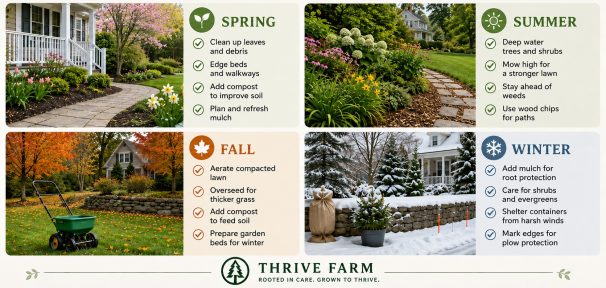
A strong yard in Connecticut does not happen by accident. Simsbury weather moves through wet springs, humid summers, leaf-heavy falls, and freeze-thaw winters, so each season needs a different plan. At Thrive Farm, our approach starts with better soil, clean mulch, compost, wood chips, and local materials that help lawns, garden beds, and landscapes stay healthier through every month of the year.
For homeowners searching for practical landscaping tips Connecticut properties can actually use, this checklist breaks the year into simple monthly tasks.
Simsbury homeowners should focus on spring cleanup, soil testing, compost, aeration, mulch refreshes, summer watering, fall overseeding, leaf management, and winter garden protection. UConn recommends soil testing before adding amendments, and Connecticut garden beds benefit from mulch or leaf cover before winter to reduce erosion and protect soil structure.
March and April: Wake Up the Yard Slowly
Early spring is not the time to rush heavy yard work. Wet Connecticut soil compacts easily, so wait until the ground is firm enough to walk on without leaving deep footprints. Start by removing winter debris, broken branches, and matted leaves from lawn areas.
Spring checklist:
- Rake lightly once soil is dry
- Edge garden beds
- Check low spots where water collects
- Add compost to vegetable beds
- Plan mulch delivery before weeds take over
For garden maintenance Simsbury homeowners can depend on, spring soil prep matters more than fast planting. UConn recommends soil testing before adding amendments, then adding compost or aged organic matter based on actual soil needs.
May: Mulch, Plant, and Build Soil Protection
May is the month to protect the work done in spring. Once beds are cleaned and plants are awake, apply mulch to reduce weeds, hold soil moisture, and stabilize soil temperature.
For trees and shrubs, keep mulch away from trunks and crowns. UConn guidance recommends spreading compost, topping with bark mulch, and keeping mulch an inch or two away from tree trunks.
May checklist:
- Install fresh mulch around shrubs and ornamental beds
- Keep mulch pulled back from stems
- Topdress weak lawn areas with lawnsoil
- Fill raised beds with a soil and compost blend
- Water new plantings deeply
June, July, and August: Manage Heat, Water, and Weeds
Summer landscaping in Connecticut is about moisture control. Deep watering is better than frequent shallow watering because it encourages deeper roots. Keep mower blades higher during heat waves so grass shades the soil and holds moisture longer.
Summer checklist:
- Water early in the morning
- Pull weeds before they set seed
- Refresh thin mulch areas
- Add wood chips to utility paths or back garden zones
- Watch for drought stress in new shrubs and young trees
Wood chips are useful for lower-visibility areas where weed reduction and soil coverage matter more than a finished ornamental look. We offer wood chips for garden paths, back beds, and practical landscape coverage.
September: Repair the Lawn Before Winter
Early fall is one of the best times for seasonal lawn care CT homeowners can schedule. Cooler air, warmer soil, and more consistent moisture help grass recover from summer stress. Penn State Extension notes that aeration is best done during cool weather, including early to mid-spring or late summer to early fall, because lawns recover faster during those periods.
September checklist:
- Aerate compacted lawn areas
- Overseed bare patches
- Topdress with screened lawnsoil
- Add compost where soil is weak
- Repair tire ruts or construction damage
October: Prep Garden Beds for Winter
Fall is the right time to prep garden for winter before the ground freezes. Remove diseased plant material, cut back annuals, and leave healthy organic matter where it can protect the soil. UConn fall garden guidance recommends covering soil with healthy leaves, straw, or mulch when cover crops or winter vegetables are not planted.
October checklist:
- Remove diseased garden debris
- Add compost to vegetable beds
- Cover bare soil with leaves, straw, or mulch
- Shred leaves before using them as mulch
- Stock firewood before cold weather demand rises
November and December: Protect Roots and Hardscape Edges
Once the ground begins to freeze, mulch helps protect fall-planted perennials and tender root systems. UConn recommends applying 3 to 5 inches of pine needles, straw, or chopped leaves around fall-planted perennials after the ground freezes but before snow.
Winter checklist:
- Mulch newly planted perennials after freeze
- Protect young shrubs from snow pile damage
- Move containers to sheltered areas
- Keep salt-heavy snow away from garden beds
- Mark driveway and bed edges before plowing
A Better Yard Starts With the Right Season
The best Simsbury landscapes are managed one season at a time. Spring builds the base, summer protects moisture, fall repairs soil, and winter safeguards roots. With local mulch, compost, lawnsoil, wood chips, and firewood from Thrive Farm, Connecticut homeowners can keep the yard working with the weather instead of fighting against it.
For better garden maintenance Simsbury properties need all year, start with healthy soil and season-ready materials from Thrive Farm.