
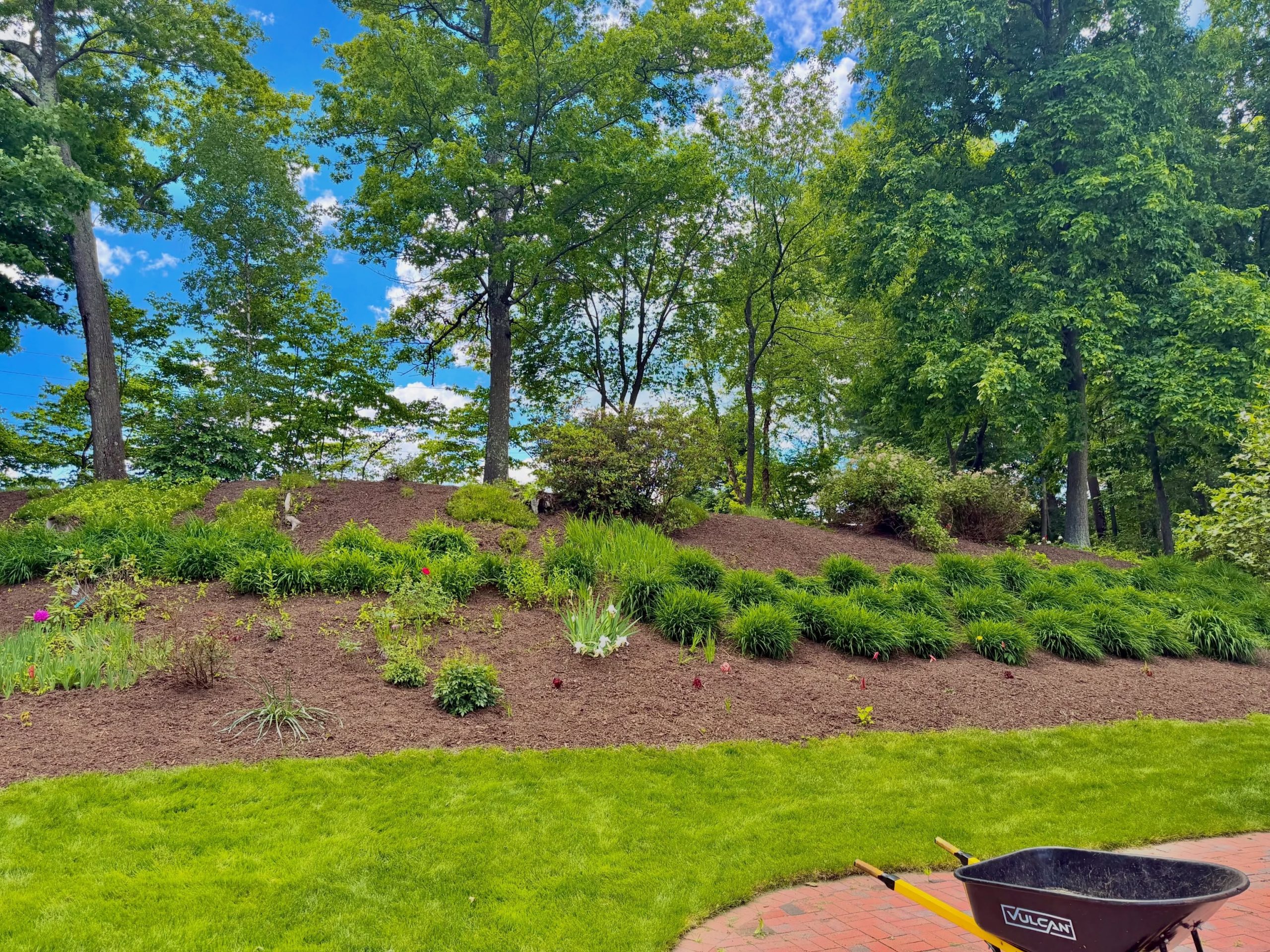
For small farms, homestead growers, and intensive vegetable beds across Simsbury, the Farmington Valley, and surrounding Connecticut towns, mulch is more than a surface covering. In a no-till system, it becomes the engine that protects soil structure, feeds biology, reduces watering stress, and cuts back the hours spent hand weeding between rows.
At Thrive Farm, our approach starts with one simple belief: healthier soil grows stronger crops. That is why the best mulch for vegetable garden beds should be chosen for biology first, then for appearance. In no till gardening methods, the goal is to keep soil covered, roots undisturbed, and organic matter moving downward through worms, fungi, and microbes.
Why Mulch Matters in No-Till Market Garden Soil Prep
Tilling may make a bed look clean for a short time, but repeated disturbance breaks apart soil aggregates, exposes moisture, and interrupts the fungal threads that help roots access water and nutrients. No-till market garden soil prep works differently. Instead of flipping the soil, we build from the top down with compost, mulch, and steady organic inputs.
A thick organic mulch layer helps:
- Keep root zones cooler during hot Connecticut summers
- Reduce evaporation during dry stretches
- Block sunlight from annual weed seeds
- Protect soil from crusting after heavy rain
- Feed earthworms, microbes, and mycorrhizal fungi as it breaks down
For growers managing lettuce, tomatoes, herbs, peppers, cucumbers, squash, cut flowers, or mixed vegetable rows, mulch becomes a labor-saving tool as much as a soil-building tool.
Clean Straw: Best for Annual Vegetable Rows
Clean, seed-free straw is one of the strongest choices for annual vegetable production. It is light, easy to spread, and works especially well around tomatoes, peppers, squash, cucumbers, strawberries, and wide-spaced crops.
Straw helps keep fruit clean, reduces soil splash during rain, and creates a loose blanket that allows water to move through. The key is sourcing clean straw rather than hay. Hay often carries seeds and can create more weeds than it prevents.
Best use: 3 to 5 inches around established transplants and between production rows.
Watch-outs: Straw can cool soil, so warm-season crops may benefit from waiting until the soil has warmed before heavy application.
Shredded Leaves: Best for Fungal Soil Building
Shredded leaves are one of the most biologically valuable mulches for no-till systems. They mimic the forest floor, break down into leaf mold, and create a fungal-friendly surface that supports long-term soil structure.
For growers focused on organic matter, worm activity, and water retention, shredded leaves are a smart fall and spring input. Whole leaves can mat, so shredding matters. A loose shredded texture lets water and oxygen pass through while still shading weed seeds.
Best use: 2 to 4 inches over composted beds, garlic beds, berry edges, and overwintered crop zones.
Watch-outs: Avoid leaves from black walnut or tree of heaven. Keep leaves loose, not packed.
Composted Wood Chips: Best for Paths, Perennials, and Long-Term Beds
When comparing wood chips vs straw mulch, the answer depends on crop placement. Straw is usually better inside fast annual vegetable rows. Composted wood chips are better for walking paths, perennial edges, berry rows, orchard lanes, and long-term garden borders.
Fresh wood chips can temporarily tie up nitrogen if mixed into the planting zone. Used as a surface mulch, especially in paths and perennial areas, they provide excellent weed reduction and slow organic matter release.
Thrive Farm offers locally sourced wood chips that work well for growers who need affordable path coverage, garden edge protection, and natural weed suppression. For vegetable production beds, pair chips with compost or topsoil products to keep the root zone fertile.
Best use: 3 to 6 inches in paths and non-direct-seeded areas.
Watch-outs: Keep thicker wood chip layers away from tender seed rows and avoid mixing large amounts into the soil.
Quick Comparison: Wood Chips vs Straw Mulch vs Leaves
| Mulch Type | Best Use | Main Benefit | Main Caution |
|---|---|---|---|
| Clean straw | Annual vegetable rows | Weed control and soil moisture | Must be seed-free |
| Shredded leaves | Soil biology and overwintered beds | Fungal activity and organic matter | Whole leaves may mat |
| Composted wood chips | Paths, perennials, borders | Long-lasting weed suppression | Not ideal for tiny direct-seeded rows |
How Thick Should Organic Mulch Be?
For most organic mulch installation, 2 to 4 inches is the working range. Market gardens often need a slightly thicker layer between rows because weed pressure and foot traffic are higher. Around transplants, keep mulch pulled slightly away from stems to prevent excess moisture against the crown.
For direct-seeded crops like carrots, lettuce, arugula, and radishes, seed into a clean compost or soil surface first. Once seedlings are established, tuck fine mulch around the rows. This keeps the seed zone open while still protecting the surrounding bed.
Need help with larger bed systems, mulch delivery, or seasonal spreading? Thrive Farm provides mulch installation and garden material support across Simsbury, Avon, Granby, Canton, Bloomfield, Farmington, West Hartford, Burlington, and nearby Connecticut service areas.
The Best No-Till Mulch Strategy
The best mulch for vegetable garden production is usually not one material. A high-performing no-till system uses layers by purpose:
- Compost or rich soil blend for the crop root zone
- Clean straw or shredded leaves around annual crops
- Composted wood chips in walking paths and border zones
- Seasonal top-ups as materials break down
Stronger Beds Start With Better Organic Matter
For Connecticut growers, the right mulch system can turn garden maintenance into soil building. Whether preparing a backyard production garden, expanding a homestead plot, or managing intensive market rows, Thrive Farm can help with mulch, wood chips, compost, lawnsoil, raised garden materials, and organic mulch installation.
Let Thrive Farm help with your mulch installation to build cleaner, healthier, lower-maintenance growing spaces.
FAQ
What is the best mulch for vegetable garden beds?
Clean straw is often best for annual vegetable rows, shredded leaves are best for fungal soil building, and composted wood chips are best for paths, borders, and perennial zones.
Can wood chips be used in a no-till vegetable garden?
Yes, but placement matters. Use wood chips on the surface, especially in paths and perennial areas. Avoid mixing fresh chips directly into annual vegetable beds.
Is straw or hay better for no-till gardening methods?
Straw is usually better because it has fewer weed seeds. Hay can introduce unwanted plants and may create more weeding work.
Does mulch help with market garden soil prep?
Yes. Mulch protects soil structure, reduces weeds, moderates temperature, holds moisture, and feeds soil organisms as it decomposes.