
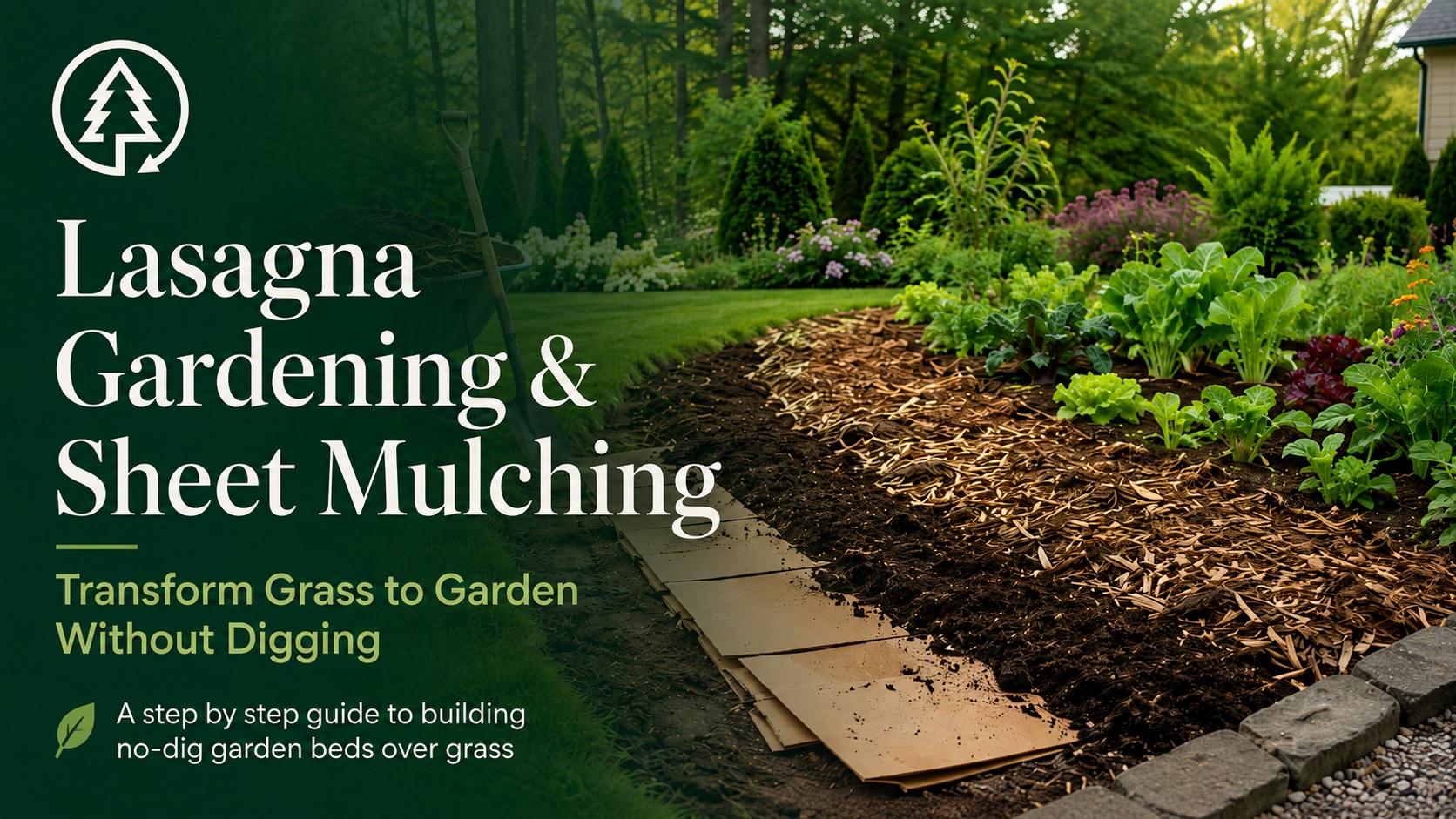
Sheet mulching grass, also called lasagna gardening, turns lawn into a new garden bed by layering plain cardboard over short-cut turf, wetting it down, then covering it with compost, aged mulch, leaves, and wood chips. The cardboard blocks light, the green nitrogen layer feeds soil biology, and the brown mulch layer smothers weeds while slowly building topsoil. Penn State Extension describes sheet mulching as a no-dig method that uses cardboard and mulch to turn lawn into garden beds while helping retain soil moisture and improve organic matter.
Why Sheet Mulching Grass Works
When a lawn becomes a garden bed, the goal is to stop grass from regrowing without tearing up the soil structure. Sheet mulching blocks sunlight, keeps the ground covered, and lets worms and microbes break down organic layers over time.
At Thrive Farm, we like this method for Simsbury, West Simsbury, Farmington Valley, Granby, Avon, Canton, Burlington, and nearby Connecticut yards because it builds better soil while reducing heavy digging.
A no-dig garden bed starting over turf works best when three layers work together:
- Barrier layer: Plain cardboard or thick newspaper blocks light.
- Green layer: Compost, grass clippings, manure-based compost, or garden scraps add nitrogen.
- Brown layer: Aged mulch, leaves, straw, or wood chips add carbon and surface protection.
Lasagna Gardening Step by Step
Step 1: Mark the New Bed
Use a hose, stakes, or marking paint to outline the future garden bed. Curved beds look natural around patios, walkways, trees, and lawn edges. Rectangular beds work well for vegetables and cut flowers.
Step 2: Mow the Grass Low
Cut the grass as short as possible. Leave the clippings in place as the first nitrogen-rich green layer. This helps feed decomposition under the cardboard.
Step 3: Add Compost
Spread 1 to 2 inches of Spicy Compost over the short-cut grass. Thrive Farm’s Spicy Compost is made from composted leaves and manure aged for two years, making it a strong fit for new garden bed building.
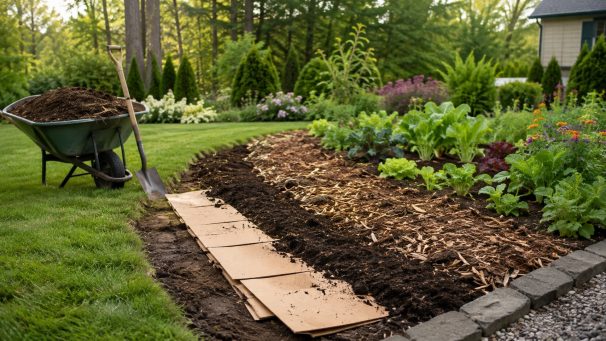
Step 4: Lay Cardboard
Use plain brown corrugated cardboard. Remove tape, staples, labels, glossy coatings, and plastic. Overlap edges so grass cannot find light gaps.
Oregon State Extension recommends overlapping paper edges so no light reaches below and soaking the paper or cardboard with water.
Step 5: Water the Barrier
Soak the cardboard until it lies flat against the ground. Moisture helps hold the barrier in place and starts the breakdown process.
Step 6: Add Heavy Brown Layers
Cover the cardboard with 4 to 6 inches of organic material. For a clean CT garden bed, use a mix of aged mulch, leaves, and bulk wood chips.
Thrive Farm ages mulch for two years, which helps create a darker material that works as a soil amendment instead of a raw surface-only cover.
Step 7: Top With Compost for Planting
For vegetables or annuals, finish with compost or 50/50 Compost Lawnsoil Mix in the planting rows. This gives seedlings a softer, nutrient-rich start while the deeper layers continue breaking down.
When Can You Plant?
For best results, build lasagna beds in fall and plant in spring. Penn State Extension notes that four to six months is usually enough resting time before planting.
Need to plant sooner? Cut small holes through the mulch and cardboard, add compost into each pocket, and plant larger transplants instead of direct seeding. For seeds, use a clean compost layer on top so roots can establish.
Best Materials to Order in Bulk
Sheet mulching usually takes more material than expected. Bagged products get expensive fast, especially for larger CT yards.
For no-dig garden bed starting, we recommend:
- Spicy Compost for the nitrogen layer
- Aged mulch for surface coverage
- Wood chips for pathways and deep brown layers
- 50/50 Compost Lawnsoil Mix for planting zones
- Raised garden beds when a framed layout is preferred
Thrive Farm supplies mulch, lawnsoil, compost, wood chips, and raised bed materials for local homeowners and garden projects.
Connecticut Tips for Better Results
Build beds before winter when possible. Fall moisture, leaf drop, and freeze-thaw cycles help settle layers naturally. Keep mulch pulled away from tree trunks, siding, and wooden structures. In wet areas, avoid creating beds where water already sits after storms.
For heavy clay, add compost generously and use wood chips for paths, not as the main planting surface. For vegetable beds, keep the top planting layer richer with compost and lawnsoil mix.
Build Soil Before You Plant
Lasagna gardening turns grass into garden space without heavy digging. Cardboard stops the lawn, compost feeds the soil, and mulch or wood chips protect the surface while nature does the work below.
Ready to turn turf into a productive garden bed? Visit Thrive Farm to order Spicy Compost, aged mulch, wood chips, and bulk soil-building materials for your next no-dig garden project.
FAQs
What is sheet mulching grass?
Sheet mulching grass is a no-dig method that uses cardboard, compost, mulch, and wood chips to smother turf and create a new garden bed.
What is lasagna gardening step by step?
Mow the grass low, add compost, lay wet cardboard, overlap edges, cover with 4 to 6 inches of mulch or organic material, let the bed rest, then plant into compost-rich pockets.
Can you start a no-dig garden bed over lawn?
Yes. A no-dig garden bed can start directly over lawn when cardboard blocks light and organic layers are added thick enough to smother grass.
Should wood chips go on top or inside the bed?
Wood chips work best as a top brown layer, pathway material, or long-term soil-building layer. For seed planting, use compost or lawnsoil mix on top.
Where can CT homeowners order bulk mulch and compost?
Thrive Farm supplies bulk mulch, Spicy Compost, wood chips, topsoil, and garden materials for Simsbury and surrounding Farmington Valley communities.