
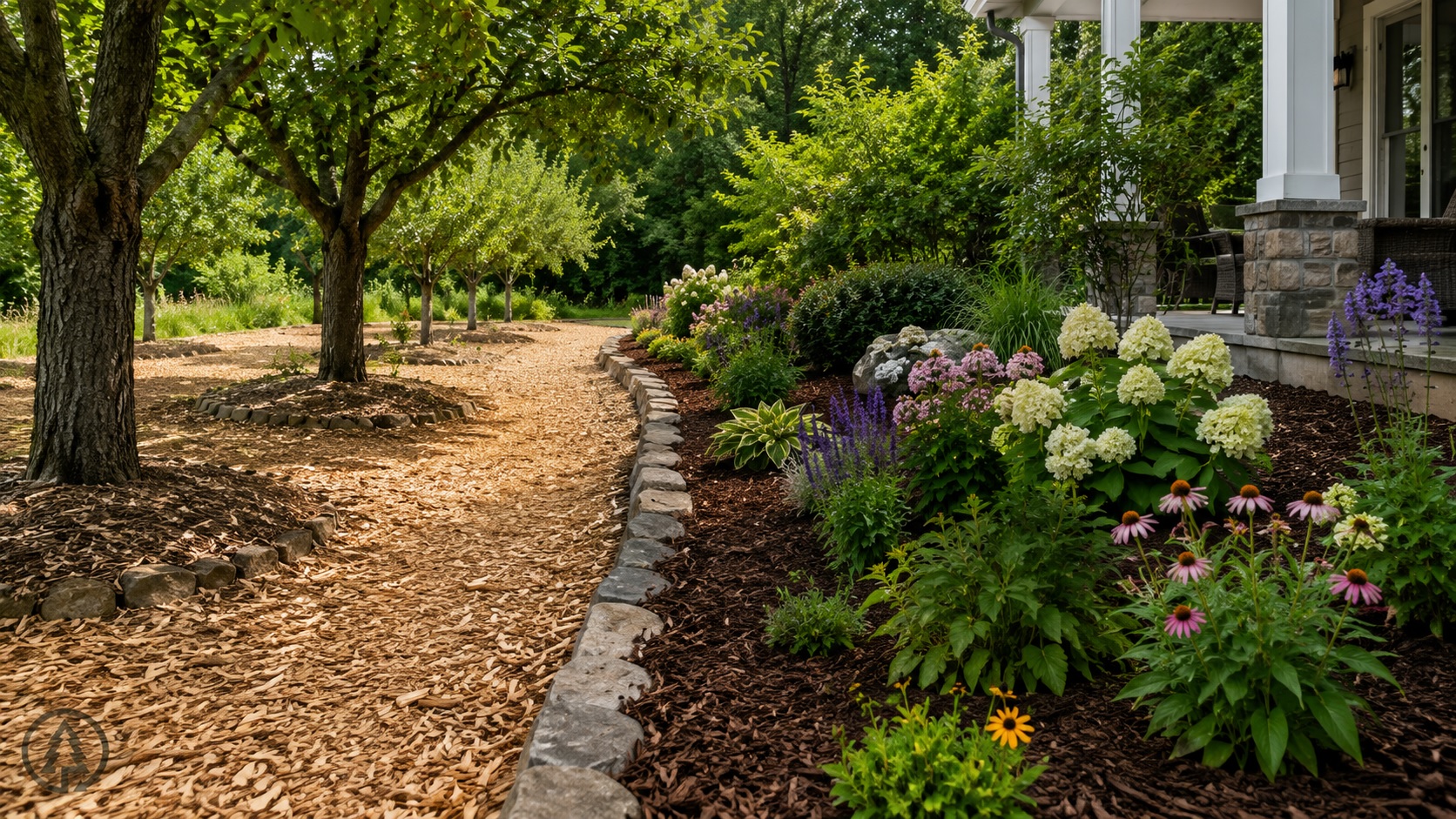
Wood chips work best around trees, shrubs, fruit trees, naturalized areas, and garden pathways because their coarse pieces create durable coverage and break down slowly. Shredded bark mulch is generally better for foundation beds, perennial gardens, and highly visible landscapes where a uniform, finished appearance matters. Wood chips can temporarily affect nitrogen near the soil surface as they decompose, but significant nitrogen competition is far more likely when fresh chips are mixed into the root zone rather than left on top as mulch.
When comparing wood chips vs mulch, there is no single material that fits every landscape project. Both help conserve soil moisture, reduce weed growth, moderate soil temperature, and protect exposed ground. The better choice depends on where the material will be used and what the area needs to accomplish.
At Thrive Farm, we supply natural wood chips, premium mulch, compost, and lawnsoil for properties throughout Simsbury and the Farmington Valley.
What Is the Difference Between Wood Chips and Bark Mulch?
Wood chips usually contain chipped branches, trunks, bark, twigs, and sometimes leafy material. Products commonly called arborist wood chips have varied particle sizes and a natural, rustic appearance.
Bark mulch is produced primarily from tree bark and is processed into a more consistent texture. Shredded bark settles into a smoother, more finished surface that complements ornamental planting beds.
Thrive Farm’s wood chips are available in varying sizes and are positioned as an economical option for weed reduction in areas where appearance is less important. Our natural mulch is produced from a mixture of native tree materials without dyes or added chemicals.
Do Wood Chips Steal Nitrogen From the Soil?
This concern is partly true, but it is often misunderstood.
Microorganisms need nitrogen while decomposing carbon-rich wood. However, the location of the chips makes a major difference. Coarse chips placed on the soil surface primarily affect the narrow zone where the wood meets the soil. When raw chips are tilled deeply into a planting bed, microbes and plant roots are more likely to compete for available nitrogen.
Oregon State University explains that large wood particles have less potential to tie up nitrogen than fine sawdust and that nitrogen competition is more likely when wood is mixed into soil rather than used as surface mulch.
For reliable results:
- Keep raw chips on top of the ground
- Do not till them into vegetable planting soil
- Apply compost beneath the chips when nutrients are needed
- Pull chips away from trunks and plant stems
Homeowners preparing nutrient-demanding beds can apply spicy compost first, then use chips as the protective surface layer.
Best Use Matrix: Wood Chips vs. Bark Mulch
| Landscape Area | Better Choice | Why It Works |
|---|---|---|
| Mature trees | Wood chips | Broad, durable coverage that protects the root zone |
| Fruit trees | Wood chips | Natural soil-building layer with fewer appearance concerns |
| Walking paths | Wood chips | Economical coverage that cushions traffic and suppresses weeds |
| Foundation beds | Bark mulch | Clean, uniform appearance near the home |
| Perennial gardens | Bark mulch | Easier to work around smaller ornamental plants |
| Naturalized areas | Wood chips | Rustic appearance and slower breakdown |
| Formal front yards | Bark mulch | Strong curb appeal and defined bed lines |
| Sheet mulching | Wood chips | Coarse, affordable material for thick surface coverage |
Wood Chips Around Trees
Coarse wood chips are an excellent choice for trees when they are applied correctly. They protect the soil from temperature swings, reduce mower damage, conserve moisture, and limit competition from turf and weeds.
Apply approximately 2 to 4 inches over a broad area. Keep the root flare visible and leave several inches of open space around the trunk. Piling either chips or bark against the trunk creates a mulch volcano that can trap moisture and contribute to bark and root problems.
A wide, shallow ring is better than a tall, narrow mound.
Wood Chip Pathways
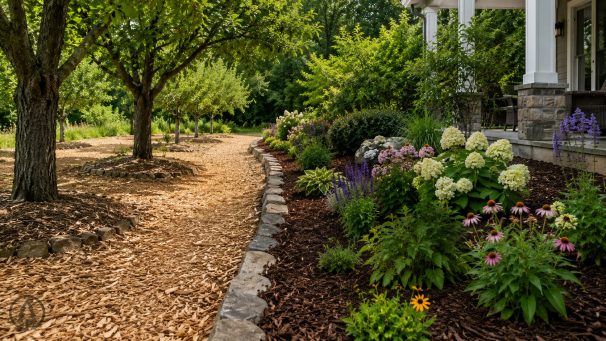
Wood chip pathways are one of the most practical uses for raw chips. They provide a softer walking surface, reduce mud, cover compacted ground, and create affordable access between garden beds.
For a new pathway:
- Remove large weeds and debris.
- Define the edges.
- Place overlapping cardboard where additional weed suppression is needed.
- Apply approximately 3 to 4 inches of chips.
- Add more material as the lower layer decomposes.
Avoid placing chips where they could wash onto sidewalks, driveways, or drainage systems during heavy Connecticut rain.
Sheet Mulching With Wood Chips
Sheet mulching with wood chips can convert lawn or weedy ground into a future planting area without immediately removing every piece of sod.
A basic system includes:
- Mowing the existing vegetation low
- Applying plain overlapping cardboard
- Wetting the cardboard thoroughly
- Adding compost when future planting is planned
- Covering the area with a thick layer of wood chips
The chips block light, protect the cardboard, and create a cleaner surface while the covered vegetation breaks down. Review our guide to sheet mulching a new garden bed before starting a larger project.
Can Fresh Wood Chips Be Used in Garden Beds?
Fresh wood chips in garden beds are best used around established trees, shrubs, berry plants, and perennial areas rather than mixed into annual vegetable soil.
Fresh chips may heat temporarily when piled deeply, so spread them rather than leaving them in a large mound beside plants. For vegetable gardens, keep chips in paths or place them over established soil without incorporating them into planting rows.
Use compost or a compost-rich soil blend inside the active root zone. Our spicy compost is aged for two years and screened for use in vegetable and ornamental beds.
When Bark Mulch Is the Better Choice
Choose shredded bark mulch when appearance is a top priority. Its consistent texture works well around:
- Front entrances
- Foundation shrubs
- Perennial flowers
- Patios and walkways
- Formal landscape borders
- Commercial properties
A layer of about 3 inches provides dependable coverage for many established beds. Thrive Farm also offers professional mulch installation and gardening services for homeowners who need bed cleanup, edging, planting, delivery, and installation.
Order Wood Chips or Bark Mulch in Simsbury, CT
Wood chips and bark mulch are not competitors. Each material solves a different landscape problem.
Choose wood chips for trees, pathways, fruit-growing areas, naturalized landscapes, and heavy sheet mulching. Choose bark mulch for perennial gardens and visible beds where a neat, refined finish matters.
Thrive Farm supplies bulk wood chips, mulch, compost, and soil products from our Simsbury location for homeowners and contractors throughout Avon, Canton, Granby, Farmington, Bloomfield, West Hartford, and nearby Connecticut communities.
Frequently Asked Questions
Are arborist wood chips safe around trees?
Yes, when used as surface mulch. Apply a broad layer approximately 2 to 4 inches deep and keep the material away from the trunk.
Are wood chips or bark mulch better for weed control?
Both can reduce annual weeds when applied at an adequate depth. Coarse wood chips are often more economical for large naturalized spaces, while shredded bark provides a more finished appearance.
Should landscape fabric go under wood chips?
Cardboard can be useful for temporary sheet mulching. Permanent landscape fabric may interfere with the natural movement of decomposed organic material into the soil and can become difficult to maintain as weeds establish above it.