
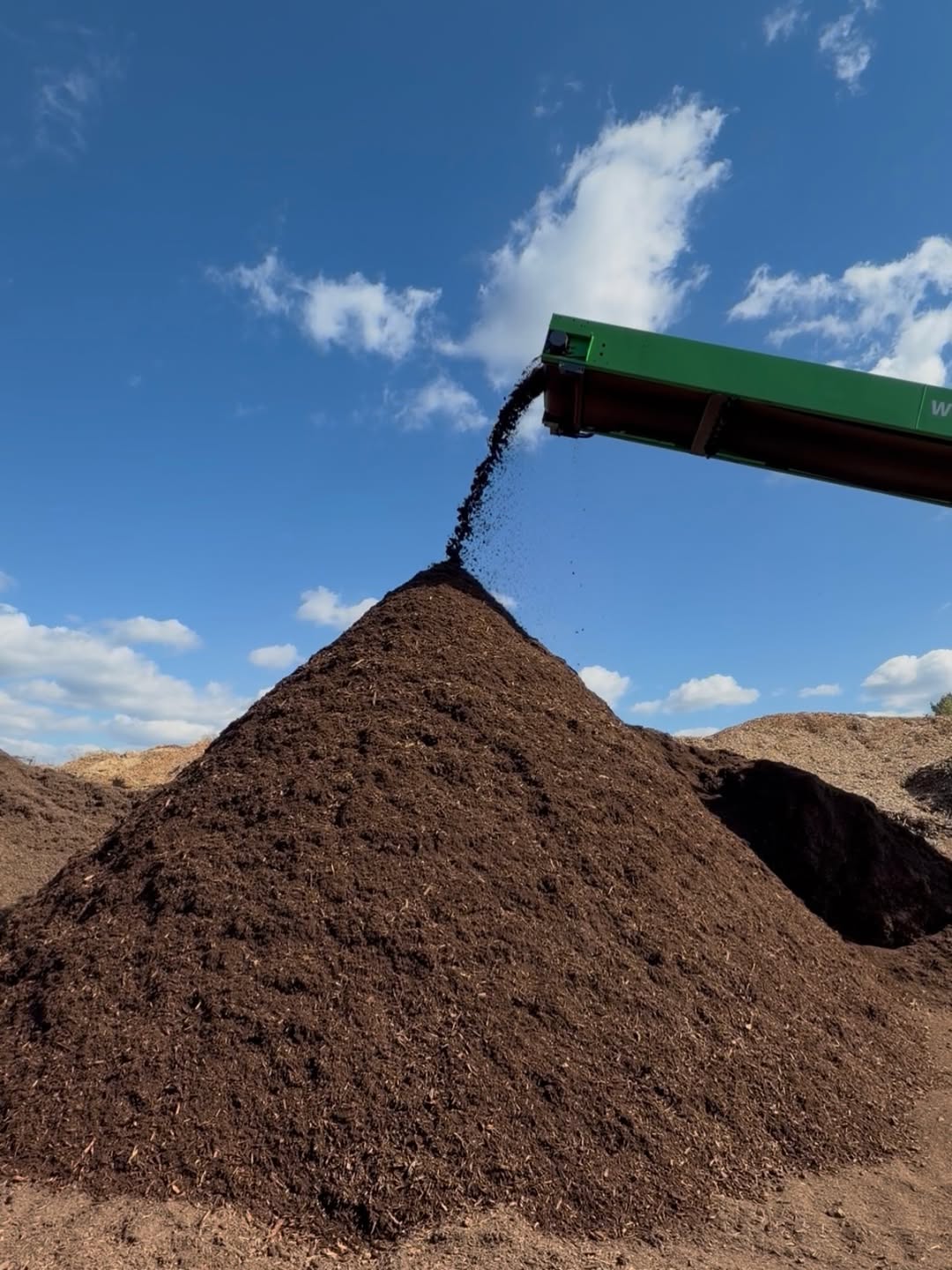
Mulch does more than make a landscape look finished. The right layer helps hold soil moisture, reduce weed pressure, protect roots from temperature swings, and improve soil structure as organic material breaks down. Texas A&M AgriLife Extension describes mulch as a soil surface covering that moderates temperature, deters weeds, protects against crusting, and can decompose into useful organic matter over time.
At Thrive Farm, our mulch installation service helps Connecticut homeowners skip the heavy lifting and get clean, even coverage across garden beds, tree rings, walkways, and curb-facing landscape areas. Our team serves Simsbury, Avon, Canton, Granby, Bloomfield, Farmington, West Hartford, Hartford, New Hartford, Burlington, and surrounding Farmington Valley communities.
Most landscape beds need a 2 to 3 inch mulch layer. A 3 inch layer gives strong weed suppression without burying plant crowns or suffocating roots. To calculate bulk mulch, use this formula: length in feet x width in feet x depth in inches divided by 324 = cubic yards. A 10 foot by 10 foot bed at 3 inches deep needs about 1 cubic yard. Since one cubic yard equals 27 cubic feet, that same yard equals about 14 two-cubic-foot bags.
How Much Mulch Do Homeowners Need?
Start with square footage. Measure the length and width of each bed, then multiply them together. Add all bed areas together before calculating depth.
Simple formula:
Square feet x desired depth in inches / 324 = cubic yards of mulch
| Landscape Area | Depth | Approximate Mulch Needed |
|---|---|---|
| 100 sq. ft. | 2 inches | 0.62 cubic yards |
| 100 sq. ft. | 3 inches | 0.93 cubic yards |
| 250 sq. ft. | 3 inches | 2.31 cubic yards |
| 500 sq. ft. | 3 inches | 4.63 cubic yards |
| 1,000 sq. ft. | 3 inches | 9.26 cubic yards |
For most homes, mulch needs increase quickly once foundation beds, mailbox beds, tree rings, and backyard planting areas are included. That is where bulk mulch from Thrive Farm becomes more practical than loading bag after bag into a car. Thrive Farm offers mulch, topsoil, compost, wood chips, firewood, and related earth products from its Simsbury, CT location.
Bulk Mulch vs Bagged Mulch
The real question is not just price per bag. It is time, waste, transport, and finished quality.
| Option | Best For | Pros | Drawbacks |
| Bagged mulch | Small touch-ups under 5 to 10 bags | Easy to store, simple for tiny beds | More plastic packaging, more loading, higher effort per cubic yard |
| Bulk mulch delivery | Full landscape refreshes, seasonal installs, larger properties | Faster unloading, less packaging waste, easier volume pricing, better for large beds | Needs driveway or drop area |
| Professional installation | Busy homeowners, larger yards, commercial curb appeal | Clean edges, even depth, proper tree spacing, less labor | Requires scheduling |
One cubic yard equals 27 cubic feet. If a common bag holds 2 cubic feet, one yard equals about 13.5 bags, rounded up to 14 bags. A homeowner comparing 30 bags is really looking at more than 2 cubic yards of material, plus repeated lifting, transporting, opening, spreading, and cleanup.
Bulk also reduces packaging. The EPA recommends reducing waste at the source and choosing products with minimal packaging when possible.
Mulch Installation Tips That Protect Plant Health
1. Use the right depth
For most planting beds, 2 to 3 inches is the sweet spot. Illinois Extension recommends 2 to 4 inches in well-drained sites, with composted materials at 2 to 3 inches and coarser mulches at 3 to 4 inches.
Too thin, and weeds break through quickly. Too thick, and water and oxygen struggle to reach the soil. Overmulching can create matted layers, trap excess moisture, and stress roots.
2. Never build mulch volcanoes
A mulch volcano happens when mulch is piled against a tree trunk like a cone. It may look neat for a few weeks, but it traps moisture against bark and can invite decay, insects, disease, root girdling, and trunk damage. Illinois Extension advises keeping mulch near the tree but not touching the trunk, with mulch kept at least 4 inches away from the trunk.
The better shape is a wide donut, not a volcano. Keep the trunk flare visible, then spread mulch outward in a broad, even ring.
3. Clean the bed first
Before new mulch goes down, remove weeds, sticks, leaf mats, old landscape debris, and loose stones. Thrive Farm’s mulch installation guidance recommends preparing the bed first, clearing debris, checking drainage, and pulling mulch back from stems and trunks to prevent damage.
4. Edge before spreading
A crisp bed edge keeps mulch from spilling into the lawn and gives the finished property a professional look. Edging also creates a clear boundary for future mowing and trimming.
5. Do not bury plant crowns
Perennials, shrubs, and young trees need air movement around the base. Keep mulch pulled back slightly from stems, crowns, and woody trunks. The goal is soil coverage, not plant burial.
When Professional Mulch Installation Makes Sense
Professional installation is often worth it when a property needs more than 2 yards, has several disconnected bed areas, needs edging, or has mature trees that require correct trunk spacing. Thrive Farm’s crew handles cleanup, delivery, spreading, and finishing across its Connecticut service area, which helps homeowners avoid a full weekend of carrying heavy bags.
Our mulch installation and gardening service also pairs well with lawnsoil delivery, spicy compost, wood chips, and raised garden bed installation. Thrive Farm produces and retails earth products, giving our team direct control over material quality and delivery support.
Buy the Right Amount, Spread It the Right Way
The best mulch project starts with a simple calculation, then finishes with proper depth and clean installation. For small touch-ups, bagged mulch can work. For full-property refreshes, bulk mulch vs bagged mulch is usually an easy choice because bulk saves time, reduces plastic packaging, and makes larger coverage easier to manage.
For homeowners across Simsbury and the Farmington Valley, Thrive Farm can deliver premium mulch, install it correctly, and leave the landscape looking clean, healthy, and ready for the season.