
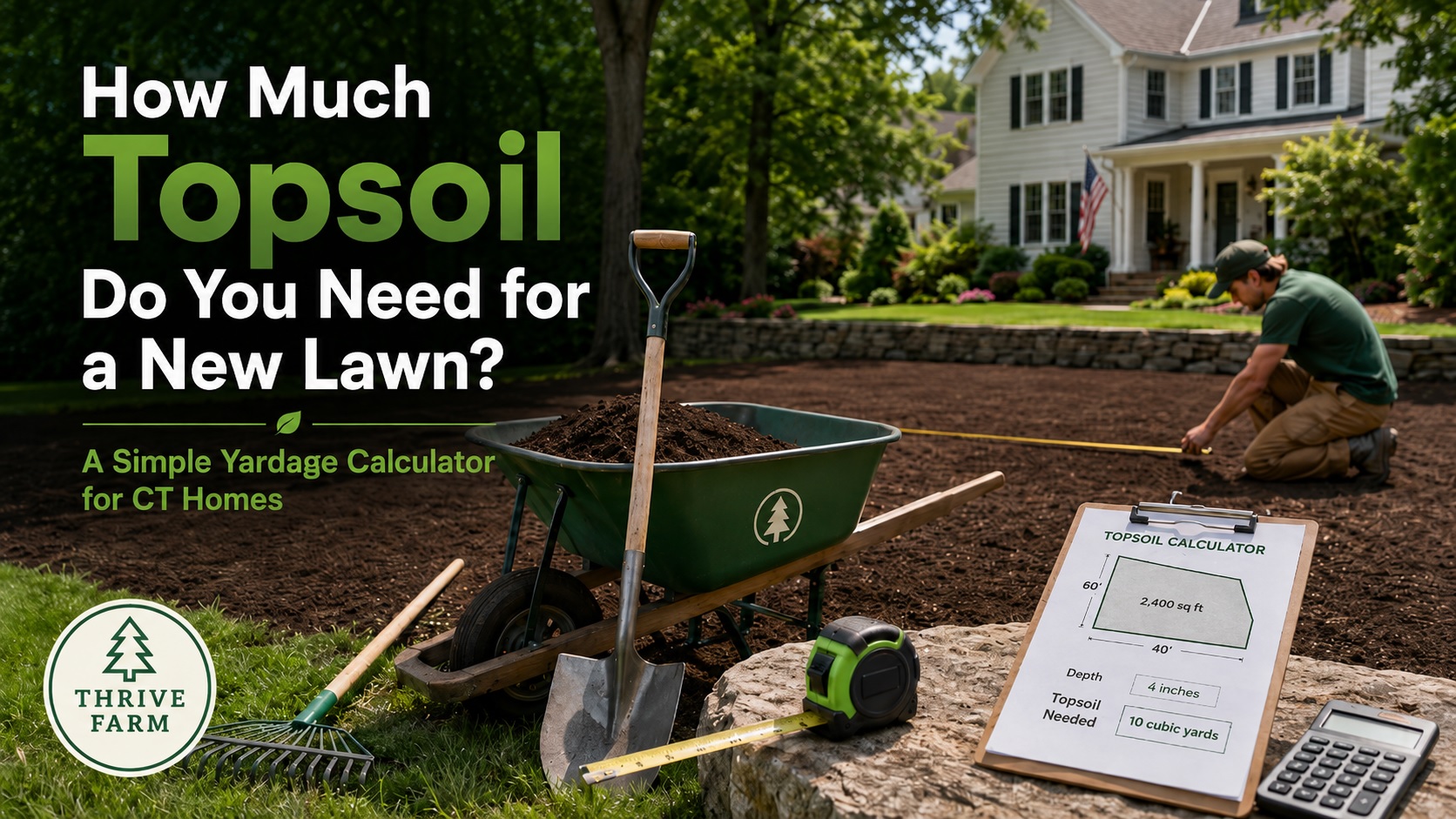
Starting a new lawn takes more than seed and water. The base matters most. When the ground has compacted clay, rocky fill, thin soil, or bare patches from construction, fresh lawn soil gives grass roots the clean, nutrient-rich layer needed to grow strong.
At Thrive Farm, we help Connecticut homeowners plan bulk material orders with less guesswork. One of the most common questions we hear is: how much topsoil do you need for a new lawn?
The answer depends on square footage and soil depth. Use this simple topsoil calculator guide to estimate yardage before ordering lawnsoil from Thrive Farm.
Quick Topsoil Calculator Formula
Use this formula:
Length x Width x Depth ÷ 324 = Cubic Yards Needed
Depth should be measured in inches.
Example:
50 ft x 40 ft x 4 inches ÷ 324 = 24.69 cubic yards
Round up to 25 cubic yards so there is enough lawn soil for grading, settling, and low spots.
How Much Topsoil Do You Need for a New Lawn?
For most new lawns in Connecticut, a 4 to 6 inch layer of quality topsoil or lawn soil works best.
Use these general depth guidelines:
2 inches
Best for light topdressing, bare patches, and lawn repair.
3 inches
Good for improving thin existing soil before overseeding.
4 inches
A strong standard depth for new lawn areas with decent subsoil.
6 inches
Best for poor soil, heavy clay, rocky ground, or new construction areas.
When homeowners search “how much topsoil do I need,” the safest answer is to measure the area, choose the right depth, then round up slightly. Extra material helps smooth low areas and create a more even seedbed.
Topsoil Yardage Chart for CT Lawns
Here is a simple reference chart:
| Lawn Area | 2 Inch Depth | 4 Inch Depth | 6 Inch Depth |
|---|---|---|---|
| 500 sq ft | 3.1 yd³ | 6.2 yd³ | 9.3 yd³ |
| 1,000 sq ft | 6.2 yd³ | 12.4 yd³ | 18.5 yd³ |
| 2,000 sq ft | 12.4 yd³ | 24.7 yd³ | 37 yd³ |
| 5,000 sq ft | 30.9 yd³ | 61.7 yd³ | 92.6 yd³ |
| 10,000 sq ft | 61.7 yd³ | 123.5 yd³ | 185.2 yd³ |
For a brand-new lawn, 4 inches is often a practical starting point. For compacted Connecticut soil, new home sites, or areas where the old lawn was removed, 6 inches may give roots a better start.
Why Lawn Soil Matters for New Grass
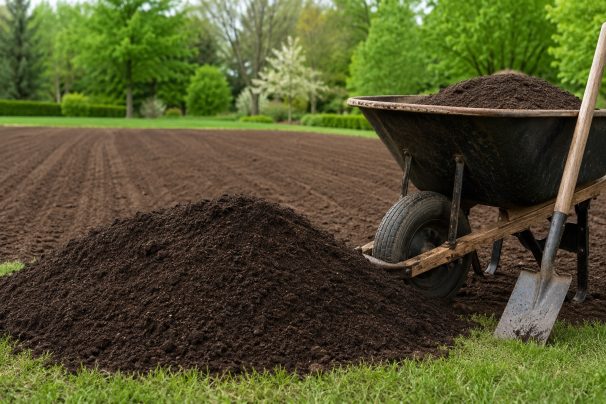
A new lawn needs loose, workable soil that can hold moisture without staying soggy. Poor fill dirt often becomes hard after rain, which makes it hard for seed roots to spread.
Quality lawn soil helps with:
- Better seed-to-soil contact
- Stronger root growth
- Smoother grading
- Better drainage
- Better moisture retention
- Healthier long-term turf
That is why ordering the right amount of lawnsoil matters before seeding. Too little soil can leave shallow roots, uneven growth, and bare spots.
How to Measure Your Lawn Area
Start by breaking the yard into simple shapes.
For a rectangle or square:
Length x Width = Square Feet
For odd-shaped areas, divide the lawn into smaller sections. Measure each section, calculate square footage, then add the totals together.
Example:
Front lawn: 40 ft x 30 ft = 1,200 sq ft
Side lawn: 20 ft x 25 ft = 500 sq ft
Total area: 1,700 sq ft
For a 4 inch lawn soil depth:
1,700 x 4 ÷ 324 = 20.98 cubic yards
Round up to 21 or 22 cubic yards.
Should You Round Up When Ordering Topsoil?
Yes. We recommend rounding up slightly because lawn soil settles after spreading, raking, watering, and grading. Small dips in the yard may also need extra material.
Rounding up helps avoid running short before the job is complete. It is easier to feather extra soil into low spots than to stop the project and schedule another delivery.
Topsoil Near Me in Connecticut
For homeowners searching topsoil near me, local delivery makes the project much easier. Bulk material is heavy, and hauling small bagged soil from a store can become costly and time-consuming fast.
Thrive Farm supplies lawnsoil, topsoil, mulch, wood chips, compost, and other landscape materials for homes throughout the Simsbury, West Simsbury, Farmington Valley, and surrounding Connecticut areas.
For larger yard projects, delivery can save time, reduce mess, and help keep the project moving.
New Lawn Prep Tips Before Spreading Topsoil
Before spreading new lawn soil, clear the area of rocks, roots, sticks, old debris, and thick weeds. Grade the base so water drains away from the home, patios, walkways, and driveway edges.
A good prep process looks like this:
- Remove debris and old grass.
- Loosen compacted soil.
- Spread lawn soil evenly.
- Rake smooth.
- Lightly compact or roll the surface.
- Seed the lawn.
- Water gently and consistently.
For garden beds or larger landscape upgrades, Thrive Farm also offers landscape services using mulch installation, lawnsoil, and compost.
Best Depth for New Grass Seed
For new grass seed, aim for 4 to 6 inches of workable lawn soil. This gives roots enough room to grow before hitting compacted subsoil.
A shallow 1 to 2 inch layer may work for patching, but it is usually not enough for a full new lawn. Grass may germinate at first, then struggle when heat, drought, or foot traffic increases.
For CT homes with rocky or clay-heavy soil, a deeper layer helps build a better growing base.
How Much Topsoil Do You Need?
Use this simple formula:
Square Feet x Depth in Inches ÷ 324 = Cubic Yards
For most new lawns, plan for 4 to 6 inches of lawn soil. Round up slightly to cover settling, grading, and low spots.
When a Connecticut lawn needs a clean start, Thrive Farm lawnsoil gives the ground a better foundation for seed, roots, and long-term turf health.
Ready to plan a new lawn? Visit Thrive Farm to order lawnsoil, request delivery, or get help choosing the right material for your yard.
Topsoil Yardage Calculator FAQs
How much topsoil do you need for 1,000 square feet?
For 1,000 square feet, you need about 12.4 cubic yards at 4 inches deep or about 18.5 cubic yards at 6 inches deep.
How many inches of topsoil are needed for new grass?
Most new lawns need 4 to 6 inches of quality topsoil or lawn soil. Thin patch repairs may only need 2 inches.
What is the easiest topsoil calculator formula?
Use square feet x depth in inches ÷ 324. This gives the amount needed in cubic yards.
Is lawn soil better than regular fill dirt?
Yes. Lawn soil is better for grass because it is made for root growth, grading, moisture balance, and seed establishment. Fill dirt is usually used for bulk leveling and may not support healthy turf as well.
Where can CT homeowners order topsoil near me?
Connecticut homeowners can order lawnsoil from Thrive Farm for new lawns, grading, garden areas, and landscape projects.