
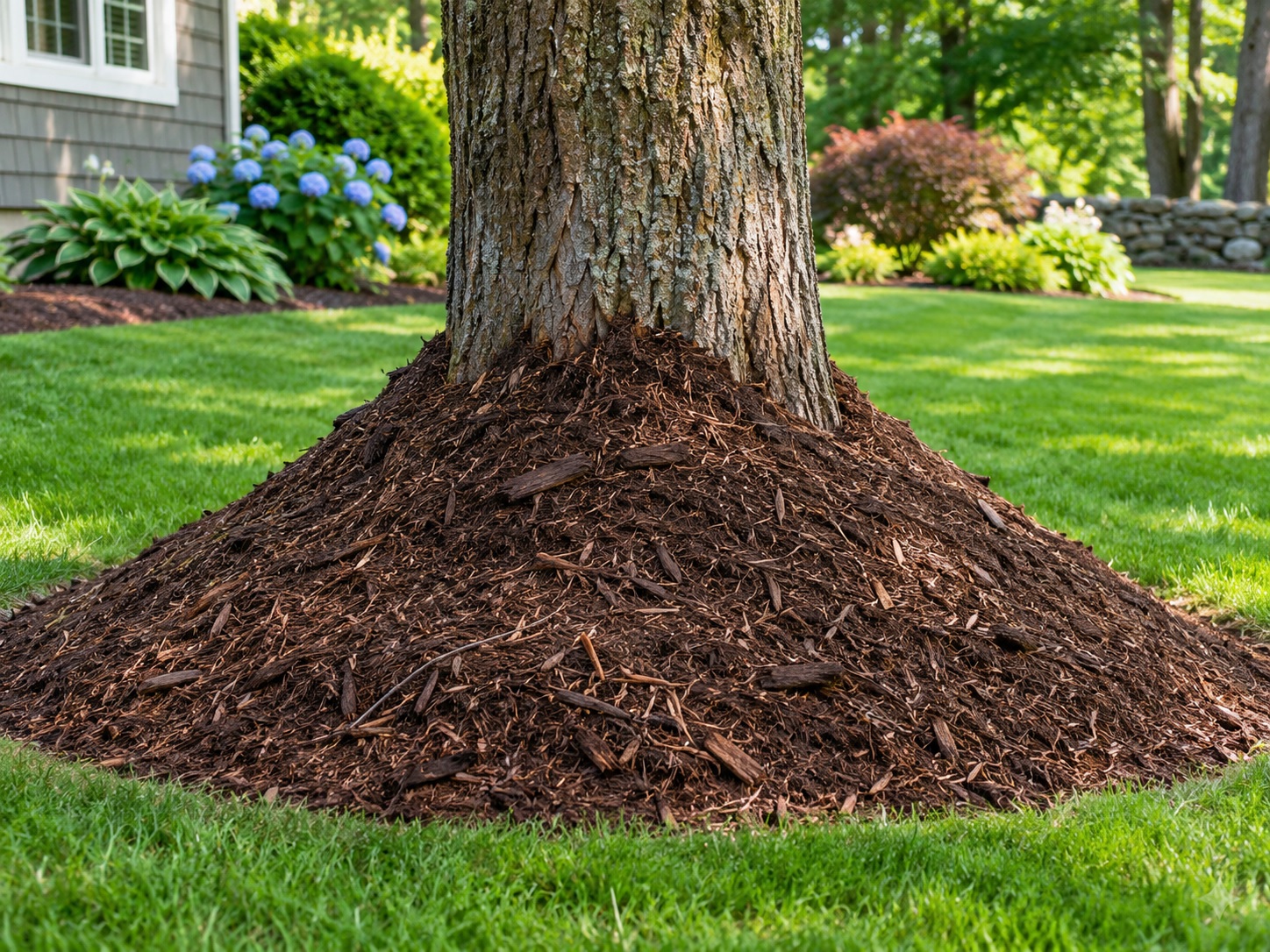
The proper way to mulch around trees is to spread a flat, donut-shaped layer of organic mulch approximately 2 to 3 inches deep, keeping it several inches away from the trunk and leaving the root flare visible. Avoid creating a mulch volcano, which occurs when mulch is piled high against the tree trunk. Excessive mulch can trap moisture, damage bark, restrict oxygen movement, and contribute to root problems. Proper tree mulching helps conserve soil moisture, reduce weeds, and protect roots during Connecticut’s changing seasons.
What Is a Mulch Volcano?
Mulching is one of the easiest ways to improve tree health, but applying too much mulch can cause serious problems.
At Thrive Farm, we help homeowners throughout Simsbury and the Farmington Valley select quality landscaping materials for healthier trees, gardens, and outdoor spaces.
One common landscaping mistake is piling mulch directly against a tree trunk.
This creates a cone-shaped mound known as a mulch volcano.
Although it may appear neat and professionally landscaped, the excessive material can gradually damage the tree.
We recommend spreading mulch outward across the root zone rather than building it upward against the trunk.
Why Are Mulch Volcanoes Bad for Trees?
1. Trapped Moisture Can Damage Tree Bark
Tree trunks are not designed to remain constantly buried beneath damp organic material.
When mulch touches the bark, it can retain moisture and create favorable conditions for decay.
Over time, damaged bark may become more vulnerable to disease and insects.
2. Excess Mulch Restricts Oxygen
Tree roots need oxygen to function properly.
Thick mulch layers can interfere with air movement and keep the underlying soil excessively wet, especially where drainage is already poor.
This can reduce healthy root development.
3. Mulch Volcanoes Can Encourage Girdling Roots
When mulch is piled too deeply, roots may begin growing into the accumulated material.
Some roots can eventually circle the trunk instead of spreading outward.
These are called girdling roots, and they may restrict the movement of water and nutrients as the tree grows.
4. Buried Root Flares Can Hide Problems
The root flare is the widened section at the bottom of the trunk where major roots begin extending into the soil.
Healthy trees should generally have this transition visible.
Covering it with excessive mulch can hide developing root and trunk problems.
5. Thick Mulch Can Shelter Rodents
Deep mulch around tree trunks can provide cover for rodents.
Some animals may chew bark near the base, potentially damaging young trees.
According to Penn State Extension’s Mulching Landscape Trees Guide, excessive mulch can contribute to root suffocation, bark deterioration, girdling roots, and long-term tree decline.
How to Mulch Around Trees Correctly
Proper tree mulching requires only a few straightforward steps.
Step 1: Remove Grass and Weeds
Clear grass, weeds, and debris from the area surrounding the tree.
This reduces competition for water and nutrients.
Avoid damaging surface roots or scraping bark while preparing the area.
Step 2: Locate the Root Flare
Identify where the trunk widens and the main roots begin.
This section should remain visible.
If the root flare is buried beneath compacted soil rather than loose mulch, we recommend consulting a qualified arborist before attempting extensive excavation.
Step 3: Spread Mulch 2 to 3 Inches Deep
Apply an even layer of organic mulch across the prepared soil.
For most established landscape trees, approximately 2 to 3 inches provides moisture retention and weed suppression without excessive buildup.
Finer, densely textured materials may require shallower applications.
Step 4: Keep Mulch Away From the Trunk
Leave a clear opening around the trunk.
As a practical guideline, we recommend:
- Young trees: Approximately 3 to 5 inches of clearance
- Mature trees: Approximately 8 to 10 inches of clearance
- All trees: Keep the root flare exposed
The finished mulch ring should resemble a flat donut rather than a volcano.
Step 5: Extend Mulch Outward
Spread mulch across as much of the root zone as practical, ideally toward the tree’s drip line.
The drip line represents the area beneath the outer edge of the canopy.
Wider mulch coverage helps protect shallow roots and reduces competition from surrounding grass.
Proper Tree Mulching vs. Mulch Volcano
| Proper Mulching | Mulch Volcano |
|---|---|
| Flat, even mulch layer | Tall, cone-shaped mound |
| Generally 2 to 3 inches deep | Often excessively deep |
| Root flare remains visible | Root flare becomes buried |
| Mulch stays off trunk | Mulch directly contacts bark |
| Supports healthy root conditions | Can contribute to root and bark damage |
What Is the Best Mulch for Trees in Connecticut?
Organic materials such as aged hardwood mulch, bark mulch, and wood chips work well around many landscape trees.
They provide several benefits:
- Moisture conservation during dry summers
- Soil temperature moderation
- Reduced weed competition
- Protection from lawn equipment
- Gradual improvement of soil organic matter
At Thrive Farm, our aged mulch is produced with natural materials and allowed to mature for approximately two years.
Our premium mulch products in Simsbury, CT provide an attractive option for tree rings and landscaped beds.
For additional material comparisons, read our related article, Wood Chips vs. Bark Mulch: Best Choice for Soil Health.
How to Fix an Existing Mulch Volcano
If your tree already has excessive mulch, the problem can often be corrected without replacing all the material.
We recommend:
- Carefully pulling mulch away from the trunk.
- Exposing the root flare without damaging bark or roots.
- Removing excessive mulch where necessary.
- Redistributing suitable material across a wider area.
- Maintaining a shallow, even layer.
Avoid cutting exposed roots or removing large quantities of soil without professional guidance.
When Should You Mulch Trees in Connecticut?
Spring and fall are practical times for tree mulching.
Spring applications help conserve soil moisture before summer temperatures rise.
Fall applications help moderate soil temperatures as Connecticut enters colder weather.
However, mulch should be replenished based on its existing depth rather than automatically adding another thick layer every year.
Frequently Asked Questions
How close should mulch be to a tree trunk?
Keep mulch several inches away from the trunk, with more clearance around larger mature trees. The root flare should remain exposed.
How deep should mulch be around trees?
Approximately 2 to 3 inches is suitable for many landscape trees. Finer mulch and poorly drained soils may require a shallower layer.
Can too much mulch kill a tree?
Yes. Excessive mulch can contribute to bark decay, restricted oxygen, root problems, and gradual decline.
Should you remove old mulch before adding new mulch?
Not necessarily. If the existing material remains suitable, replenish only enough to maintain the recommended depth.
Protect Your Trees With Quality Mulch From Thrive Farm
Learning how to mulch around trees correctly helps protect roots, conserve moisture, and prevent unnecessary damage.
At Thrive Farm, we supply quality aged mulch, wood chips, compost, and bulk landscaping materials throughout Simsbury, Avon, Canton, Granby, Farmington, and surrounding Connecticut communities.
Whether you’re correcting mulch volcanoes or refreshing landscape beds, we can help you select the right materials and estimate the quantity needed.