
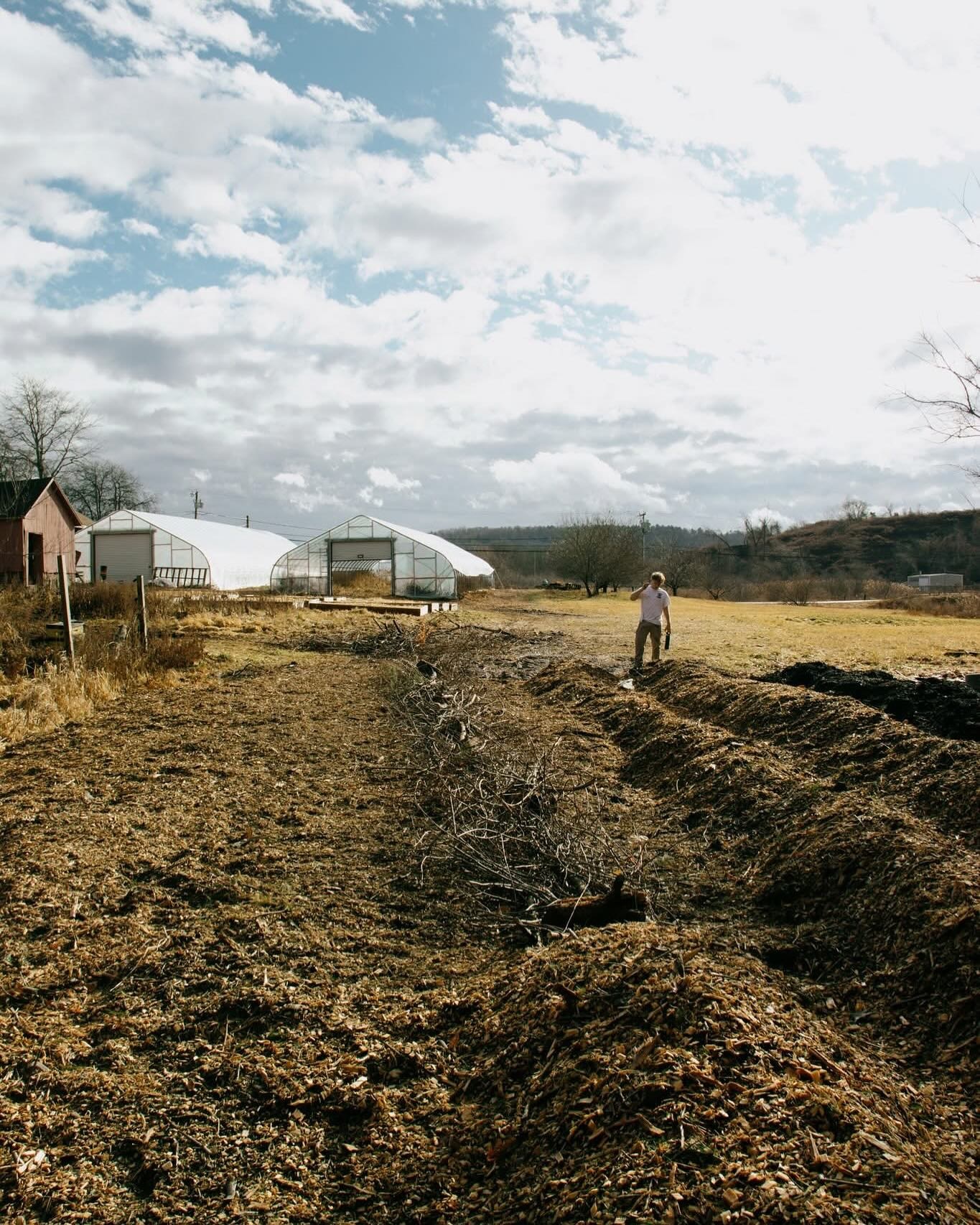
When homeowners compare wood chips vs mulch, the decision often starts with appearance. Bark mulch looks clean, dark, and finished. Wood chips can look more natural, rustic, or uneven depending on the source.
But if your goal is soil building, the better question is not, “Which mulch looks best today?” The better question is, “Which mulch helps my soil become healthier over time?”
For trees, shrubs, perennial beds, pathways, and naturalized garden areas, wood chips often do more for long-term soil health than bark mulch. They hold moisture, break down slowly, create habitat for beneficial organisms, and encourage the fungal networks that woody plants depend on.
At Thrive Farm, we help Simsbury and Farmington Valley homeowners choose the right earth products for the job, including wood chips, mulch, Spicy Compost, and topsoil/lawnsoil. If your landscape goal is healthier soil, wood chips deserve a closer look.
Are Wood Chips Better Than Bark Mulch?
Wood chips are often better for building soil health, especially around trees, shrubs, native plantings, and perennial landscapes. Bark mulch is useful for weed control and a polished look, but wood chips usually create a better long-term environment for moisture retention, fungal activity, decomposition, and soil structure.
Bark mulch can contain natural waxy compounds that slow water movement. Wood chips act more like a sponge. They absorb moisture, release it gradually, and create a living layer where fungi, microbes, worms, and organic matter work together.
What Is Bark Mulch?
Bark mulch is made mostly from the outer bark of trees. It is popular because it gives landscape beds a uniform, finished appearance. It is commonly used around foundation plantings, ornamental beds, walkways, and high-visibility areas.
Bark mulch is good for:
- Decorative landscape beds
- Weed suppression
- Cleaner curb appeal
- Slower breakdown
- A finished, uniform look
Bark mulch is less ideal when:
- Your main goal is deep soil building
- You want fast biological activity
- You need better moisture movement into dry soil
- You are trying to build fungal dominated soil for trees and shrubs
Bark is naturally designed to protect trees from losing moisture. That same protective quality can make bark less absorbent than wood chips. In some conditions, bark mulch can shed water instead of soaking it in.
What Are Wood Chips?
Wood chips are made from chipped wood and may include a mix of inner wood, bark, twigs, leaves, and small branches. This mixed texture is one reason wood chips are so valuable for soil health.
Instead of creating one uniform layer, wood chips create a diverse organic surface. Some pieces break down quickly. Others decompose slowly. This gradual breakdown helps feed soil life over time.
Wood chips are a practical option for garden areas, natural pathways, weed reduction, and landscapes where function matters as much as appearance.
Wood chips are good for:
- Soil building
- Moisture retention
- Tree and shrub beds
- Naturalized garden areas
- Pathways
- Weed suppression
- Long-term organic matter
- Fungal dominated soil
Why Wood Chips Build Better Soil
Healthy soil is not just dirt. It is a living system filled with fungi, bacteria, insects, worms, roots, air pockets, moisture, and decomposing organic matter.
Wood chips support this system because they break down slowly and create a steady food source for soil organisms.
1. Wood Chips Hold Moisture Like a Sponge
One of the biggest advantages of wood chips is water behavior.
Bark can repel water in some situations because of its waxy, protective structure. Wood chips, especially mixed chips with varied particle sizes, can absorb and hold moisture more effectively.
That matters because consistent moisture helps:
- Reduce plant stress
- Protect roots during hot weather
- Support microbial activity
- Encourage fungal growth
- Reduce watering needs
- Improve long-term soil structure
For Connecticut homeowners dealing with dry summer stretches, this moisture-holding ability is a major benefit.
2. Wood Chip Decomposition Feeds the Soil Slowly
Wood chip decomposition is not instant. That is a good thing.
Fast-decomposing materials can disappear quickly and require frequent replacement. Wood chips break down over time, gradually releasing organic matter into the soil surface.
As they decompose, they help create:
- Better soil texture
- Improved aggregation
- More organic matter
- Stronger moisture retention
- More biological activity
- Better root-zone conditions
Wood chips do not need to be tilled into the soil to work. In fact, they are usually best used as a surface mulch. Soil organisms will naturally pull decomposed material downward over time.
For garden beds that need an immediate nutrient boost, pair wood chips with Spicy Compost rather than mixing raw wood chips directly into the planting zone.
3. Wood Chips Encourage Fungal Dominated Soil
A fungal dominated soil is especially important for trees, shrubs, woodland edges, native plantings, and perennial landscapes.
Why? Because woody plants naturally grow in environments where leaves, twigs, branches, and wood break down on the soil surface. Fungi are the organisms best equipped to break down woody material.
When you apply wood chips, you are creating a soil environment that looks more like a forest floor.
Fungi help soil by:
- Breaking down woody carbon
- Creating stable organic matter
- Improving soil structure
- Helping roots access nutrients
- Supporting tree and shrub health
- Forming beneficial networks in the root zone
This is why wood chips are often a smart choice around trees and shrubs. They feed the type of soil biology those plants prefer.
4. Wood Chips Protect Soil From Compaction
Bare soil takes a beating from rain, foot traffic, wind, heat, and freeze-thaw cycles. Over time, exposed soil can become compacted, crusted, and less able to absorb water.
Wood chips create a protective blanket.
They help:
- Reduce erosion
- Soften rainfall impact
- Protect soil pores
- Reduce mud
- Limit weed pressure
- Keep roots cooler in summer
- Moderate soil temperature in colder months
If you have walking paths between garden beds, around raised beds, or through a backyard growing area, wood chips are especially useful.
Wood Chips vs. Bark Mulch: Side-by-Side Comparison
| Feature | Wood Chips | Bark Mulch |
|---|---|---|
| Best use | Soil building, trees, shrubs, pathways, natural beds | Decorative beds, curb appeal, weed suppression |
| Moisture behavior | Absorbs and holds moisture well | Can repel water in some conditions |
| Decomposition | Slow and steady | Slow, often less biologically active |
| Soil biology | Strong support for fungi and microbes | Some support, but less diverse |
| Appearance | Natural, rustic, variable | Uniform, polished, decorative |
| Fungal dominated soil | Excellent fit | Moderate fit |
| Long-term soil building | Strong | Moderate |
| Best for trees and shrubs | Yes | Yes, if applied correctly |
| Best for annual vegetables | Not directly mixed into beds | Not the first choice |
When Bark Mulch Still Makes Sense
This does not mean bark mulch is bad. Bark mulch has a place in landscaping.
Choose bark mulch when your priority is:
- A clean finished look
- Front foundation beds
- Decorative curb appeal
- Slower visual breakdown
- Weed suppression in ornamental beds
Bark mulch can still protect soil and reduce weeds when applied correctly. Just remember that it may not build living soil as effectively as wood chips, especially if the goal is fungal growth and long-term organic matter.
When Wood Chips Are the Better Choice
Choose wood chips when your priority is:
- Building soil naturally
- Improving tree and shrub health
- Creating fungal dominated soil
- Covering paths or informal areas
- Reducing erosion
- Holding moisture
- Supporting long-term decomposition
- Creating a forest-floor effect
Wood chips are especially useful around:
- Fruit trees
- Evergreen shrubs
- Native plant beds
- Woodland edge gardens
- Perennial borders
- Berry bushes
- Backyard pathways
- Raised bed walkways
For homeowners searching for “wood chips near me” in the Simsbury area, Thrive Farm’s wood chips are a practical local option.
Important Tip: Do Not Mix Fresh Wood Chips Into Planting Soil
Wood chips are excellent on top of soil. They are not always ideal mixed directly into the root zone of annual vegetables or new planting beds.
Why? Fresh wood chips can temporarily tie up nitrogen as they decompose. This is usually not a major issue when chips stay on the surface, but it can become a problem if they are tilled into soil where young plants need nutrients.
Best practice:
- Use wood chips as a surface mulch
- Keep chips away from direct contact with trunks and stems
- Apply compost or soil amendments below the mulch layer when needed
- Use compost-rich soil for vegetable planting areas
- Use wood chips for pathways, tree rings, shrub beds, and perennial zones
If you are building a productive garden bed, start with Spicy Compost or topsoil/lawnsoil, then use wood chips where they make sense as a protective surface layer.
How Deep Should Wood Chips Be?
For most landscape beds, a 2 to 4 inch layer works well. Around trees and shrubs, avoid piling mulch against the trunk. Keep a few inches of open space around the base of each plant.
Simple application guide:
- Trees and shrubs: 2 to 4 inches deep, pulled away from trunks
- Perennial beds: 2 to 3 inches deep
- Garden pathways: 3 to 4 inches deep
- Weed-prone informal areas: 3 to 4 inches deep
- Vegetable beds: Use on paths, not mixed into planting rows
Avoid creating “mulch volcanoes” around trees. Too much mulch against bark can trap moisture and cause problems.
Best Soil Health Strategy: Compost Plus Wood Chips
If you want the strongest soil-building result, do not think of compost and wood chips as competitors. Think of them as partners.
Compost feeds plants quickly.
Compost adds nutrients, improves soil texture, and supports immediate biological activity.
Wood chips feed soil slowly.
Wood chips protect the surface, conserve moisture, and support fungi over time.
A strong system might look like this:
- Add Spicy Compost to improve nutrient levels.
- Plant trees, shrubs, perennials, or garden crops.
- Apply wood chips on top as a protective mulch.
- Let decomposition and soil life do the work.
- Refresh the surface layer as needed.
This approach works especially well for homeowners who want healthier soil without relying heavily on synthetic fertilizers.
Are Wood Chips Good for Vegetable Gardens?
Wood chips can be useful in vegetable gardens, but placement matters.
Use wood chips for:
- Garden pathways
- Around perennial herbs
- Around berry bushes
- Between raised beds
- Around fruit trees near the garden
- Mud control in growing areas
Avoid mixing fresh wood chips directly into vegetable planting soil. For annual vegetable beds, compost-rich soil is usually the better direct planting medium.
If you are planning a new growing area, Thrive Farm’s raised garden bed service can help you create a practical layout and fill it with the right materials.
Which One Actually Builds Soil Health?
If your goal is appearance, bark mulch is a strong choice.
If your goal is soil building, wood chips are often the better long-term option.
Wood chips help create a living soil surface. They hold moisture, protect roots, support fungi, encourage decomposition, and build organic matter over time. For trees, shrubs, perennials, and natural landscape areas, they are one of the most practical materials you can use.
Bark mulch can make a bed look finished, but wood chips help the soil function better.
That is the real difference.
If you want healthier soil, stronger roots, and a more resilient landscape, start with the biology beneath your feet. Explore Thrive Farm’s wood chips, Spicy Compost, and mulch installation services to build a landscape that looks good today and grows stronger over time.
FAQs
Are wood chips better than mulch?
Wood chips are a type of mulch. Compared with bark mulch, wood chips are often better for soil building because they hold moisture, decompose gradually, and support fungal activity in the soil.
Do wood chips build soil?
Yes. Wood chips build soil by slowly decomposing into organic matter. They also protect the soil surface, reduce erosion, improve moisture retention, and feed beneficial fungi and microbes.
What is the difference between wood chips and bark mulch?
Wood chips usually contain inner wood, bark, twigs, and sometimes leaves. Bark mulch is mostly the outer bark of trees. Wood chips are often better for soil biology, while bark mulch is often chosen for its finished appearance.
Is bark mulch bad for soil?
Bark mulch is not bad for soil when applied correctly. It can suppress weeds and protect beds. However, it may not build soil as effectively as wood chips, especially when the goal is fungal dominated soil and long-term organic matter.
Do wood chips create fungal dominated soil?
Wood chips help encourage fungal dominated soil because fungi are the main organisms that break down woody material. This makes wood chips especially useful around trees, shrubs, native plants, and perennial beds.
Can I put wood chips around trees?
Yes. Wood chips are a good mulch for trees when applied properly. Keep the chips a few inches away from the trunk and spread them in a wide, even layer over the root zone.
How long does wood chip decomposition take?
Wood chip decomposition can take months to years depending on chip size, moisture, temperature, and soil biology. This slow breakdown is beneficial because it feeds the soil gradually.
Should I mix wood chips into garden soil?
It is usually better to keep fresh wood chips on top of the soil instead of mixing them into planting areas. Mixing fresh chips into soil can temporarily tie up nitrogen during decomposition.