
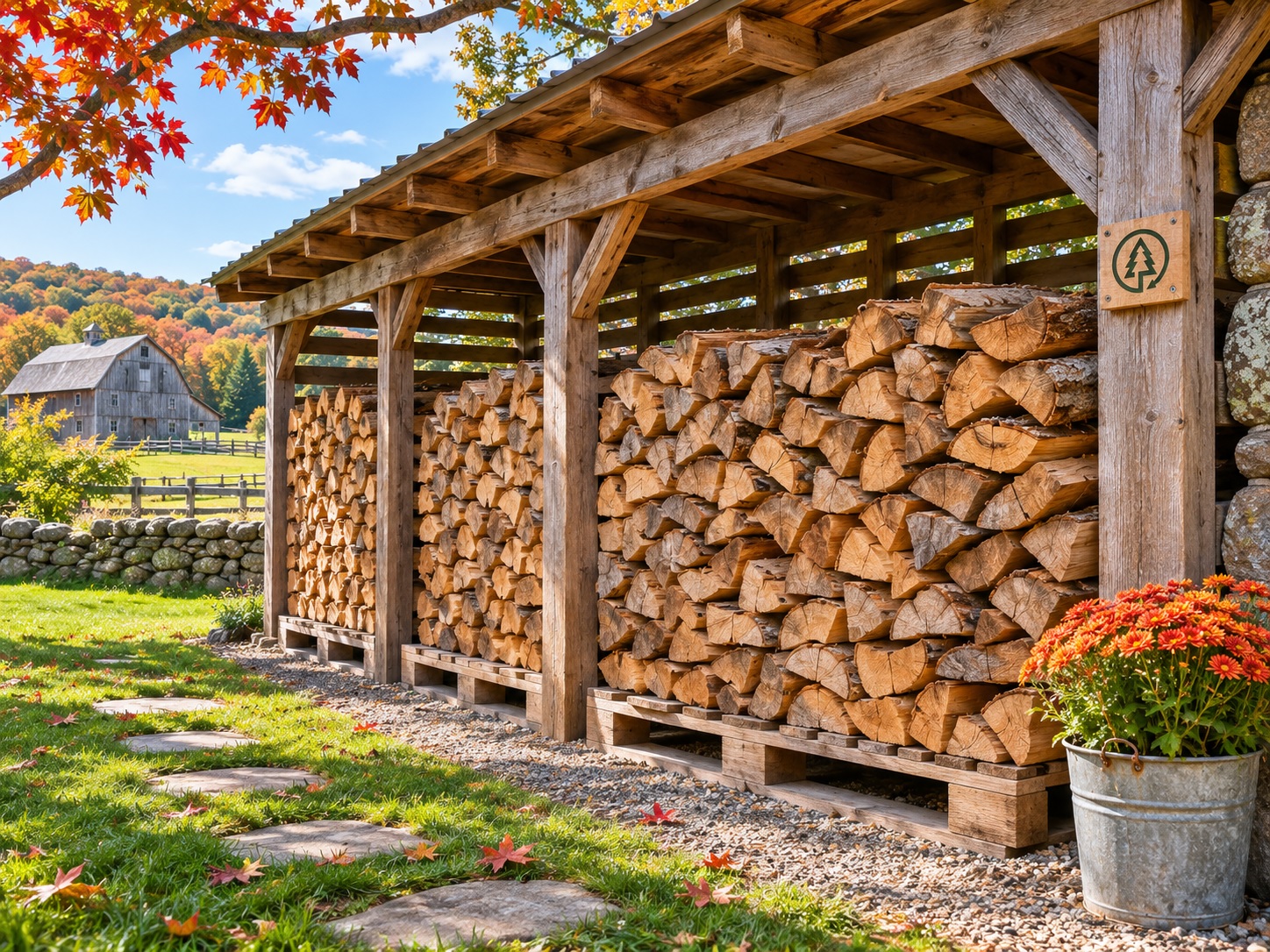
Firewood generally takes 6 to 12 months to season, but dense hardwoods such as oak may require 12 to 24 months, especially in Connecticut’s humid climate. Softwoods typically dry faster, while hardwoods such as maple, ash, and oak need longer seasoning periods depending on their size and storage conditions. Properly seasoned firewood should measure below 20% moisture content when tested on a freshly split surface. Splitting logs, stacking them off the ground, and maintaining airflow can shorten drying time.
How Long Does Firewood Take to Season in Connecticut?
Freshly cut firewood contains substantial moisture that must evaporate before the wood burns efficiently.
At Thrive Farm, we help homeowners throughout Simsbury and the Farmington Valley prepare for Connecticut’s heating season with quality seasoned and kiln-dried firewood.
One of the most common questions is how long firewood needs to dry before it’s ready for a fireplace or wood stove.
The answer depends on the wood species, log size, weather, and storage conditions.
We recommend using moisture content rather than the number of months alone to determine whether firewood is ready to burn.
Firewood Seasoning Time by Wood Type
Not all firewood dries at the same rate.
| Firewood Type | Estimated Seasoning Time |
|---|---|
| Pine and other softwoods | 6 to 12 months |
| Ash and maple hardwoods | Approximately 12 months or longer |
| Mixed seasoned hardwoods | 12 to 18 months |
| Oak and other dense hardwoods | 12 to 24 months |
| Kiln-dried firewood | Ready after proper kiln processing |
These are approximate planning ranges, not guaranteed drying periods. Actual readiness depends on moisture testing.
Softwood Firewood
Softwoods such as pine and spruce generally dry faster than dense hardwoods.
When split early in spring and stored properly, some softwood can be ready for outdoor burning by fall.
Hardwood Firewood
Hardwoods are popular for Connecticut home heating because many species provide longer-lasting fires and substantial heat per cord.
However, dense hardwoods may retain internal moisture longer.
Oak is particularly slow to season and may require two drying seasons.
For dependable indoor heating, we recommend planning hardwood purchases well ahead of winter.
Why Connecticut Weather Affects Firewood Drying
Connecticut experiences humid summers, rainy springs, and cold winters.
These seasonal conditions influence how quickly moisture escapes from wood.
Spring: Start the Seasoning Process
March through May is a practical time to cut, split, and stack firewood.
Rising temperatures and improving ventilation support the drying process.
Summer: Maximum Drying Opportunity
Warm temperatures, sunlight, and moving air encourage moisture evaporation.
We recommend keeping stacks exposed to airflow while protecting them from prolonged rainfall.
Fall: Check Moisture Before Burning
By September or October, faster-drying wood may approach suitable moisture levels.
However, dense hardwoods split during spring may still require additional seasoning.
Winter: Protect Your Firewood Supply
Cold temperatures generally slow natural drying.
Snow accumulation and poor ventilation can also keep firewood damp.
We recommend protecting stored wood from precipitation while keeping the sides of the stack open.
5 Ways to Season Firewood Faster
1. Split Firewood Immediately
Large, unsplit logs retain moisture longer than smaller pieces.
Splitting exposes more wood surface to air, helping moisture escape.
We recommend splitting logs into manageable sizes shortly after cutting.
2. Stack Firewood Off the Ground
Soil moisture can enter firewood through direct ground contact.
Use pallets, firewood racks, or other stable supports to elevate the stack.
3. Choose a Sunny, Breezy Location
Good airflow is essential for drying firewood.
We recommend choosing an open location with natural ventilation rather than a shaded, enclosed corner.
4. Cover Only the Top
A common mistake is wrapping an entire firewood pile with a tarp.
This can trap moisture and restrict airflow.
We recommend covering the top while leaving the sides open.
5. Avoid Stacking Wood Too Tightly
Proper spacing allows air to move between logs.
Use orderly rows instead of tightly packed piles that restrict ventilation.
For additional guidance, read our related article, How to Store Firewood Safely and Keep It Dry.
How to Tell if Firewood Is Fully Seasoned
Visual signs can help indicate whether wood is drying properly.
Common characteristics include:
- Cracks forming at the ends of logs
- Lighter weight compared with green wood
- Bark becoming loose
- A sharper sound when two dry logs are struck together
- Easier ignition and less excessive smoke
However, appearance alone cannot confirm internal moisture levels.
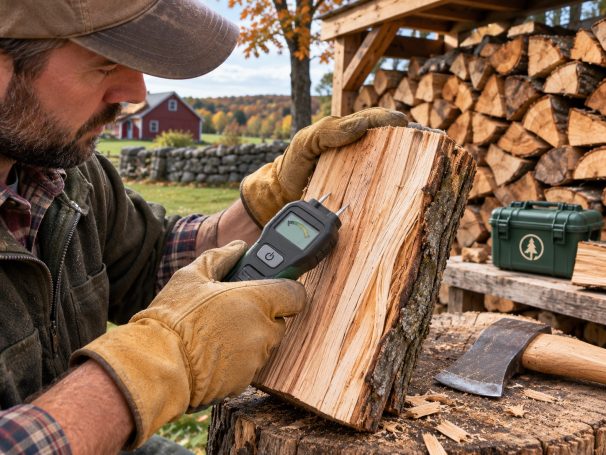
Test Firewood With a Moisture Meter
The U.S. Environmental Protection Agency recommends burning wood with moisture content at or below 20%.
For accurate testing:
- Select a representative firewood piece.
- Split it to expose the interior.
- Insert moisture meter probes into the freshly exposed surface.
- Check several pieces from different sections of the stack.
- Continue seasoning when readings remain above 20%.
A moisture meter is more reliable than guessing based on seasoning time.
Seasoned vs. Kiln-Dried Firewood: What’s the Difference?
Seasoned firewood dries naturally through outdoor airflow and time.
Kiln-dried firewood undergoes controlled heating to remove moisture more quickly.
| Feature | Seasoned Firewood | Kiln-Dried Firewood |
|---|---|---|
| Drying method | Natural air drying | Controlled kiln drying |
| Drying time | Several months or longer | Shortened through kiln processing |
| Moisture level | Varies by conditions | Controlled and tested |
| Best for | Planned seasonal storage | Homeowners needing dry wood sooner |
At Thrive Farm, our kiln-dried firewood is tested to approximately 15% moisture content.
This provides an alternative for homeowners who need ready-to-burn firewood without waiting through another natural seasoning cycle.
What Happens if You Burn Firewood Too Early?
Burning wet or unseasoned firewood can create several problems.
Excess moisture consumes heat during combustion, reducing useful warmth.
Wet wood can also produce more smoke and contribute to creosote accumulation in chimneys.
We recommend avoiding green firewood in indoor fireplaces and wood stoves until properly dried.
Frequently Asked Questions
Can firewood season in six months?
Yes, certain species may dry sufficiently within six months under favorable conditions. However, hardwoods generally require longer, and moisture testing is essential.
Does firewood season faster in summer?
Usually. Warm weather and good airflow encourage drying, although high humidity and rainfall can slow the process.
Can firewood season during winter?
Yes, but the process generally slows during cold weather.
How dry should firewood be before burning?
Firewood should measure below 20% moisture content, preferably tested on the freshly split interior.
Is kiln-dried firewood better than seasoned wood?
Both can burn effectively when properly dried. Kiln-dried wood offers controlled moisture reduction and is convenient when naturally seasoned wood is unavailable.
Get Quality Seasoned Firewood From Thrive Farm
Knowing how long firewood takes to season helps Connecticut homeowners prepare before temperatures drop.
At Thrive Farm, we provide seasoned hardwood, outdoor firewood, and kiln-dried firewood throughout Simsbury and surrounding Farmington Valley communities.
Our firewood products and delivery services help homeowners choose suitable fuel for fireplaces, wood stoves, and outdoor fires.
Whether you’re stocking up early or need kiln-dried firewood for the current heating season, we can help you select the right option.