
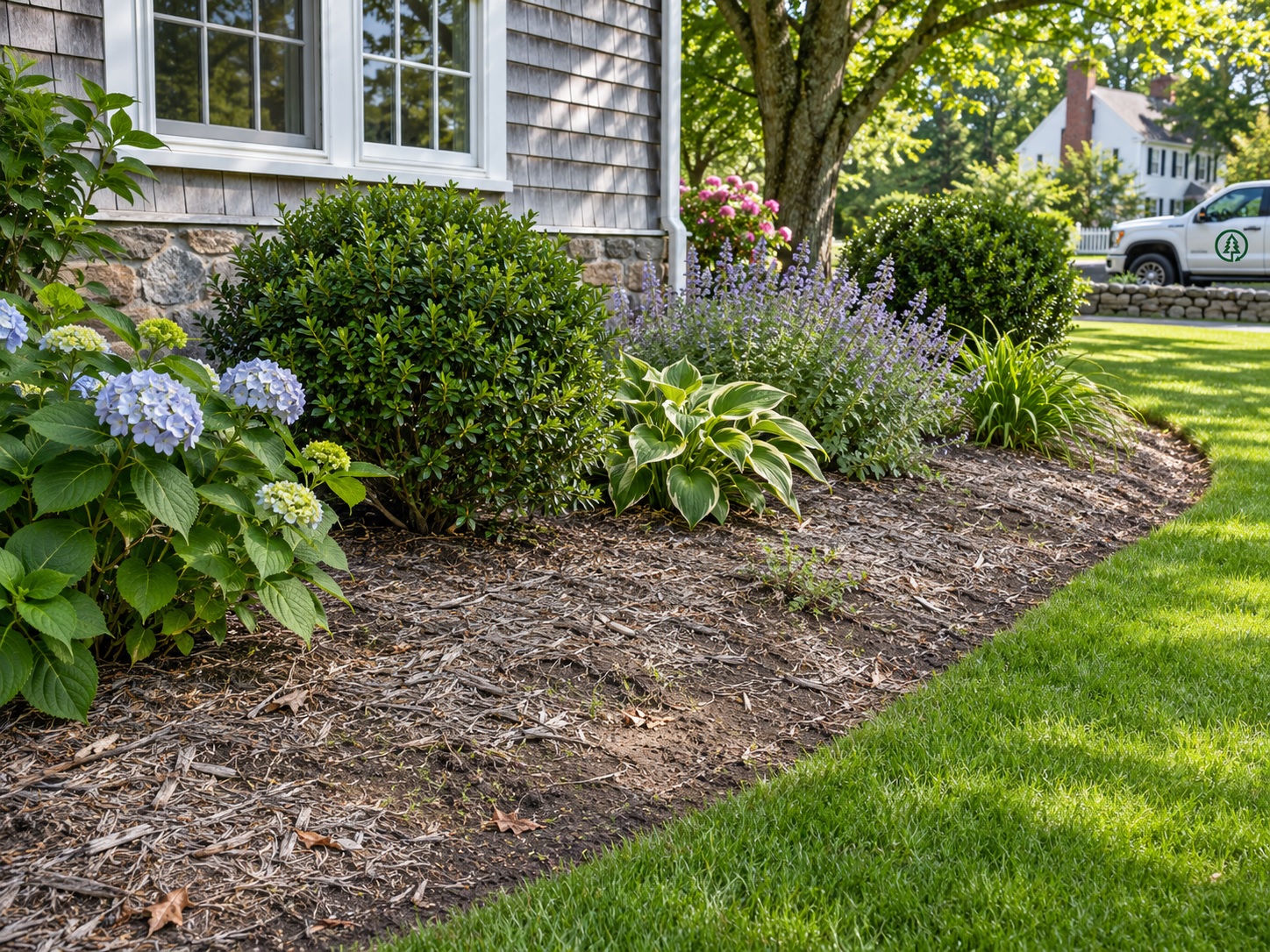
Most homeowners should inspect their landscape mulch at least once or twice a year and refresh it when necessary. Organic wood mulch typically needs occasional replenishment as it decomposes, settles, or washes away. However, complete mulch replacement every year is usually unnecessary. For Connecticut garden beds, maintaining approximately 2 to 3 inches of organic mulch helps conserve moisture, suppress weeds, and protect soil. Spring and fall are practical times to evaluate mulch depth and condition before adding new material.
How Often Should You Replace Mulch in Connecticut?
Mulch plays an important role in maintaining healthy garden beds, protecting plant roots, and improving curb appeal.
However, Connecticut’s changing seasons can affect how quickly landscaping materials break down.
At Thrive Farm, we help homeowners throughout Simsbury and the Farmington Valley maintain attractive landscapes with quality natural mulch and bulk landscaping materials.
One question we frequently address is whether old mulch should be completely removed every spring.
Our recommendation is to refresh mulch when necessary rather than automatically replacing the entire layer.
Organic mulch gradually decomposes and contributes organic matter to the underlying soil.
Removing all of it every year can create unnecessary work and waste useful material.
6 Signs Your Mulch Beds Need a Refresh
1. The Mulch Layer Has Become Too Thin
One of the clearest signs that mulch needs replenishment is exposed soil.
Over time, wood mulch breaks down and settles, reducing its original thickness.
When coverage becomes too thin, soil may dry more quickly and weeds can establish themselves.
What to Do: Measure the existing mulch depth and add enough material to maintain approximately 2 to 3 inches around most established ornamental plants.
2. Your Mulch Has Faded
Sunlight, rainfall, and natural weathering gradually change mulch color.
Dark brown mulch may become grayish or lighter after extended exposure.
However, faded mulch is not necessarily ineffective.
What to Do: We recommend lightly raking the existing material before purchasing more.
If the mulch remains thick enough, refreshing its appearance may be sufficient.
3. Weeds Are Growing Through the Mulch
A healthy mulch layer helps limit sunlight reaching weed seeds near the soil surface.
As mulch decomposes or becomes displaced, exposed areas may allow additional weeds to germinate.
What to Do: Remove established weeds and restore adequate coverage.
Avoid adding excessive mulch simply to bury weeds.
4. The Mulch Has Become Compacted or Matted
Some organic materials gradually form dense layers.
When this happens, water may have difficulty penetrating the mulch and reaching the soil.
This can be especially problematic during dry Connecticut summers.
What to Do: Gently loosen compacted mulch with a rake.
If the material remains excessively dense, remove or redistribute the affected portion before replenishing.
5. Rainwater Has Washed Mulch Away
Heavy rainfall, snowmelt, and poor drainage can displace mulch from garden beds.
Sloped properties may experience repeated movement during storms.
What to Do: Replace missing material and address concentrated runoff.
We recommend checking drainage conditions before repeatedly adding mulch to the same washed-out locations.
6. The Mulch Has Developed an Unpleasant Odor
Organic mulch naturally supports fungi and microorganisms that help break down wood.
Occasional mushrooms or harmless fungal growth do not automatically require replacement.
However, strong sour, ammonia-like, or rotten odors may indicate poorly aerated, excessively wet material.
What to Do: Loosen the material and evaluate drainage. Remove affected mulch when necessary, especially if it may damage nearby plants.
How Long Does Different Mulch Last?
The lifespan of mulch depends on particle size, material composition, sunlight, moisture, and landscape conditions.
| Mulch Type | General Refresh Guidance |
|---|---|
| Fine shredded wood mulch | Inspect every 6 months; replenish as needed |
| Natural aged mulch | Inspect annually; replenish when coverage decreases |
| Bark mulch | May remain useful for 2 years or longer |
| Wood chips | Often remain useful for multiple seasons |
| Shredded leaves | Usually require more frequent replenishment |
| Decorative stone | Does not decompose; occasional cleaning |
These are general maintenance guidelines rather than guaranteed replacement schedules.
At Thrive Farm, we produce natural dark brown mulch from a blend of tree species.
Our mulch is aged for approximately two years before sale and contains no added dyes or chemicals.
Should You Remove Old Mulch Before Adding New?
In most situations, no.
Existing organic mulch can remain in place if it is loose, draining properly, and not excessively thick.
According to University of Maryland Extension, organic mulch should generally be replenished only as needed and should not exceed approximately 3 inches around trees and shrubs.
We recommend the following process:
- Remove weeds, fallen leaves, and debris.
- Lightly rake existing mulch to loosen compacted sections.
- Measure the remaining depth.
- Remove excessive or unsuitable material.
- Add only enough new mulch to restore proper coverage.
- Keep mulch away from tree trunks and plant stems.
Repeatedly adding several inches every spring can create excessively deep beds.
For trees, read our related article, How to Mulch Around Trees Correctly: Avoid Mulch Volcano Damage.
When Is the Best Time to Refresh Mulch in Connecticut?
Spring and fall are convenient times for landscape maintenance.
Spring Mulch Refresh
April through May is a practical period to inspect beds, remove winter debris, and replenish mulch before summer heat.
We recommend waiting until excessively wet areas have drained and spring planting work is complete.
Fall Mulch Refresh
September through November is another opportunity to restore thin areas and prepare landscaped beds for colder temperatures.
Organic mulch helps moderate soil temperature fluctuations and protect plant roots.
However, mulch can be replenished whenever its coverage becomes inadequate.
How Much New Mulch Do You Need?
Most mulch refresh projects require less material than a complete installation.
Use this formula:
Cubic Yards = Square Feet × Additional Depth in Inches ÷ 324
For example, refreshing a 600-square-foot garden bed with one additional inch of mulch requires:
600 × 1 ÷ 324 = 1.85 cubic yards
We recommend ordering approximately 2 cubic yards to allow for uneven coverage.
Our premium natural mulch in Simsbury, CT is available for bulk ordering and delivery.
Frequently Asked Questions
Do you need to replace mulch every year?
Not necessarily. Inspect mulch annually and replenish only when the existing layer becomes too thin or unsuitable.
Can you put new mulch over old mulch?
Yes. As long as the old material remains in good condition, fresh mulch can be added without removing everything underneath.
Is old mulch good for soil?
Yes. As organic mulch decomposes, it contributes organic matter that can gradually improve soil conditions.
How deep should fresh mulch be?
Approximately 2 to 3 inches is suitable for many established landscape beds. Finer materials and sensitive plants may require less.
Can too much mulch damage plants?
Yes. Excessive mulch can trap moisture, restrict oxygen movement, and contribute to bark and root problems.
Refresh Your Landscape With Premium Mulch From Thrive Farm
Knowing how often to replace mulch helps Connecticut homeowners maintain healthier garden beds without unnecessary material purchases.
At Thrive Farm, we provide naturally aged dark brown mulch, wood chips, compost, and bulk landscaping materials throughout Simsbury, Avon, Canton, Granby, Farmington, and surrounding communities.
Whether you’re refreshing existing beds or preparing a new landscape, we can help estimate the right mulch quantity for your project.