
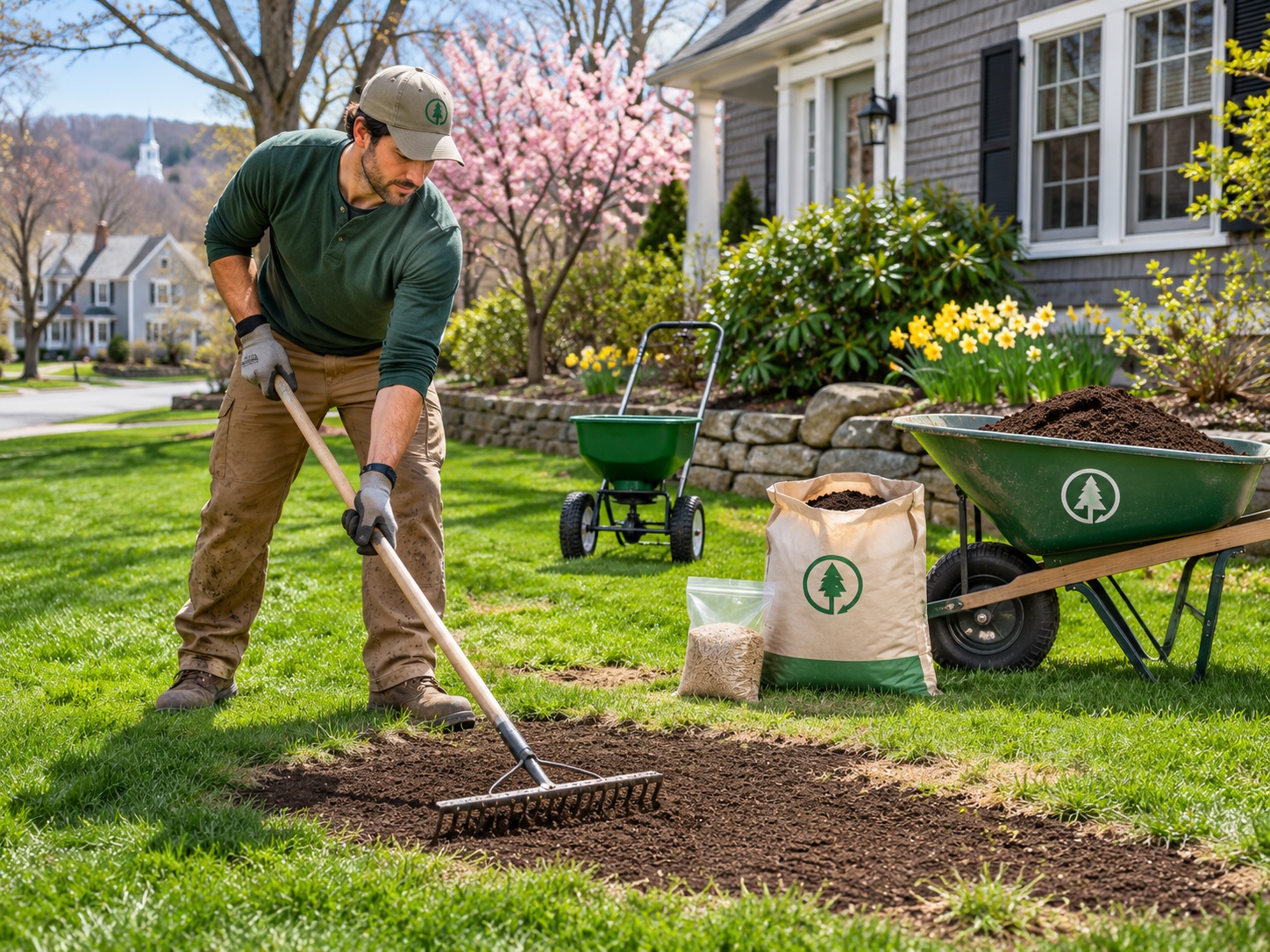
Spring lawn care in Connecticut should begin after the snow melts and the soil becomes firm enough to walk on without causing compaction. Start by removing winter debris, inspecting damaged grass, testing the soil, and correcting drainage problems. As temperatures warm, repair bare patches with quality lawnsoil, overseed when soil temperatures consistently exceed 50°F, and begin mowing once grass actively grows. Avoid heavy fertilization and aggressive lawn work too early in the season.
When Should You Start Spring Lawn Care in Connecticut?
After months of snow, freezing temperatures, and winter moisture, Connecticut lawns often need attention before the growing season begins.
At Thrive Farm, we help homeowners throughout Simsbury and the Farmington Valley prepare healthier lawns with quality topsoil, compost, and bulk landscaping materials.
However, timing matters.
Starting spring lawn preparation too early can compact wet soil, damage recovering grass, and interfere with root development.
For most Connecticut properties, lawn maintenance begins gradually between March and May, depending on weather and soil conditions.
We recommend waiting until the ground has thawed, excess water has drained, and the grass begins showing signs of active growth.
8 Essential Steps for Spring Lawn Care After Winter
1. Remove Leaves, Branches, and Winter Debris
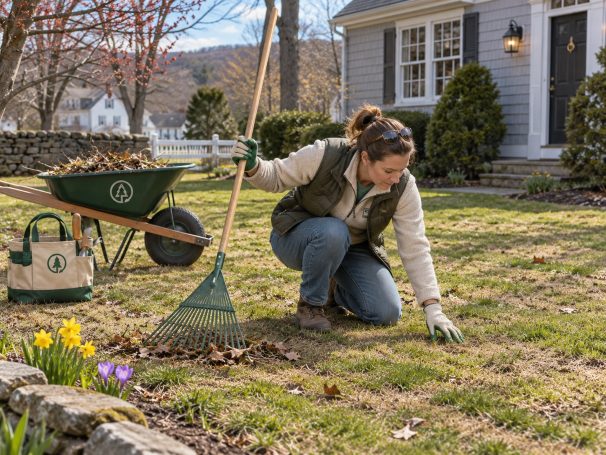
Once the lawn dries sufficiently, begin with a gentle cleanup.
Remove fallen branches, accumulated leaves, and other materials that may block sunlight or trap moisture.
We recommend using a flexible leaf rake rather than aggressively scraping the ground.
Avoid raking saturated soil because it can damage recovering turf and create additional compaction.
2. Inspect Your Lawn for Winter Damage
Connecticut winters can leave several types of lawn damage.
Common problems include:
- Brown patches from snow mold
- Salt damage near roads and driveways
- Vole tunnels and surface runways
- Compacted soil from snow removal equipment
- Standing water and drainage problems
- Bare spots where grass failed to survive
According to UConn Extension’s Spring Lawn Care Tips, snow mold, road salt, and vole activity are common causes of winter lawn damage.
We recommend identifying the cause before applying fertilizers or grass seed.
3. Test Your Soil Before Fertilizing
Healthy grass starts with suitable soil conditions.
A soil test helps identify pH levels and nutrient deficiencies before amendments are applied.
For Connecticut lawns, soil testing can be especially useful when grass struggles despite regular watering and maintenance.
We recommend testing before adding lime or substantial amounts of fertilizer.
Applying nutrients without understanding existing soil conditions may waste money and contribute to runoff.
4. Fix Drainage Problems and Low Spots
Spring snowmelt and rainfall often reveal uneven areas where water accumulates.
Persistent puddles may indicate compacted soil, poor grading, or inadequate drainage.
For minor depressions, we recommend correcting the grade with suitable screened lawnsoil.
Our Topsoil (Lawnsoil) contains approximately 70% native topsoil and 30% compost, screened to ½ inch for lawn establishment and repair.
For established grass, apply thin layers of compatible material without burying the blades.
Deeper depressions may require more extensive soil preparation and reseeding.
5. Repair Bare Patches With Quality Lawnsoil
Winter damage can leave thin or completely bare sections of lawn.
Once temperatures become favorable, we recommend:
- Removing dead grass and loose debris.
- Loosening the exposed soil.
- Adding screened lawnsoil where necessary.
- Leveling the planting surface.
- Spreading suitable cool-season grass seed.
- Maintaining consistent moisture during germination.
Kentucky bluegrass, perennial ryegrass, and fescues are commonly used in Connecticut lawns.
Spring seeding becomes more reliable when soil temperatures consistently exceed approximately 50°F.
However, late summer through early fall remains the preferred period for major lawn renovations.
6. Aerate Compacted Soil When Necessary
Core aeration can improve air movement, water infiltration, and root development in compacted lawns.
However, not every lawn requires annual aeration.
We recommend checking whether the soil is compacted before scheduling treatment.
Spring aeration should occur only when the grass is actively growing and the ground is moist but not saturated.
For many Connecticut lawns, fall offers more favorable conditions for aeration and overseeding.
7. Fertilize at the Right Time
One common spring lawn care mistake is applying fertilizer immediately after snowmelt.
Cool-season grasses initially rely on stored carbohydrates as growth resumes.
We recommend waiting until the lawn is actively growing before fertilizing.
Use soil test results to determine whether additional nutrients are necessary.
Avoid excessive nitrogen applications, which can encourage rapid leaf growth without supporting balanced root development.
8. Begin Mowing and Adjust Watering
Start mowing once the lawn begins actively growing and reaches an appropriate height.
We recommend maintaining most established cool-season lawns around 3 inches tall.
Keep mower blades sharp and avoid removing more than one-third of the grass blade during a single mowing.
Spring rainfall often provides sufficient moisture, so additional irrigation may not be necessary.
Monitor soil conditions before watering.
Connecticut Spring Lawn Care Checklist by Month
| Month | Recommended Lawn Care Tasks |
|---|---|
| March | Remove debris when dry, inspect winter damage, test soil |
| April | Correct low spots, repair bare patches, begin seeding when soils warm |
| May | Continue mowing, evaluate fertilization needs, monitor weeds and irrigation |
| June | Maintain healthy mowing height, monitor moisture, prepare for summer heat |
Actual timing varies with soil temperature, rainfall, and local growing conditions.
Common Spring Lawn Care Mistakes to Avoid
Even well-intentioned maintenance can damage recovering grass.
We recommend avoiding:
- Walking or operating heavy equipment on saturated lawns
- Applying fertilizer before active growth begins
- Reseeding while the soil remains too cold
- Adding thick layers of topsoil over existing grass
- Mowing too short during early growth
- Using ordinary crabgrass pre-emergent products where new grass seed must germinate
When both crabgrass prevention and spring seeding are planned, check herbicide labels carefully because many pre-emergent products inhibit desirable grass seed germination.
For additional seasonal guidance, read our related article, How to Aerate and Overseed a Lawn in Connecticut.
Frequently Asked Questions
When should you start spring lawn care in Connecticut?
Most homeowners begin between March and April, once the ground thaws and becomes firm enough for maintenance without causing soil compaction.
Should you rake your lawn immediately after winter?
Wait until the lawn has dried sufficiently. Gentle raking can remove dead grass and debris without damaging recovering turf.
Is spring a good time to plant grass seed in Connecticut?
Spring seeding is possible when soil temperatures exceed approximately 50°F. However, late summer and early fall generally provide better establishment conditions.
Should you fertilize your lawn in early spring?
Avoid fertilizing immediately after snowmelt. Wait until grass actively grows, and use soil test recommendations to determine nutrient requirements.
Can topsoil help repair winter lawn damage?
Yes. Quality screened lawnsoil can improve seedbed conditions, fill shallow depressions, and support grass establishment when applied correctly.
Get Your Lawn Ready for Spring With Thrive Farm
Successful spring lawn care begins with healthy soil, proper timing, and addressing winter damage before the growing season accelerates.
At Thrive Farm, we provide quality screened lawnsoil, compost, and bulk landscaping materials for homeowners throughout Simsbury, Avon, Canton, Granby, Farmington, and surrounding Connecticut communities.
Whether you’re repairing bare patches, leveling uneven areas, or preparing a new lawn, we’ll help you choose suitable materials for your project.