
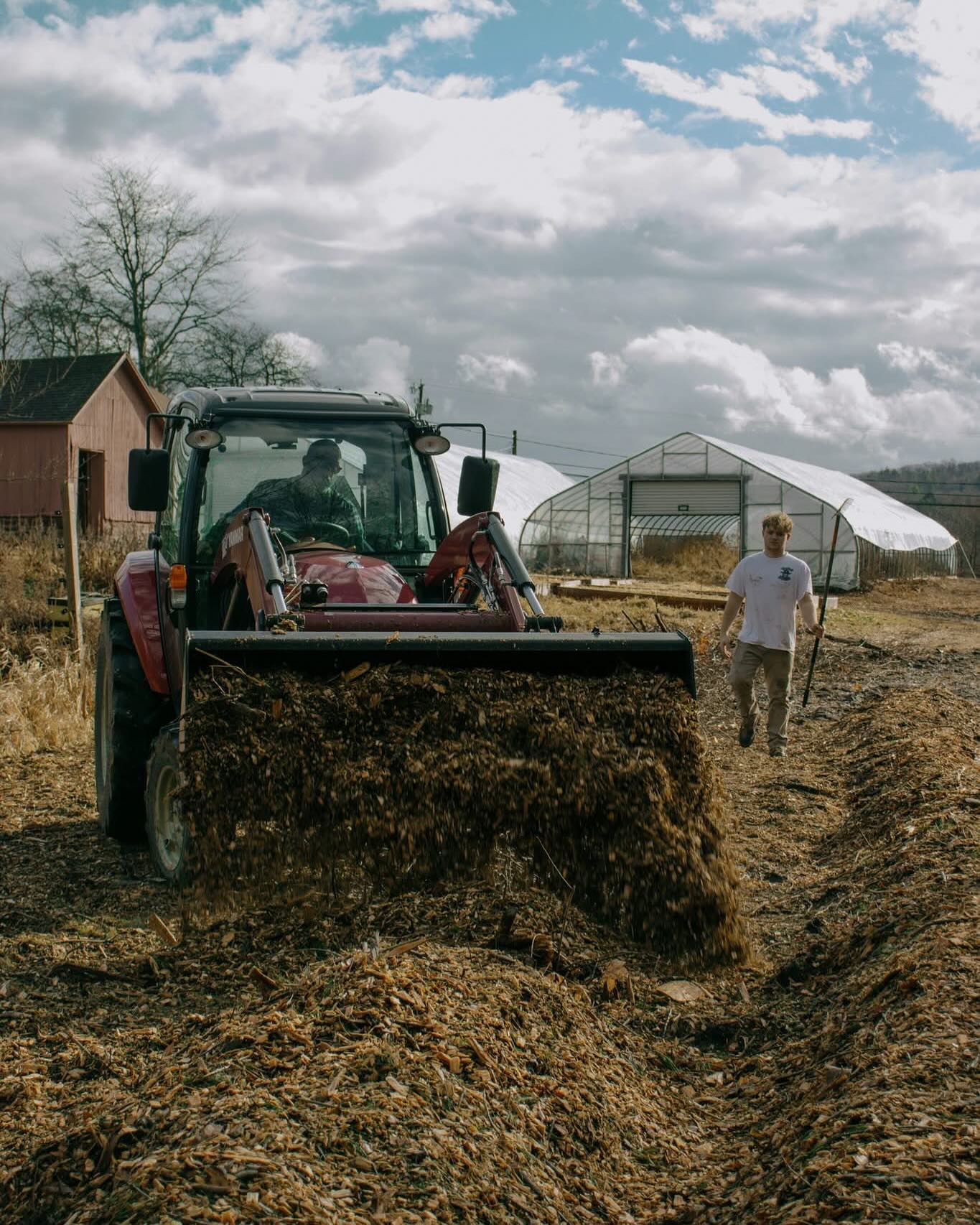
When most homeowners think of wood chips, they think of budget-friendly garden paths or a quick way to stop mud in high-traffic areas. But beneath the surface, a biological miracle is happening. If you want to transform your Simsbury garden from “surviving” to “thriving,” you need to stop thinking about mulch as a decoration and start thinking of it as a biological engine.
At Thrive Farm, our premium wood chips are more than just recycled timber—they are the key to building fungal-dominant soil.
Why Fungal-Dominant Soil Matters
Most vegetable gardens are bacterial-dominant, which is great for fast-growing annuals. However, for perennials, fruit trees, and a truly resilient landscape, you need a healthy network of mycelium.
Fungi are the “internet of the soil.” They break down complex lignin in wood, turning it into slow-release nutrients that plants can actually use. By using wood chips as a heavy mulch, you encourage these fungal networks to expand, which significantly improves soil structure and increases moisture retention during our hot Connecticut summers.
The Power of the Mycelial Web
When you apply a thick layer of wood chips, you aren’t just suppressing weeds; you are providing a “carbon bank.” As the chips go through the process of wood chip decomposition, they feed specialized fungi that:
- Transport Nutrients: Mycelium can reach out further than plant roots, bringing distant water and minerals directly to your plants.
- Improve Aeration: Fungal activity creates “macro-pores” in the dirt, preventing the soil compaction often found in our heavy CT clay.
- Increase Soil Carbon: This is the foundation of sustainable landscaping. High-carbon soil holds more water and supports a more diverse ecosystem of beneficial microbes.
Wood Chips vs. Bark Mulch: What’s the Difference?
While our premium mulch is fantastic for aesthetic garden beds, wood chips (often called arborist chips) contain a mix of wood, bark, and sometimes leaves. This variety provides a more diverse “diet” for the fungi in your soil.
If you are practicing Back to Eden gardening or building new raised garden beds, wood chips are an unbeatable resource for building long-term fertility.
How to Apply Wood Chips for Best Results
To get the most out of your locally sourced chips, follow these steps:
- Don’t Till: Simply spread the chips on top of the soil. This protects the delicate fungal threads from being broken.
- Go Thick: A 4–6 inch layer is ideal for maximum weed suppression and water conservation.
- Pair with Compost: For an extra boost, put down a layer of our spicy compost before adding the wood chips to jumpstart the biological activity.
Get Your Soil Growing Today
Ready to start building the best soil in the Farmington Valley? Whether you need a small truckload for your backyard or professional mulch installation for a larger project, we’ve got you covered.
Order your wood chips online today! We provide convenient delivery to Simsbury, Avon, Farmington, West Hartford, and beyond.