
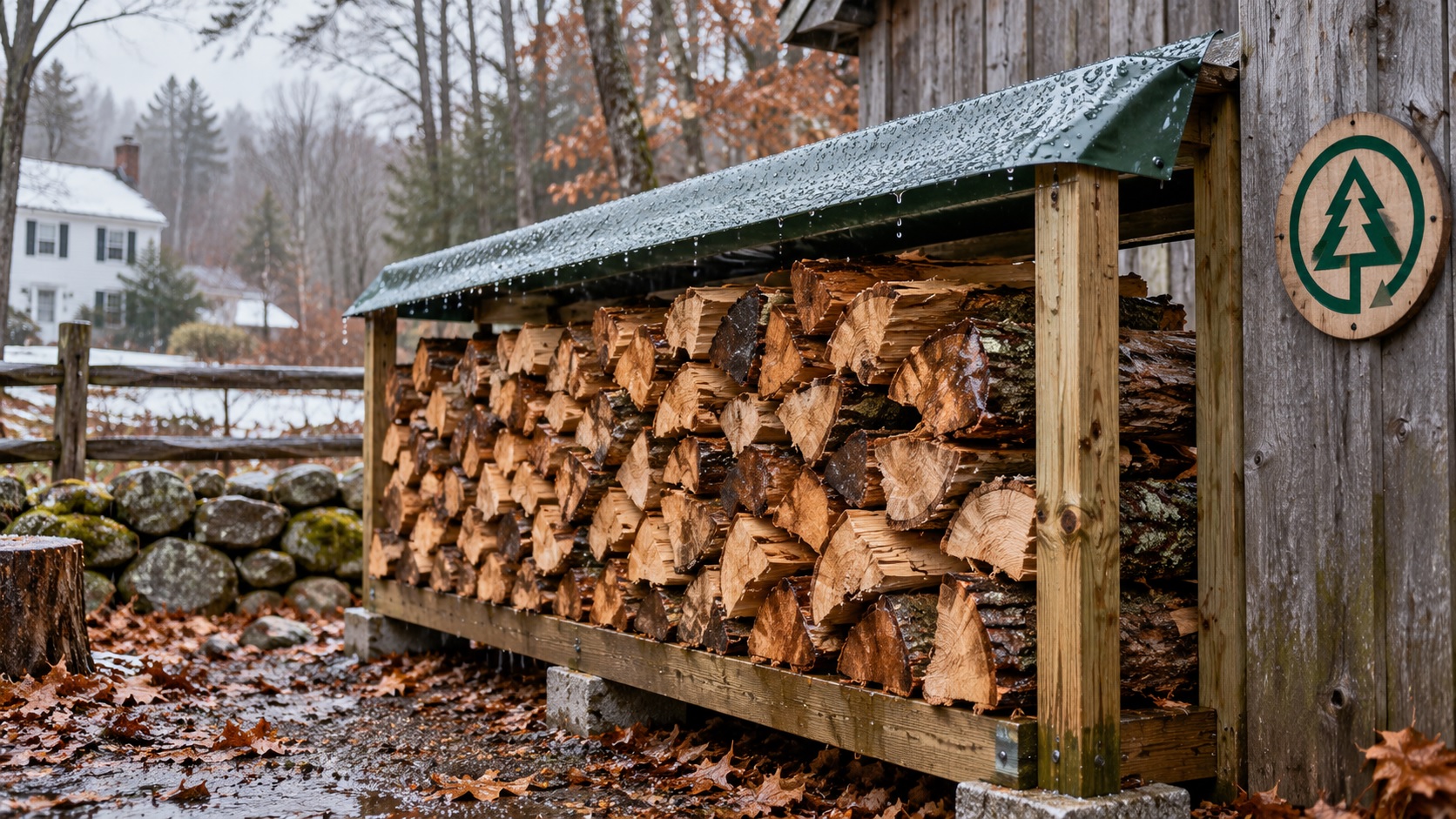
Yes, seasoned firewood can get wet without becoming unusable. Rain and snow often add moisture to the outer surface of properly seasoned logs without immediately reversing months of drying. However, prolonged exposure, poor airflow, and ground contact can allow wood to absorb additional moisture. Wet firewood should be allowed to dry before burning, and the freshly split interior should measure 20% moisture or less for efficient heating.
Can Seasoned Firewood Get Wet Without Being Ruined?
Connecticut weather can change quickly. A dry stack of firewood may be exposed to heavy rain, melting snow, or several days of damp conditions.
At Thrive Farm, we regularly help homeowners understand how moisture affects firewood quality and burning performance.
The good news is that a rainstorm does not automatically ruin seasoned firewood.
The important distinction is between surface moisture and internal moisture.
Seasoned wood has already released much of the natural moisture stored inside its fibers. Rain can wet the bark and exposed surfaces, but a short period of exposure does not necessarily make the center of each log wet again.
However, repeatedly soaking firewood without allowing it to dry can create problems.
What Happens When Firewood Gets Rained On?
Leaving firewood in rain affects the wood differently depending on how long it stays exposed.
Short Rain Exposure
A brief rainstorm typically wets the outside of seasoned logs.
The wood may feel damp, but its interior can remain sufficiently dry for burning once the surface moisture evaporates.
Several Days of Rain
Prolonged rainfall can increase moisture absorption, especially through exposed grain, cracks, and cut ends.
Tightly stacked wood dries more slowly because air cannot circulate effectively.
Extended Wet Storage
Firewood left directly on wet soil or under a poorly ventilated tarp may remain damp for weeks.
This increases the risk of mold, fungal decay, and deteriorating wood quality.
The longer wood stays wet, the more important proper drying and storage become.
Does Snow Make Firewood Wet?
Snow does not automatically damage seasoned firewood.
Dry snow may accumulate on the outside of a stack without immediately soaking the logs. Problems become more likely when snow melts and moisture enters the woodpile.
During Connecticut winters, repeated freezing and thawing can expose firewood to additional moisture.
| Weather Condition | Effect on Seasoned Firewood |
|---|---|
| Light rain | Mostly surface moisture |
| Heavy, prolonged rain | Greater potential for water absorption |
| Dry snow | Often limited moisture until melting |
| Melting snow | Can wet logs and collect beneath stacks |
| Repeated freeze-thaw cycles | May prolong wet conditions |
| Ground contact | Encourages moisture absorption and decay |
We recommend protecting the top of the woodpile while keeping the sides open for ventilation.
How to Dry Wet Firewood After Rain or Snow
If your firewood gets soaked, there is usually no need to discard it immediately.
Follow these steps to help dry wet firewood properly.
1. Move Firewood Under a Protective Cover
Place the logs beneath a roof, woodshed, or waterproof top covering.
Avoid wrapping the entire stack tightly in plastic, which can trap moisture.
2. Keep Logs Off the Ground
Use pallets, firewood racks, or supports to create separation between the logs and damp soil.
This helps reduce moisture absorption and improves circulation beneath the stack.
3. Improve Air Circulation
Leave gaps between logs and avoid tightly packed piles.
Sunlight and airflow help moisture escape from exposed wood surfaces.
4. Remove Snow Before It Melts
Brush accumulated snow from accessible logs and the top covering.
Preventing meltwater from entering the pile is easier than drying repeatedly soaked firewood.
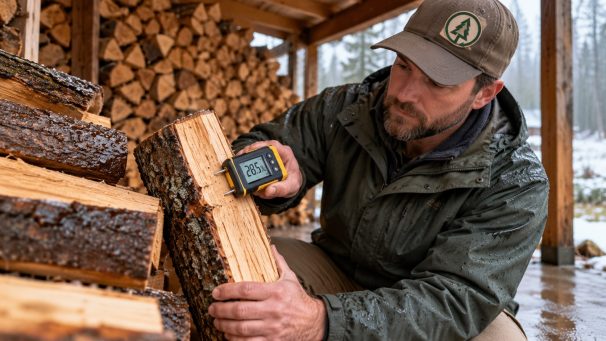
5. Test Before Burning
Use a firewood moisture meter to determine whether the wood is sufficiently dry.
For more detailed storage recommendations, explore our guide to storing firewood safely and keeping it dry.
How Long Does Wet Firewood Take to Dry?
Drying time depends on several conditions:
- How thoroughly the wood became wet
- Whether the logs were already seasoned
- Temperature and humidity
- Sunlight and airflow
- Wood species and split size
Seasoned logs exposed to brief rainfall may lose their surface moisture relatively quickly under dry, breezy conditions.
Wood that has absorbed moisture over an extended period can require considerably more drying time.
We recommend testing moisture instead of relying on a fixed number of days.
According to the U.S. Environmental Protection Agency’s wood-burning guidance, properly dried firewood should measure 20% moisture content or less.
For an accurate reading, split a representative log and test the freshly exposed interior surface according to the meter manufacturer’s instructions.
What Happens If You Burn Wet Firewood?
Burning firewood with excessive moisture can cause several problems.
Reduced Heat Output: Energy that could heat your home is consumed evaporating water.
Excessive Smoke: Damp wood can produce cooler, less complete combustion.
Creosote Buildup: Increased smoke and lower chimney temperatures can contribute to combustible creosote deposits.
Difficult Ignition: Wet logs may hiss, smolder, and struggle to maintain a steady fire.
At Thrive Farm, we recommend properly seasoned hardwood for indoor fireplaces and wood stoves.
Our seasoned firewood selection includes native hardwoods such as oak, maple, and ash, with delivery options throughout our Connecticut service area.
Frequently Asked Questions
Can seasoned firewood get wet and still burn?
Yes. Seasoned firewood exposed to rain may remain dry internally. Allow surface moisture to evaporate and verify the interior moisture content before burning.
Does rain make seasoned firewood green again?
No. Rain does not instantly reverse the seasoning process. However, prolonged exposure can cause wood to absorb additional moisture.
Can you burn snow-covered firewood?
Snow-covered logs should be cleared and allowed to dry before burning. Check moisture levels rather than assuming the interior is wet or dry.
Should firewood be completely covered with a tarp?
No. We recommend covering the top while leaving the sides open for airflow. Completely enclosing the stack can trap moisture.
Keep Your Firewood Dry With Thrive Farm
Rain and snow are part of Connecticut winters, but proper storage can help keep seasoned firewood ready for heating.
At Thrive Farm, we supply seasoned hardwood for indoor heating and seasoned softwood for outdoor fires.
Whether you’re preparing for winter or replenishing your firewood supply, our team can help you select suitable wood for your needs.
Ready to stock up? Order now at Thrive Farm, explore seasoned firewood options and schedule delivery in Simsbury and surrounding Connecticut communities.