
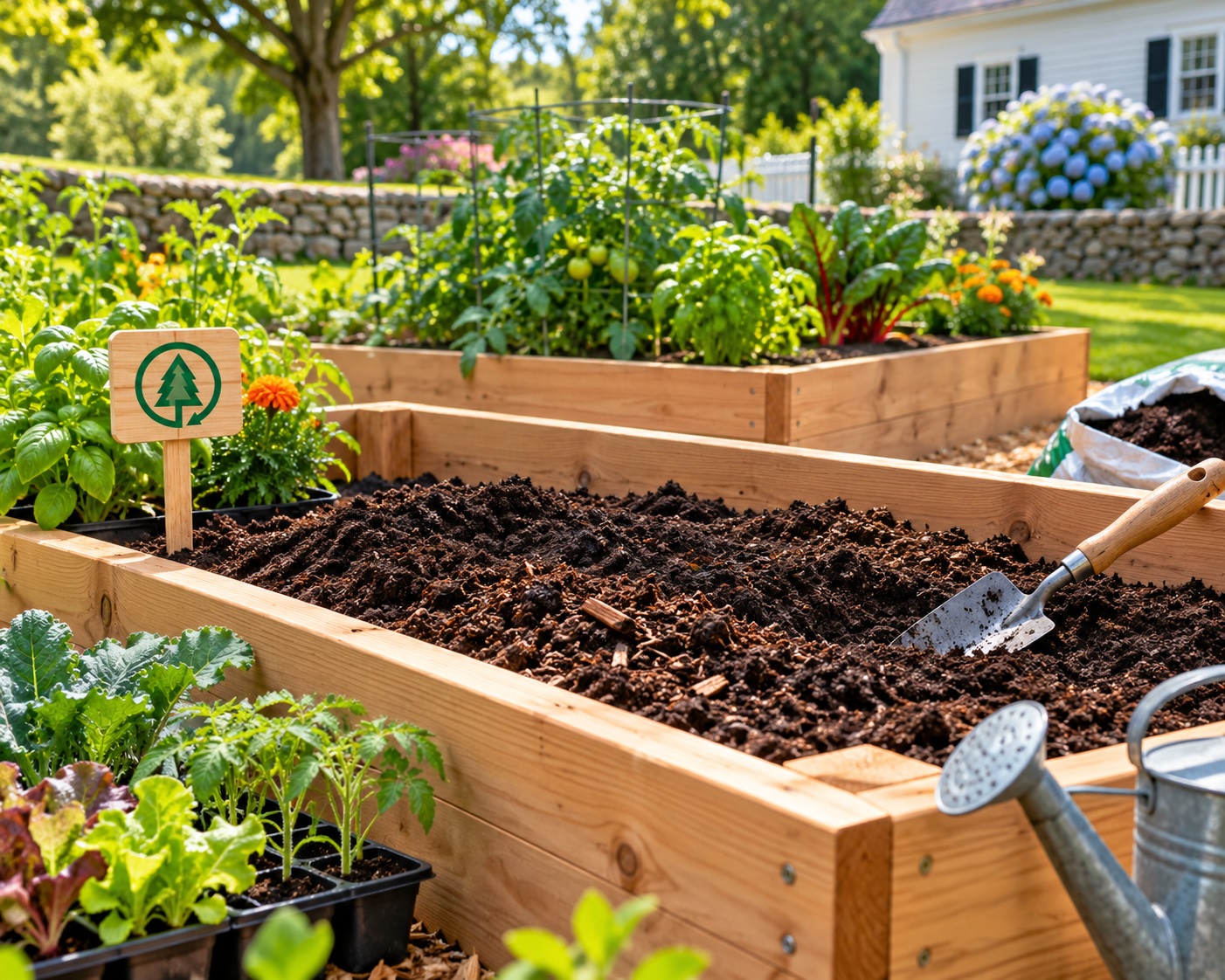
Yes, you can fill raised beds with topsoil only, provided it is high-quality, well-draining, and fertile. However, topsoil alone may become compacted, lack sufficient organic matter, or retain too much moisture. For most Connecticut vegetable gardens, a blend of approximately 50% to 67% topsoil and 33% to 50% mature compost provides a better growing environment. The ideal raised bed soil supports root development, drainage, and nutrient availability.
Can You Fill Raised Beds With Topsoil Only?
Building a raised garden bed is an excellent way to grow vegetables, herbs, flowers, and other plants without relying entirely on native ground conditions.
However, choosing the right soil can make the difference between healthy plants and disappointing results.
At Thrive Farm, we help homeowners throughout Simsbury and surrounding Connecticut communities choose suitable bulk soil materials for raised beds and garden projects.
One common question is whether filling an entire raised bed with topsoil is enough.
The answer depends on the quality and composition of the topsoil.
Good garden-quality topsoil can support plant growth. However, soil with excessive clay, poor drainage, or limited organic matter may restrict root development.
For most new vegetable beds, we recommend combining mineral soil with mature compost.
Why Topsoil Alone May Not Be Best for Raised Beds
Topsoil provides the mineral foundation plants need, but its quality varies significantly.
1. Compaction Can Restrict Root Growth
Some purchased topsoil contains substantial amounts of clay or fine particles.
When wet, these materials may become dense and compacted.
Compacted soil limits the movement of air and water through the root zone, making it harder for vegetables to establish healthy roots.
2. Poor Drainage Can Damage Plants
Raised beds are often used to improve drainage, particularly in Connecticut’s heavy or rocky soils.
However, filling a raised bed with dense, poorly draining topsoil can recreate the same problems.
Excess moisture may reduce oxygen availability around roots and increase the risk of root diseases.
3. Topsoil May Lack Organic Matter
Not all topsoil contains enough organic matter to support productive vegetable gardens.
Without adequate organic matter, soil may struggle to retain moisture and provide favorable conditions for beneficial soil organisms.
Adding mature compost helps address these deficiencies.
What Is the Best Soil Mix for Raised Beds?
A balanced raised bed soil mix should provide mineral structure, organic matter, adequate drainage, and moisture retention.
According to the University of Connecticut Home Garden Education Office, a suitable mix for framed raised beds contains approximately one-half to two-thirds topsoil and one-third to one-half aged compost.
Raised Bed Soil Comparison
| Soil Material | Main Benefit | Potential Limitation |
|---|---|---|
| Screened topsoil | Mineral structure and root support | Quality and drainage vary |
| Mature compost | Organic matter and nutrients | Excess amounts can create nutrient imbalances |
| Topsoil and compost blend | Combines structure and organic matter | Requires appropriate proportions |
| Soilless growing mix | Lightweight and porous | Can dry quickly and require additional feeding |
Recommended Topsoil and Compost Ratio
For many raised beds built over native ground, a practical starting mix is:
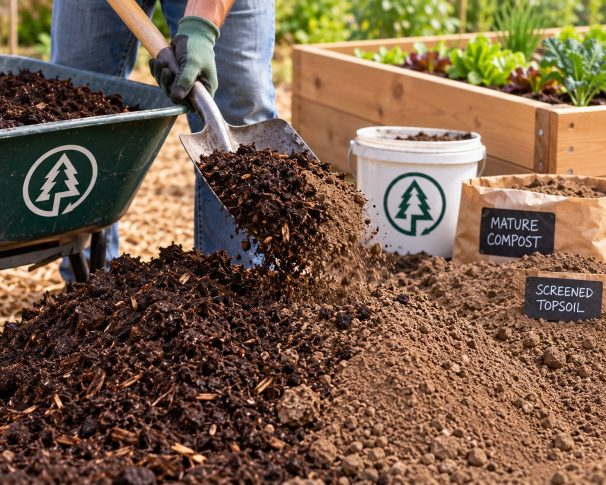
- 2 parts quality screened topsoil
- 1 part mature compost
This produces approximately 67% topsoil and 33% compost.
The proportions can be adjusted depending on existing soil quality, nutrient levels, drainage, and the crops being grown.
Why Compost in Raised Beds Makes a Difference
Compost improves several important soil characteristics.
Better Soil Structure: Organic matter can help soil form stable aggregates that create space for air and water.
Improved Moisture Retention: Compost helps soil retain moisture, particularly during dry Connecticut summers.
Nutrient Availability: Mature compost contributes plant nutrients and supports natural nutrient cycling.
Healthier Root Conditions: Improved aeration and soil structure encourage stronger root development.
However, excessive compost is not necessarily better. Too much nutrient-rich compost can raise phosphorus or soluble salt levels.
We recommend using mature compost and testing soil when nutrient levels are uncertain.
Should You Use Pre-Mixed Raised Bed Soil?
Pre-mixed soil can simplify large gardening projects because the materials arrive blended and ready for placement.
At Thrive Farm, our 50/50 Compost Lawnsoil Mix combines house-made compost with screened lawnsoil.
The mix is designed for raised beds, vegetable gardens, and other planting applications.
Our lawnsoil already contains compost, so the finished blend is particularly rich in organic material. We recommend considering soil-test results and crop requirements when selecting a blend or adding further amendments.
For gardeners seeking bulk raised bed soil in Connecticut, delivery can also reduce the work involved in transporting numerous individual bags.
How to Fill Raised Beds With Soil Correctly
Follow these steps when preparing new garden beds.
Step 1: Prepare the Ground
Remove weeds, grass, and debris from the planting area.
If the raised bed sits directly on native soil, loosen compacted ground beneath it to encourage root penetration and water movement.
Step 2: Choose Quality Soil
Select screened topsoil from a trusted supplier.
Avoid unknown fill dirt, construction debris, or potentially contaminated soil.
Step 3: Blend Topsoil and Compost
Combine the selected materials evenly rather than creating sharply separated layers.
A uniform growing medium helps support consistent root development.
Step 4: Fill to the Appropriate Depth
For many annual vegetables, approximately 12 to 18 inches of usable soil depth provides a good growing environment.
Some crops need deeper rooting space. Beds on hard surfaces may also require different soil blends and drainage arrangements.
Step 5: Water and Maintain the Bed
Water gently after filling to settle the material naturally.
Avoid walking on the soil, and add organic mulch after planting to reduce moisture loss.
For more information about filling deeper garden beds, read our related guide, How to Fill a New Raised Garden Bed: The Smart Layering Method.
Frequently Asked Questions
Can vegetables grow in 100% topsoil?
Yes. Vegetables can grow in high-quality topsoil with suitable drainage, nutrients, and organic matter. However, compost can improve soil conditions when the existing topsoil is deficient.
How much compost should be added to raised beds?
For many new framed beds, approximately one-third to one-half mature compost by volume is a useful guideline, depending on soil quality and nutrient levels.
Is garden soil better than topsoil for raised beds?
Garden soil blends may contain compost and other amendments that improve growing conditions. However, quality varies, so checking the composition is more important than the product label.
Can you add compost to a raised bed later?
Yes. Mature compost can be incorporated between growing seasons or applied as a light surface amendment when additional organic matter is needed.
Build Healthier Raised Beds With Thrive Farm
Choosing the right raised bed soil helps create a productive garden from the beginning.
At Thrive Farm, we provide quality screened lawnsoil, house-made compost, and blended soil materials for homeowners and gardening contractors throughout Simsbury and surrounding Connecticut communities.
Whether you’re filling your first vegetable bed or expanding an established garden, we can help you choose suitable soil materials and estimate the quantity needed.