

For Connecticut lawns, the best window for aeration and overseeding is generally from mid-August through mid-September. Core aerate first, spread a cool-season grass seed suited to the lawn, add a light layer of quality lawnsoil or compost blend where needed, then keep the seedbed consistently moist while new grass establishes. UConn recommends August 15 through mid-September as the best period for establishing or renovating Connecticut lawns because warm soil supports germination while cooler fall weather reduces heat stress and weed competition.
A thin lawn rarely needs to be torn out and started over. With the right fall preparation, we can open compacted soil, introduce stronger grass varieties, improve seed-to-soil contact, and help bare areas fill before winter.
For Connecticut homeowners searching how to overseed a lawn, timing matters almost as much as seed selection.
Why Fall Lawn Overseeding Works So Well in Connecticut
Most Connecticut lawns contain cool-season turfgrasses such as Kentucky bluegrass, perennial ryegrass, tall fescue, and fine fescues. These grasses perform strongly as temperatures moderate toward fall.
UConn’s Lawn Renovation and Repair guidance identifies August 15 through mid-September as the preferred lawn establishment and renovation period in Connecticut. UConn also notes that seeding becomes less reliable as soil temperatures cool and recommends completing seeding before early October.
That makes late summer and early fall the prime season for fall lawn overseeding CT projects.
Step 1: Mow the Lawn Before Aerating
Start by mowing the existing lawn somewhat shorter than the normal maintenance height without scalping it.
Remove heavy leaves, sticks, and excess debris so the aerator can reach the soil.
If the lawn contains badly matted dead grass, lightly rake those sections. The goal is to expose enough of the soil surface for seed to reach the ground instead of becoming trapped above old plant material.
Step 2: Core Aerate Compacted Soil
For lawn aeration and overseeding, we recommend core aeration rather than simply punching narrow spikes into the ground.
A core aerator removes plugs of soil, creating openings that allow air and water to enter the root zone while reducing surface compaction.
Aeration becomes especially valuable on lawns with:
- Heavy foot traffic
- Compacted soil
- Thin turf
- Poor water infiltration
- Hard ground beneath the grass
- Areas stressed during summer
UConn notes that aerification can help relieve surface soil compaction where turf has become thin from wear.
Run the aerator across problem sections thoroughly. For heavily compacted areas, crossing the lawn from another direction can create better coverage.
Step 3: Overseed Immediately After Aeration
Do not wait several weeks after aerating.
Spread seed while the aeration holes remain open and exposed soil is available.
Choose seed based on the property’s sunlight, traffic, soil, and maintenance expectations. Fine fescues can work well where lower maintenance or better shade performance is wanted, while turf-type tall fescues can offer durability for higher-use lawns. UConn also notes that grass selection should account for site conditions and intended maintenance level.
Apply seed at the manufacturer’s recommended overseeding rate.
More seed does not automatically produce better turf. Excessively dense seedlings compete for moisture, nutrients, and growing space.
Step 4: Add a Light Topdressing
After seeding, a thin layer of quality material can improve the seedbed.
For thin or uneven Connecticut lawns, our 50/50 Compost Lawnsoil Mix combines screened lawnsoil with house-made compost. Thrive Farm’s blend is designed to provide soil structure, organic matter, drainage, and moisture retention and can be used for lawn repair and topdressing.
Spread the material lightly rather than burying established turf.
UConn recommends roughly a quarter-inch of compost when topdressing after core aerification, then raking the material into the aeration holes.
For low spots that need more substantial grading, screened lawnsoil may be the better choice.
Our related guide, How Much Topsoil Do You Need for a New Lawn?, can help estimate bulk material needs before ordering.
Step 5: Keep the Seedbed Moist
New grass seed should not be allowed to repeatedly dry out during germination.
Water lightly enough to keep the upper soil layer moist without producing puddles or washing seed into low areas.
Depending on weather, that may require several light watering cycles during warm or windy days.
Once seedlings become established, gradually reduce watering frequency and water more deeply. That encourages roots to follow moisture farther into the soil rather than remaining concentrated near the surface.
Step 6: Give New Grass Time Before Heavy Use
Avoid heavy foot traffic while seedlings are young.
Wait until new grass reaches a mowable height before the first cut, and use a sharp mower blade. Remove only a modest portion of the blade rather than cutting the new turf extremely short.
Fall growth above ground may eventually slow, but roots can continue developing while soil conditions remain favorable.
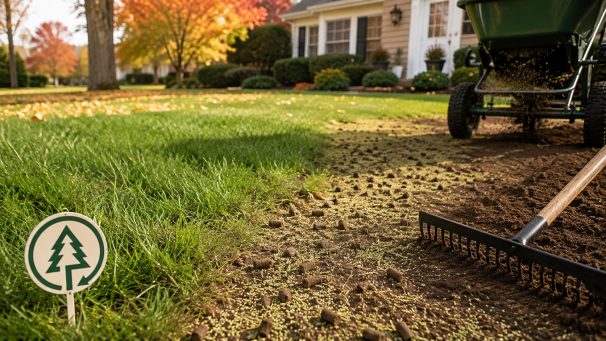
Common Aeration and Overseeding Mistakes
Several shortcuts can reduce results:
- Seeding too late in fall
- Overseeding without creating soil contact
- Applying too much topdressing
- Allowing germinating seed to dry
- Choosing grass unsuited to shade or traffic
- Aerating extremely dry, rock-hard ground
- Burying existing turf under excessive soil
The goal is not to cover the lawn with dirt. The goal is to improve the root zone and give new seed enough contact, moisture, and time to establish.
Build a Better Seedbed Before Fall Ends
A successful overseeding project starts below the grass blades.
Core aeration creates openings through compacted soil. Fresh seed fills thin areas. Proper topdressing improves contact between seed and soil while adding useful organic matter and structure.
For patch repairs, full overseeding projects, or lawn leveling, order bulk 50/50 Compost Lawnsoil Mix or screened topsoil from Thrive Farm for your fall seed bed.